cost guides
Collarbone Tattoo Cost: What You'll Pay in 2026
Collarbone tattoos usually run $150 to $700 depending on size, style, and shop tier. Here is what drives the price and what to budget for a piece that sits well on the clavicle.

Collarbone tattoos sit right on the edge of jewelry territory. The area is narrow, flat over bone, and highly visible, which means artists price it differently than a fleshy forearm or thigh. Most collarbone pieces land between $150 and $700, with fine-line script or small symbols at the low end and full clavicle-to-clavicle designs pushing well past a thousand. This guide breaks down the real 2026 pricing you should expect, why the collarbone earns a slight premium at many shops, and how to keep your budget honest without cutting corners on the artist.
What a collarbone tattoo actually costs
For a small piece under three inches, expect to pay a shop minimum of $80 to $150 in most US cities and closer to $200 in New York, Los Angeles, or Miami. A single word in fine-line script across one clavicle usually runs $150 to $300. A palm-sized floral spray, small bird silhouette, or geometric ornament typically lands between $250 and $500. Once you cross into a full clavicle-to-clavicle design or a wide ornamental piece that wraps toward the shoulder, you are looking at $600 to $1,500, often billed as a single flat rate rather than by the hour.
Hourly rates on the collarbone track the artist's standard rate, which sits in the $150 to $300 per hour range at mid-tier US shops and $250 to $500 at high-demand studios. Sessions here rarely go long. Two hours is common, three is the practical ceiling for most people before the bone contact becomes too sharp to sit through cleanly. If your artist quotes flat, that flat rate is usually the equivalent of one and a half to two sessions of hourly time, which is why small collarbone pieces often feel expensive per square inch. You are paying for setup, stencil work, and the artist's care over a technically demanding surface, not just needle time.
Why the collarbone earns a premium
The clavicle is one of the boniest tattoo locations on the body. Skin sits thin and tight directly over the bone, which means the needle vibration transfers hard, ink can grey out if the artist pushes too deep, and blowouts happen more easily than on padded areas. Experienced artists price this in. A shop that charges $180 for a small forearm piece may quote $220 to $280 for the same design on the collarbone, and that is not a markup, it is realistic time for a slower, more careful pass.
Visibility is the other pricing driver. A collarbone tattoo shows in almost every neckline, from t-shirts to dresses to workout tops. Artists know clients scrutinize this placement harder than a hidden thigh piece, so they build in extra time for stencil placement, symmetry checks along the clavicle line, and clean healing edges. If you want a design that follows the natural curve of the bone rather than sitting as a floating shape, budget for a consultation session even if the shop does not charge for it, because that planning time gets folded into the flat rate.
Price ranges by style
Style drives cost as much as size on this placement, because some techniques are far more forgiving over bone than others. Here is what to expect across the styles that read best on the collarbone:
- Fine-line and single-needle script: $150 to $450. Fast to execute, low ink load, but requires a steady hand over the bone. Book an artist who specializes in fine-line, not a generalist.
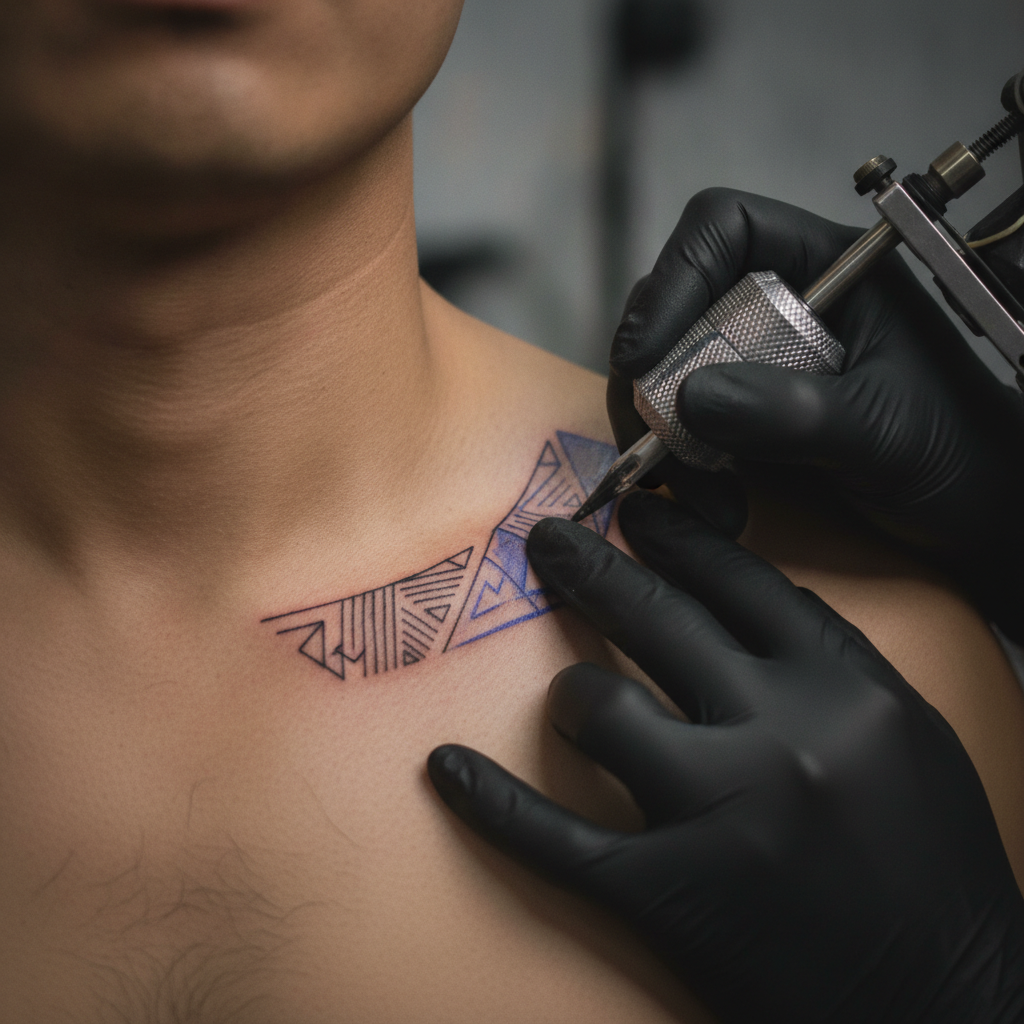
- Small blackwork or dotwork ornament: $250 to $600. Slower work, more shading passes, higher skill floor.
- Lettering across one or both clavicles: $200 to $700 depending on length and font weight.
- Floral or botanical spray: $350 to $900. Adds color or heavy shading, often runs two sessions.
- Ornamental or filigree that wraps toward the shoulder: $600 to $1,500. Custom design fee typically included.
- Full chest-piece extension pulling in the collarbone: $1,500 to $4,000 across multiple sessions.
Color work costs more everywhere and the collarbone is no exception. Expect a 20 to 40 percent premium over black-and-grey for the same size design, because color needs more passes to saturate and often a follow-up touch-up. Watercolor styles on the collarbone are risky. The bone makes soft washes prone to patchy healing, and most experienced artists will steer you toward black-and-grey or fine-line for this placement.
What else adds to the total
The sticker price is not the full number. A few line items catch first-timers off guard when they add up the real cost of a collarbone piece. Deposits are standard and usually run $50 to $200, applied to your final bill on the day. Touch-ups within the shop's window, typically 30 to 60 days, are often free but not always. Ask before you book. Some shops charge a flat $50 to $100 for touch-up sessions after the free window closes.
Tipping is the other line that gets missed. In the US, 15 to 25 percent of the total is standard, and most artists on the collarbone are working slower and more carefully than they would on a bicep. A $400 tattoo turns into a $480 to $500 out-the-door number once you tip. If you are traveling to book a guest artist, factor in their travel surcharge, which usually runs $50 to $150 on top of the design price. And if you want your artist to design something custom rather than adapt flash, expect $50 to $200 in design fees, sometimes waived if you commit to booking.
How to keep the budget honest
The cheapest collarbone tattoo is rarely the best value. This placement punishes a rushed artist. Blowouts on thin clavicle skin look muddy within a year, and touch-ups on a healed blowout are harder than the original piece. If your quote from a reputable shop feels high, the answer is usually to shrink the design rather than shop for a cheaper artist. A two-inch fine-line piece at a $250 shop minimum will outlast a six-inch discount piece from a booth artist charging $180.
Book a consultation before you commit. A ten-minute conversation about placement, size, and style will surface any hidden costs and let the artist mock up the design against your actual clavicle curve. Ask specifically what the flat rate includes, whether the touch-up window is 30 or 60 days, and whether deposits are refundable if you cancel more than a week out. These questions signal you are a serious client and often earn you a more accurate quote than the website's stock pricing page.
If the shop offers financing through a third party, read the terms before you sign. Most tattoo financing runs 20 to 30 percent APR, which turns a $600 piece into a $750 piece over a year. Save for a month or two instead if the total is stretching your budget. A tattoo you paid for in full always feels better in the mirror.
Frequently asked
Is the collarbone one of the most painful tattoo spots? Yes, it ranks in the top tier for most people. The bone sits directly under thin skin with no muscle padding, so the needle vibration transfers hard. Most clients rate collarbone pain a 7 to 9 out of 10. Sessions rarely go past three hours because the discomfort compounds.
How long does a small collarbone tattoo take? A single word in fine-line script or a simple symbol under two inches usually takes 45 minutes to 90 minutes in the chair, plus 20 to 30 minutes of setup and stencil placement. Larger ornamental work runs two to three hours per session.
Do collarbone tattoos fade faster than other placements? Slightly, yes. The bone contact and constant fabric friction from bra straps, collars, and bag straps wear the ink down faster than a bicep or thigh. Expect to want a touch-up around year five or six, sooner if you are outside frequently without sunscreen.
Should I get color or black-and-grey on my collarbone? Black-and-grey and fine-line hold up best on this placement. Color needs more passes to saturate, and the thin skin over bone makes color heal patchy on some clients. If you want color, commit to a follow-up session and use SPF 50 daily on the piece.
Can I get a collarbone tattoo as my first tattoo? You can, but understand you are starting at one of the more painful spots. Many artists will honestly recommend a small forearm or thigh piece first so you learn how your body handles the needle. If you are set on the collarbone, keep the design small for round one and plan a longer piece as a follow-up once you know your pain tolerance.
What size design fits best on the collarbone? Anything from a one-inch symbol up to a full clavicle-to-clavicle piece works, but designs that follow the natural curve of the bone read better than shapes that sit across it. Fine-line script, small botanical branches, and thin ornamental linework are the most flattering on almost every body type.