cost guides
Elbow Tattoo Cost: Pricing, Pain, and What to Expect
Elbow tattoos run $150 to $800 for standalone pieces and cost more per square inch than most placements. Here is what drives the price.

Elbow tattoos sit in an awkward pricing bracket. A small standalone piece costs $150 to $300, a full elbow cap or ditch design lands between $400 and $800, and connecting the elbow into a sleeve adds $500 to $1,200 on top of the sleeve total. The elbow itself is one of the most expensive square inches on the body to tattoo, and the reasons are structural rather than artistic.
This guide breaks down what you actually pay for an elbow tattoo, why the pricing sits higher than a bicep or forearm at the same size, and what to budget for touch-ups once the piece has healed.
Why elbow tattoos cost more per square inch
Elbow skin is thin, stretchy, and constantly moving. When the arm bends the skin bunches, and when it straightens it pulls tight over the olecranon (the bony point at the back of the joint). Ink deposited into that surface has to survive years of that folding, which is why artists slow down and layer pigment more carefully than they would on a flat panel like the outer forearm. That extra time gets billed at the studio's normal hourly rate, so a design that would take two hours on the bicep often takes three on the elbow.
The bone contour is the second cost driver. The olecranon does not sit under a cushion of muscle or fat, so the artist has to reposition the client's arm frequently to keep the skin taut in the right zone. Repositioning eats chair time. Some artists charge a placement premium of 10 to 20 percent for joints, hands, feet, and other bony areas, and even those who do not still end up billing more hours than the design size would suggest.
Ink saturation is the third factor. Elbow skin often needs two passes for solid black fills and two to three sessions for dense blackwork or realism. Each session includes a shop minimum ($80 to $150 in most cities) and a fresh setup fee at some studios, so a piece that reads as "one tattoo" is functionally billed as several.
Standalone elbow tattoo pricing by size and style
Pricing scales with size, complexity, and style. The ranges below assume a mid-tier artist at $150 to $250 per hour in a US or Western European city. Bangkok, Bali, and Mexico City run 40 to 60 percent lower for comparable skill.
- Small linework spider web or mandala centered on the olecranon: $150 to $300, one 1 to 2 hour session
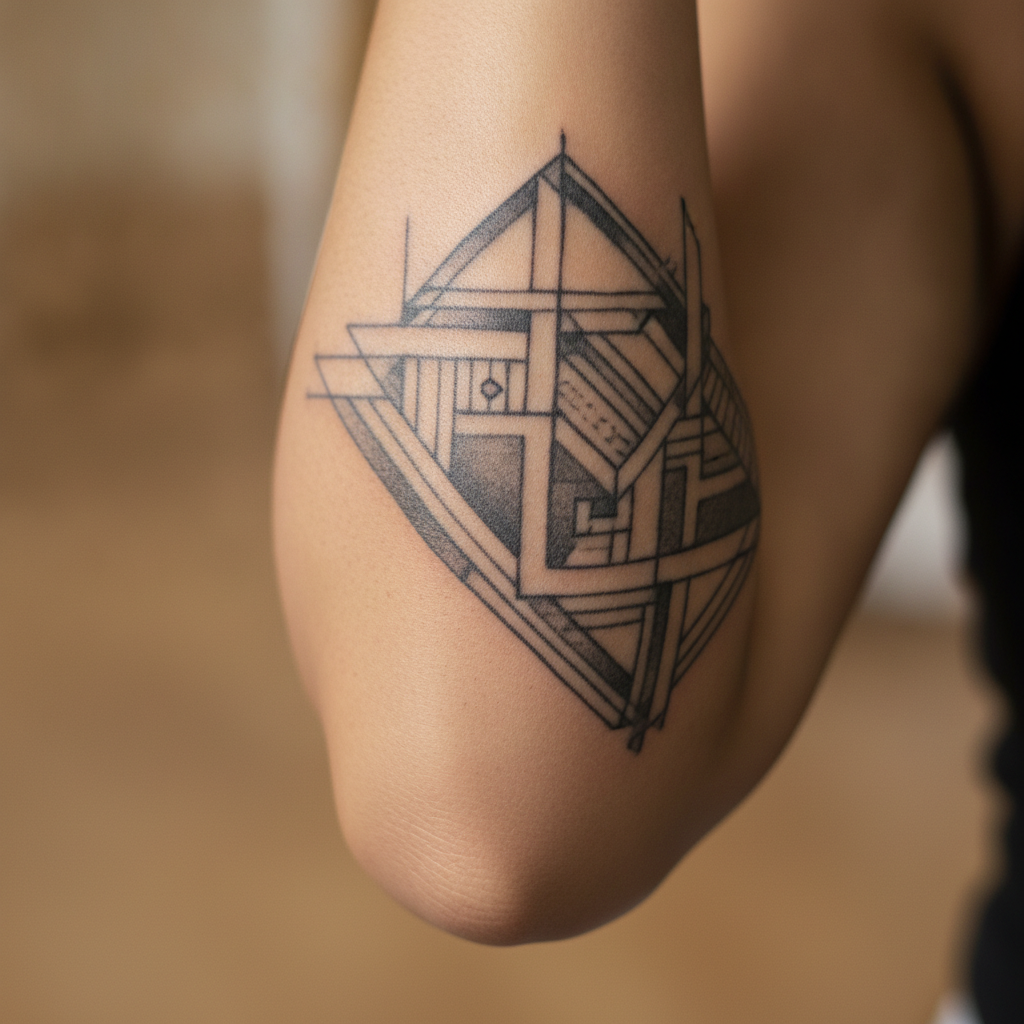
- Medium blackwork ornamental or geometric elbow cap covering the joint: $400 to $700, one 3 to 4 hour session
- Detailed realism or neo-traditional piece with color: $600 to $1,000 across one or two sessions
- Full elbow ditch (inner elbow) botanical or Japanese wave: $350 to $600, one 2 to 3 hour session
- Elbow blackout or heavy solid black cap: $500 to $900 spread across two sessions to protect the skin
The ornamental style sits at the sweet spot for elbow placement because the radial symmetry works with the joint's natural focal point. Geometric and mandala designs land in the same range. Portrait or hyperrealism work on the elbow itself is rare and priced closer to the top of these ranges because of how much detail gets lost as the skin folds.
What sleeve integration adds
Most elbow tattoos are part of a sleeve rather than standalone pieces. When the elbow is included in a half or full sleeve, the pricing works differently. Artists usually quote sleeves as a package or as an estimated hourly range rather than square-inch pricing, and the elbow section gets absorbed into that number. Expect the elbow portion to represent 15 to 25 percent of the sleeve's total cost even though it covers less than 10 percent of the surface area.
A half sleeve including the elbow runs $1,500 to $3,500 depending on style density and city. Full sleeves that wrap through the elbow land between $3,000 and $8,000. Japanese irezumi sleeves with heavy background work sit at the top of that range because the elbow needs to blend into the wave, wind bar, or cloud pattern without breaking the composition. Compare against a half sleeve without elbow work if you want to see what dropping the joint saves.
Artists who specialize in Japanese, blackwork, or neo-traditional sleeves often quote a flat package rate that includes the elbow. That structure protects you from paying extra hours when the elbow inevitably takes longer than expected. Ask about package pricing before you commit if you are planning a multi-session sleeve.
Pain, healing, and hidden costs
Elbow tattoos rank in the top five most painful placements on the standard tattoo pain chart. The outer elbow over the olecranon produces sharp, vibrating pain because the needle is essentially tapping bone through thin skin. The inner elbow ditch is a different kind of pain, more of a burning nerve sensation because of the ulnar nerve running underneath. Neither zone is unbearable for most people, but the sessions feel longer than the clock suggests.
Healing takes 3 to 5 weeks for surface healing and up to 4 months for deep healing. The joint's constant movement means scabs crack more easily and heavy scabbing can pull pigment out of the skin. Plan on the following hidden costs:
- Touch-up session at 6 to 12 weeks post-heal: $80 to $200 or free depending on the artist's policy
- Second touch-up at 6 months for saturation loss: $100 to $250
- Time off the gym for at least 10 days to avoid stretching the healing skin
- A soft elbow sleeve or Saniderm second-skin bandage for the first week: $15 to $40
Ink loss on the elbow is real. Even with perfect tattoo aftercare, you should expect 10 to 20 percent lighter saturation than a comparable forearm tattoo after the first heal. Good artists factor this in by layering pigment more heavily in the first session or scheduling a mandatory touch-up as part of the initial quote.
How to save money without cutting corners
Cheaper is not always worse on the elbow, but the wrong kind of cheap is a disaster. A junior artist at a reputable shop charging $100 per hour will produce a better elbow piece than a mid-career artist rushing through it at $200 per hour. Look for portfolios that show healed elbow work at 6 months or longer, not fresh photos taken the day of the session. Healed photos tell you whether the artist knows how to saturate the joint properly.
Booking a longer single session instead of multiple short ones saves money because you avoid repeated shop minimums and setup fees. A 4 hour session at $180 per hour ($720) usually beats two 2 hour sessions at the same rate once you factor in the second minimum. Travel is the other lever. A one-week trip to Bangkok or Mexico City for a $400 to $600 elbow piece often costs less than the same tattoo in New York or London once you include the flights.
Avoid the temptation to add color as a cost-saver, meaning to skip color to save money. Color pricing on the elbow is roughly 20 percent more than black-and-grey because of the extra pass required for saturation, but a poorly executed color elbow ages worse than a well-done black-and-grey. If budget is tight, downsize the design before you downgrade the artist or drop the color.
Frequently asked
Why do artists charge more for elbow tattoos than the size would suggest? Elbow skin requires more chair time per square inch because of the bone contour, the stretch, and the extra ink passes needed to saturate the joint. Most artists price by hour rather than square inch for this reason, and elbow work simply takes longer than a flat panel like the bicep or thigh.
How painful is a tattoo directly on the elbow bone? The outer elbow over the olecranon is one of the top five most painful placements. The sensation is a sharp vibrating pain because the needle transmits through thin skin directly into bone. Most people describe it as intense but brief, and sessions rarely run longer than 3 to 4 hours because both the client and the artist need breaks.
Do elbow tattoos always need a touch-up? Yes, almost always. The joint's constant folding pulls pigment out of the skin as it heals, and even a well-executed piece will look 10 to 20 percent lighter after 3 months. Most artists build one free or discounted touch-up into their pricing. Budget for a second paid touch-up at the 6 to 12 month mark if you want the piece to hold its full saturation.
Can I get an elbow tattoo as my first tattoo? You can, but most artists will advise against it. The pain level, the healing complications from constant movement, and the technical difficulty of laying down clean lines on stretchy skin make it a harder first experience than a forearm or bicep piece. If your first-tattoo idea only works on the elbow, sit for a shorter test tattoo on the outer forearm first to see how you handle needle work on a bony area.
How long should I wait between elbow sessions? Wait at least 4 to 6 weeks between sessions on the same elbow, and 8 weeks if the first session was heavily saturated. The skin needs to complete surface healing before the artist can build the next layer of pigment without disturbing what is already down. Booking too close together is the fastest way to end up with a patchy, uneven piece.
Is tipping expected on an elbow tattoo? Yes, tip 15 to 25 percent of the session total, same as any other tattoo. If the artist absorbed extra time because the elbow took longer than quoted, tip closer to 25 percent. See the full tipping guide for how to handle multi-session pieces.


