cost guides
Full Sleeve Tattoo Cost: What to Budget in 2026
A full sleeve tattoo typically runs $2,500 to $12,000 depending on style, artist tier, and session count. Here's how the pricing actually breaks down.
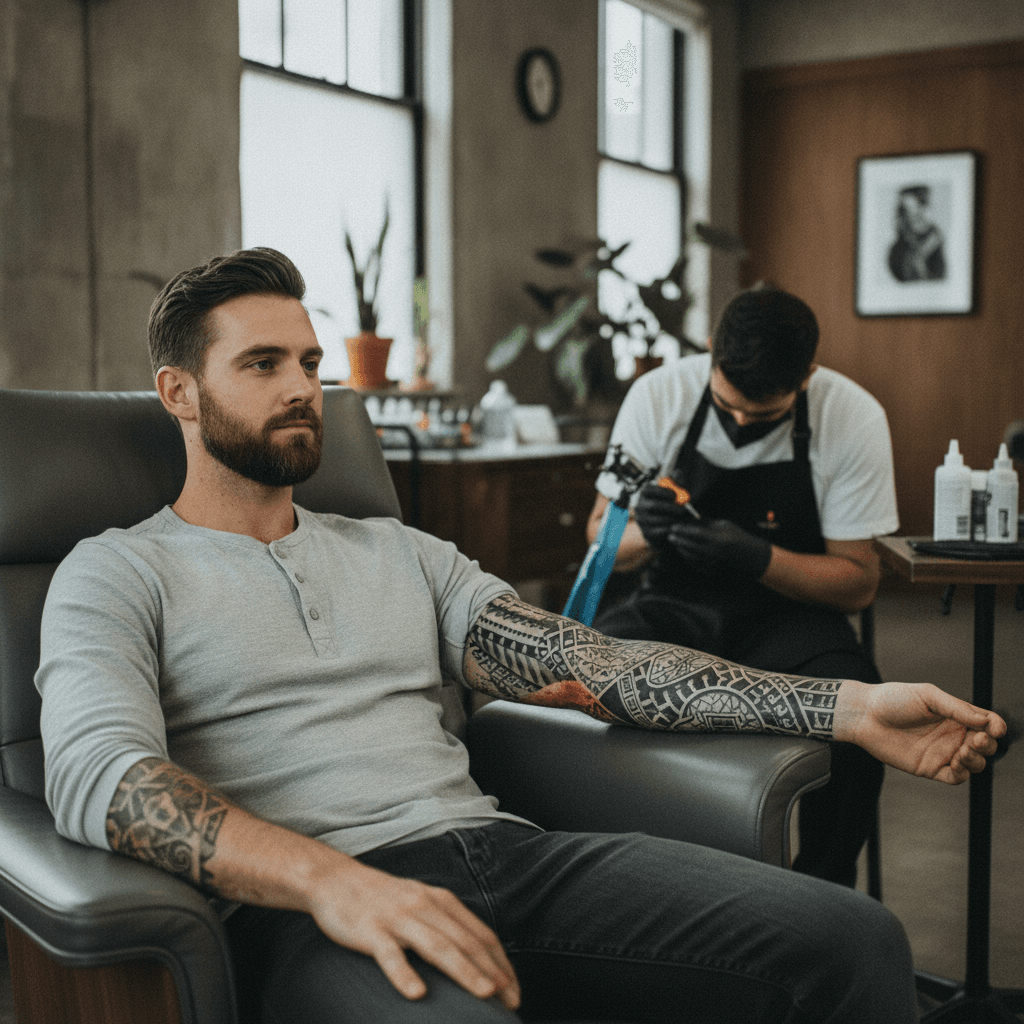
A full sleeve covers the shoulder to the wrist and is the single largest common commitment in tattooing. The total cost sits between $2,500 and $12,000 for most clients in the US, with premium artists in New York, LA, or London pushing $15,000 to $20,000 for color realism or dense Japanese work. Pricing is driven far more by style and artist tier than by size alone, and the bill arrives in installments across four to twelve sessions rather than a single payment. This guide breaks down the ranges by style, explains why hourly rates vary so much, and lists the smaller costs that catch first-timers off guard.
How the total is calculated
A full sleeve is priced by the hour in almost every studio. Artists estimate the total hours based on complexity, then bill per session or per day. A clean black-and-grey sleeve with moderate detail takes 20 to 30 hours of work. A dense color realism sleeve with portraits, animals, or complex scenery runs 40 to 80 hours. Japanese irezumi with full backgrounds sits in the 50 to 100 hour range depending on how tight the wind bars, waves, and scale work are drawn.
Hourly rates in 2026 typically fall into four tiers. Newer artists with one to three years of experience charge $100 to $150 per hour. Mid-career artists with a strong local reputation charge $175 to $250. Established artists with waitlists of three to twelve months charge $275 to $400. Internationally recognized specialists and guest-spot artists at flagship shops charge $450 to $700 and sometimes bill by the day at $2,500 to $4,000 flat. Multiply the hourly rate by the hour estimate to get a ballpark, then add roughly 15 percent for the natural overrun most large pieces experience.
Session structure also affects the total. Most artists work in four to seven hour sittings, spaced two to six weeks apart to let each panel heal before the next one. Some artists offer full-day sessions at a slight per-hour discount, which shortens the calendar but makes each sitting more physically brutal. Booking a day rate is usually the fastest way to finish a sleeve, but only worth it if you tolerate long sessions well and have already worked with the artist on a smaller piece.
Cost ranges by style
Style is the single biggest multiplier on a sleeve budget. The same artist will quote very different numbers depending on what you ask for, because some styles are simply slower to execute per square inch of skin.
- Black-and-grey traditional or neo-traditional: $2,500 to $6,000. Bold lines and limited shading work quickly and heal predictably.
- Fine line and single-needle: $3,500 to $8,000. Slower application because of the light passes required, and often more touch-up work.
- Blackwork with heavy fill: $3,000 to $7,000. Straightforward but time-consuming due to solid black saturation across large areas.
- Color realism or portraiture: $6,000 to $15,000. Portraits, animals, and photographic references require premium artists and long hours.
- Japanese irezumi: $6,000 to $14,000. Backgrounds, scales, and layered compositions demand precise planning and dozens of hours.
- Geometric, mandala, or dotwork: $4,000 to $9,000. Precision line work and stippling slow the process even when the palette is simple.
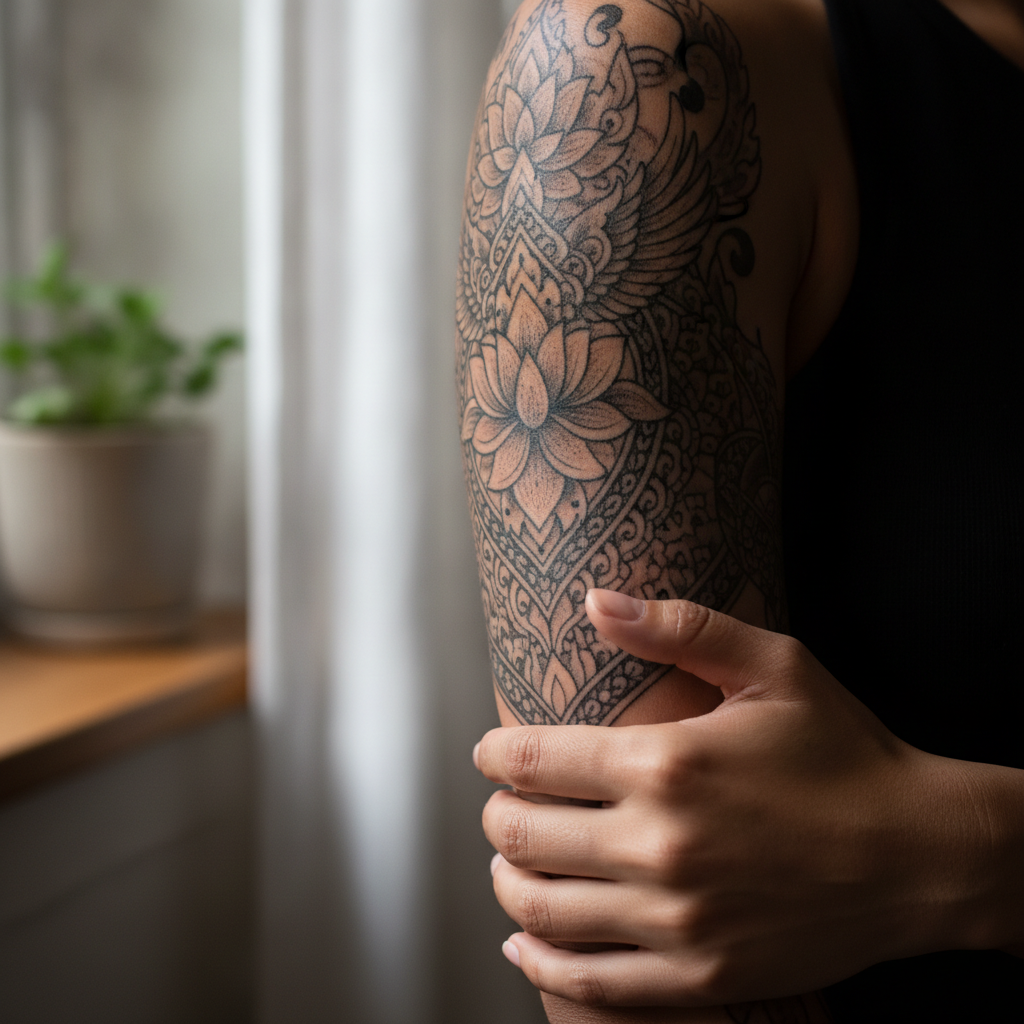
The style guide for Japanese irezumi and the blackwork breakdown both explain why these styles take longer than a first-timer expects. Watercolor work looks fast on Instagram but is deceptively slow in practice, as the artist blends fresh ink wet-on-wet and has to plan color layering across multiple sessions.
Deposits, consultations, and design fees
Nearly every artist takes a non-refundable deposit before the first session. For a full sleeve, expect a deposit of $200 to $1,000, which is applied to your final session rather than the first. Miss an appointment without at least 48 hours notice and the deposit is forfeited. Some studios charge separate consultation fees of $50 to $150 for a full sleeve, waived if you book. Custom design work is often billed at 25 to 50 percent of one session rate, or bundled into the hourly quote for larger commitments.
Ask before booking whether revisions to the drawing are included or billed separately. Sleeves usually involve one to three rounds of design changes before ink hits skin, and a clear scope keeps the process from turning into an expensive negotiation. Established artists rarely show the full design until the day of the first session, which is normal for that tier, but any artist should be willing to discuss placement, composition, and reference before you commit.
Hidden costs that add up
The hourly total is only part of what a full sleeve actually costs. Travel is the most common blind spot. If your preferred artist is not local, plan for flights, hotels, and food across multiple trips over six to eighteen months. A three-night trip to a mid-tier city adds $600 to $1,200 per session and can easily add $5,000 to a sleeve budget if you fly repeatedly to New York, LA, or Tokyo.
Tipping is standard at 15 to 25 percent of each session invoice. On a $6,000 sleeve, that adds $900 to $1,500 across the full timeline. The tipping guide covers exceptions like day rates and international shops where tipping conventions differ. Aftercare supplies run $30 to $80 per session for quality lotion, wash, and second-skin bandages, and the aftercare basics for the first 24 hours explain why cutting corners here is a false saving. Touch-ups after full healing are usually free within the first six months, then billed at the hourly rate. Budget one to three hours of paid touch-ups over the lifetime of the sleeve, particularly for color work and fine line.
Time off work is the last hidden cost. Full sleeve sessions leave the arm sore and swollen for two to five days. Physical or client-facing jobs may need a day off after each sitting. Multiply that across ten sessions and the sleeve costs meaningful vacation days as well as cash.
Ways to reduce the total honestly
Cost cutting on a sleeve is possible but comes with tradeoffs. Choosing black-and-grey over color drops the hourly count by 25 to 40 percent and is the single biggest lever. Simpler compositions with negative space finish faster than dense wall-to-wall designs and often age better anyway. Booking longer sessions of six to eight hours instead of three-hour sittings reduces total setup time and can save 10 to 15 percent overall.
Working with a mid-career artist rather than the local celebrity saves 30 to 50 percent for work that is often technically indistinguishable to a non-tattooer eye. Ask to see healed photos rather than fresh ones, since healed line quality is the real test. Traveling for guest spots at studios in lower cost-of-living cities can also save meaningfully, though this only works if the artist matches your style vision.
Avoid the false economies. A cheap sleeve done by an underqualified artist ends up more expensive once cover-up or laser work enters the picture. The cover-up cost guide and tattoo removal cost guide both illustrate why the initial saving rarely holds up.
Payment structure and financing
Most artists collect payment at the end of each session in cash, card, or bank transfer. A few take Venmo, Zelle, or crypto, but never assume without asking. Large studios in the US increasingly offer financing through third-party providers like Affirm or Klarna, spread across six to twelve months at 0 to 30 percent APR depending on credit. Independent artists rarely offer financing directly.
If you want to finance a sleeve, do it through a general 0 percent purchase credit card rather than a tattoo-specific plan. The terms are usually better and you keep leverage if there is ever a dispute. Pay the deposit on a card that offers purchase protection. Never pay the full estimated sleeve total up front, even if offered a discount for doing so. Once cash is transferred, your ability to walk away is gone, and sleeves that go poorly two sessions in are the ones you most need the option to exit.
Frequently asked
How many sessions does a full sleeve take? Most sleeves finish in four to twelve sessions depending on style and session length. Simple black-and-grey with an artist working full-day sessions can wrap in four sittings. Dense color realism or Japanese work commonly runs eight to twelve sessions across a year or longer.
Is it cheaper to do a sleeve all at once or spread out? The hourly total is roughly the same either way, but longer sessions often earn a small discount of 5 to 15 percent per hour. Spreading sessions out costs more in setup time and travel if you fly to your artist, but is easier on the body and lets each panel heal properly before the next one begins.
Do artists give a fixed quote for a full sleeve? Almost never. The complexity of a sleeve means real hours often diverge from estimates by 15 to 30 percent. Some artists give a not-to-exceed range as a courtesy, but most bill purely by the hour. Ask for a hour estimate in writing and treat it as a range rather than a fixed number.
How much should I tip on a sleeve? Tip 15 to 25 percent of each session invoice, not the full sleeve total. Some artists on day rates prefer a smaller flat tip like $100 to $200 per day rather than a percentage. When in doubt, ask the studio manager what is customary for that artist.
Are payment plans available? Some large studios offer Affirm or Klarna financing, and a few artists accept installment payments between sessions if you have an established relationship. Never expect financing from an independent artist as a first-time client, and never assume a payment plan until it is confirmed in writing.
What is the cheapest way to get a real full sleeve? Choose black-and-grey traditional with a skilled mid-career artist in a mid-cost city, keep the composition airy rather than filled, and book longer sessions to reduce setup time. This path typically lands between $2,500 and $4,500 for high-quality work that heals well and ages predictably.