cost guides
Neo-Traditional Tattoo Cost: 2026 Pricing by Size and Detail
Neo-traditional tattoos run $200 to $3,500 depending on size, color count, and artist tier. Here is what actually drives the number in 2026.

Neo-traditional pricing sits above American traditional and below hyper-realism for a reason. The style leans on the same bold black outlines as its old-school parent but layers in painterly color, tighter detail, and modern subject matter. That mix of technical demands and artist scarcity is what pushes the hourly rate up, and it is what this guide breaks down piece by piece.
What you actually pay for neo-traditional in 2026
Rates for neo-traditional in 2026 cluster in the $180 to $350 per hour range at established color-specialist shops in the US, UK, and Australia. Small filler pieces at roughly the size of a business card land between $200 and $450. A palm-sized panel, think a rose with two leaves and a ribbon, runs $500 to $900 as a flat rate at most mid-tier studios. Half-sleeves in true neo-traditional finish land at $2,200 to $4,500 depending on background fill and color count, and a full sleeve with linked panels and negative-space design work commonly reaches $6,000 to $10,000 across four to seven sessions.
Compare that to plain American traditional, where flat black shading and a five-color palette keep hourly rates closer to $150 to $250, and the neo-traditional premium becomes obvious. You are paying for more colors, more shading passes, and an artist who can render a face or an animal without it collapsing into mush at year five.
Size brackets and realistic ranges
Neo-traditional does not price by area alone. Two pieces of the same size can sit two hours apart in chair time based on subject and color count. That said, size brackets give a working baseline.
- Micro pieces (under 2 inches): $200 to $400, usually a single-session flat rate
- Small panel (2 to 4 inches): $400 to $850, one session
- Medium panel (4 to 7 inches): $900 to $1,800, one to two sessions
- Large single piece (7 to 12 inches): $1,800 to $3,500, two to three sessions
- Half-sleeve: $2,200 to $4,500, three to four sessions
- Full sleeve: $6,000 to $10,000, four to seven sessions
- Back piece: $8,000 to $15,000, six to ten sessions
Faces, animals with detailed fur or feathers, and ornate frames sit at the top of each bracket. Simple florals, daggers, and single-object designs sit at the bottom.
Why neo-traditional costs more than traditional
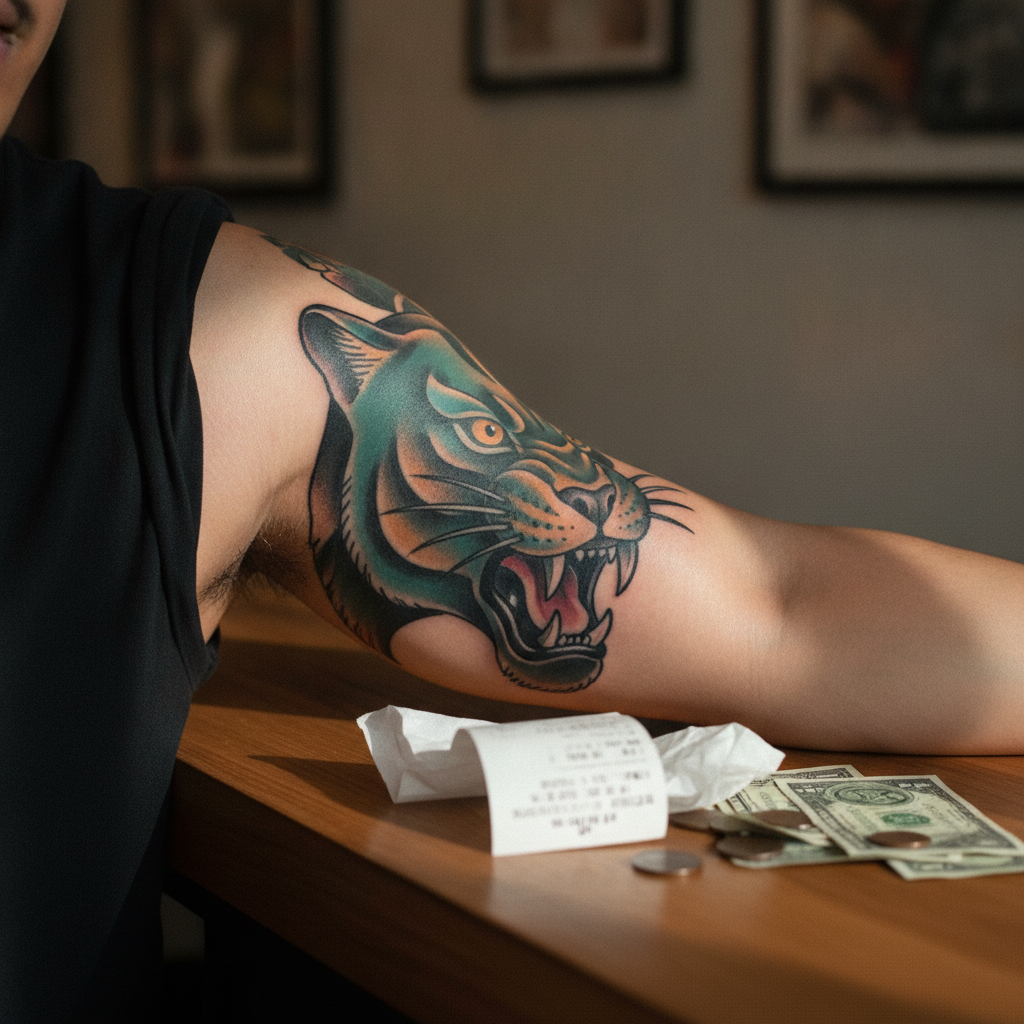
Neo-traditional uses roughly twice the color palette of American traditional. Where old-school work leans on red, green, yellow, brown, and black, neo-traditional artists routinely pack a workstation with teals, muted plums, burnt oranges, sage greens, and layered skin tones. Each additional color adds pack time, blend time, and cleanup. Layered shading, especially on faces and animal fur, gets built across multiple passes with progressively smaller magnum groupings. A single peony petal might see three colors packed and blended before the artist moves to the next petal.
The linework is another cost driver. Neo-traditional lines carry weight variation on purpose, thick on the outside contour, thinner on interior detail. That takes a slower, more deliberate hand than the uniform outlines of American traditional. Combine slower lines with layered color passes, and you get sessions that run 30 to 50 percent longer than a comparable traditional piece. That time shows up directly in the invoice.
Artist tier and how it shifts the number
Neo-traditional has a tight bench of specialists. Below apprentice level, no serious neo-traditional artist exists. The style demands too much color theory and rendering skill for a first-year to pull off cleanly. Expect these bands in 2026.
- Journeyman color artist (2 to 5 years, solid book): $150 to $220 per hour
- Established neo-traditional specialist (6 to 12 years, waiting list): $250 to $400 per hour
- Recognized name with published editorial work or convention circuit presence: $400 to $700 per hour, often flat-rate only
- Guest spots at overseas conventions can add $500 to $1,500 in shop fees on top of the artist rate
Deposits track the tier. Journeymen typically ask $100 to $200 to hold a date. Established specialists ask $300 to $500. Recognized names commonly ask 30 to 50 percent of the full projected price upfront and enforce strict reschedule windows. The tattoo deposit rules matter more here than in most styles because color specialists lose real money to no-shows.
Sessions, sittings, and pacing costs
Neo-traditional lines and color rarely finish in a single sitting past palm size. A medium panel with dense color usually takes one linework session of two to three hours, then a color and shading session of four to six hours two to three weeks later. Half-sleeves and full sleeves get broken into anatomical panels, each with its own line and color pass.
That pacing has cost consequences. Every session carries a minimum charge, usually $150 to $250, plus tip. Rushing color into a partially healed line session invites blowout and forces touch-ups. Spacing sessions properly, ideally three to five weeks apart on the same panel, protects both line integrity and pigment saturation. See the session-spacing rules for the healing markers artists watch before pushing color into a panel.
A well-executed neo-traditional half-sleeve is not a single tattoo. It is a series of three to five tattoos priced, planned, and healed as one project.
Where the money actually goes
Understanding the invoice removes most of the sticker shock. A typical $2,800 medium neo-traditional piece at a mid-tier studio breaks down roughly as follows. The artist keeps 60 to 70 percent, or about $1,700 to $2,000, out of which they cover their own supplies, taxes, insurance, and continuing education. The shop takes 30 to 40 percent for chair rent, autoclave sterilization, station consumables, licensing, and front-desk labor. Nothing in that split is negotiable, and shops that undercut it usually do so by cutting supply quality.
Add-ons stack fast on color-heavy work. Custom design fees of $150 to $400 are standard for any piece that requires original artwork rather than flash. Numbing cream, if the artist allows it, adds $30 to $75 per session. Aftercare bundles from the shop, usually a Saniderm bandage plus a small tub of healing balm, add $25 to $60. Tips run 15 to 25 percent of the total, more common at the low end of that range on larger multi-session projects. Follow the tip standards most shops expect rather than guessing.
Ways to lower cost without wrecking the piece
Neo-traditional has real levers you can pull to bring cost down. Simplify the subject before you simplify the color. A neo-traditional rose and dagger with three colors and a clean background costs 40 percent less than the same rose and dagger with a full ornamental frame, drop shadow, and gradient sky. Cut the frame first, not the color, because the color is what makes the style read as neo-traditional at all.
Choose smaller placements. A 3-inch neo-traditional bee on the forearm sits at $400 to $700. The same bee scaled up to 7 inches on the thigh with a honeycomb frame lands at $1,400 to $2,200. Both look great. One costs a third of the other. Ask about flash sheets. Many neo-traditional specialists release seasonal flash days at 20 to 30 percent below custom pricing, and the designs are already color-locked, which removes design fees entirely.
Frequently asked
Is neo-traditional worth the higher hourly rate compared to traditional? If you want painterly color and modern subject matter, yes. If you are happy with a five-color palette and classic Americana imagery, traditional gets you the same longevity for less. Neo-traditional ages beautifully in the hands of a specialist, but the premium is real, and a $250-an-hour neo-traditional session should not be spent on a design that would look identical in American traditional.
How long does a neo-traditional half-sleeve take from consultation to final touch-up? Plan on four to six months. That covers one to two design consultations, three to four sitting sessions spaced three to five weeks apart, and a final touch-up session six to eight weeks after the last color pass. Rushing this window is the fastest way to end up with faded color and blown lines.
Do neo-traditional pieces need more touch-ups than other styles? Yes, slightly. The saturated colors, especially bright reds, yellows, and light blues, can lose vibrancy in the first year, particularly on darker skin tones or heavily sun-exposed placements. Budget one paid or complimentary touch-up between months 3 and 12, then plan a color refresh every 8 to 12 years to keep the piece looking editorial.
What ruins the cost math on a neo-traditional tattoo? Three things. Picking an artist who does the style occasionally rather than as their main portfolio, skipping the deposit process and getting bumped to a slower session cadence, and cheaping out on aftercare in the first two weeks. Any one of those adds a $200 to $600 touch-up to the total and can force a full color rework by year two.
Can I finance a large neo-traditional piece? Most established shops now accept Affirm, Klarna, or in-house payment plans on projects over $2,000. Interest rates run 0 to 15 percent depending on term length. Read the fine print on missed payments before signing, and never finance a piece if you cannot afford the full artist tip in cash at each session.
How do I know if a quote is fair? Get two written quotes from artists whose portfolios show at least ten finished neo-traditional pieces in the past year. If the quotes are within 20 percent of each other, both are fair. If one is more than 30 percent below the other, the low quote usually reflects less chair time budgeted, which means a rushed piece.