cost guides
Polynesian Tattoo Cost: What You Pay for Traditional Tribal Work
Polynesian tattoos run $150 to $300 per hour and most pieces land between $800 and $4,000 depending on size, density, and artist lineage.
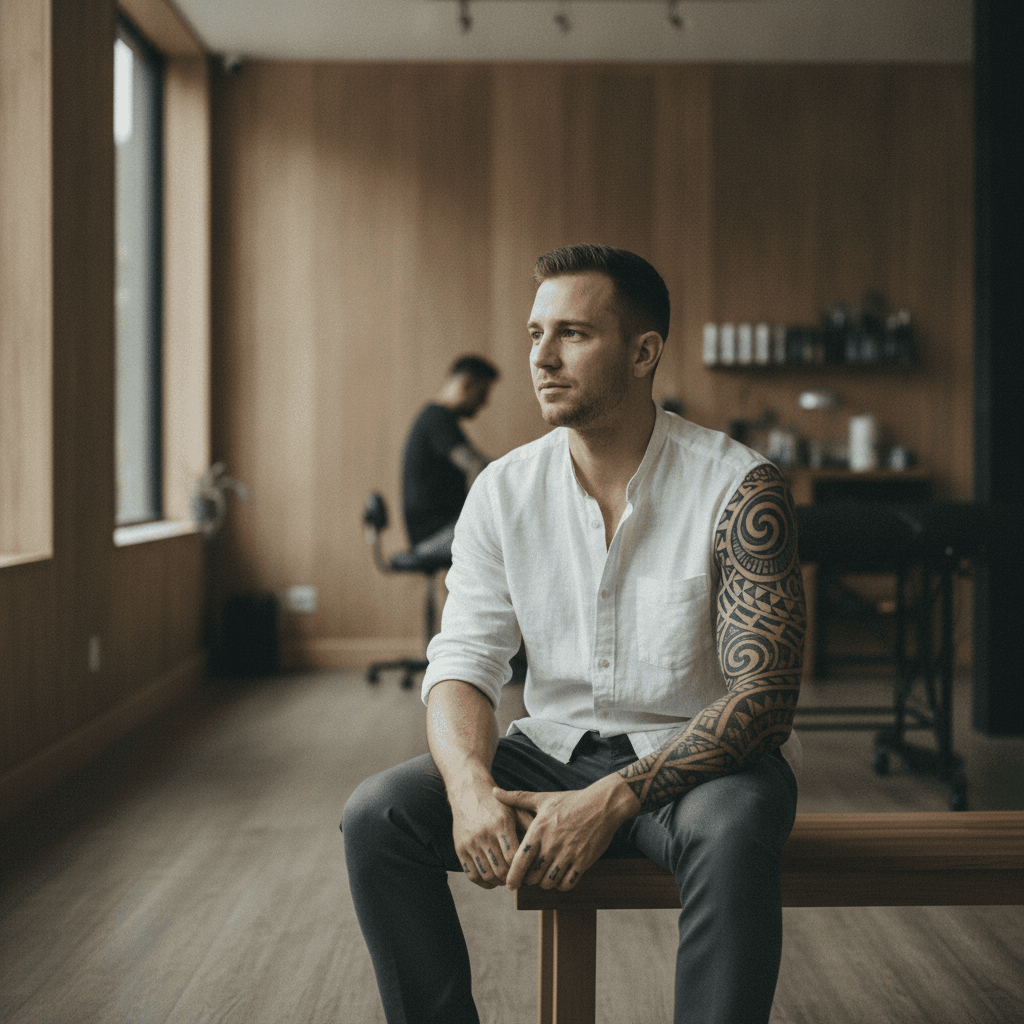
Polynesian tattoos are dense, geometric, and almost always big. That combination of coverage, line weight, and specialist knowledge is what drives the price, not any single stencil or motif. If you want a straight read on what you will actually pay, this guide breaks down hourly rates, piece-by-piece totals, lineage premiums, and the costs most people forget to budget for.
Hourly rates for Polynesian work
Most Polynesian tattoos are quoted by the hour because sessions run long and designs are custom. In the United States you should expect $150 to $250 per hour from a competent generalist, and $250 to $400 per hour from an artist who specialises in Samoan, Maori, Hawaiian, or Marquesan work. Studios in New York, Los Angeles, and Honolulu sit at the top of that range. Smaller cities and shops without a tribal specialist come in cheaper but you give up design authenticity, which matters more here than in most styles.
Travel pricing in the islands themselves is a different market. A session with a traditional practitioner in Samoa or French Polynesia often runs $100 to $200 per hour for machine work, with hand-tap (tatau) sessions priced per full project rather than per hour. For a frame of reference on how geography bends tattoo rates, our guide to tattoo pricing explained lays out the main variables that move an estimate up or down. Flat-rate pricing exists but is rare for Polynesian work above the forearm, because artists cannot predict exactly how long dense fill and freehand adjustments will take.
What a full piece actually costs by size
Hourly rates are only useful once you know how long the piece will take. Here are realistic session counts and total costs for the most common Polynesian placements, assuming a mid-tier specialist at roughly $200 per hour.
- Small ankle or wrist band, 3 to 6 inches: 2 to 4 hours, $400 to $800
- Calf band or shoulder cap: 4 to 7 hours over 1 to 2 sessions, $800 to $1,500
- Half-sleeve, shoulder to elbow: 10 to 15 hours over 2 to 3 sessions, $2,000 to $3,000
- Full sleeve with chest panel: 20 to 30 hours over 4 to 6 sessions, $4,000 to $6,500
- Full back piece: 25 to 40 hours over 5 to 8 sessions, $5,000 to $8,000
- Pe'a style thigh-to-knee wrap (Samoan): 40 to 60 hours of hand-tap, often quoted as a $6,000 to $12,000 flat project
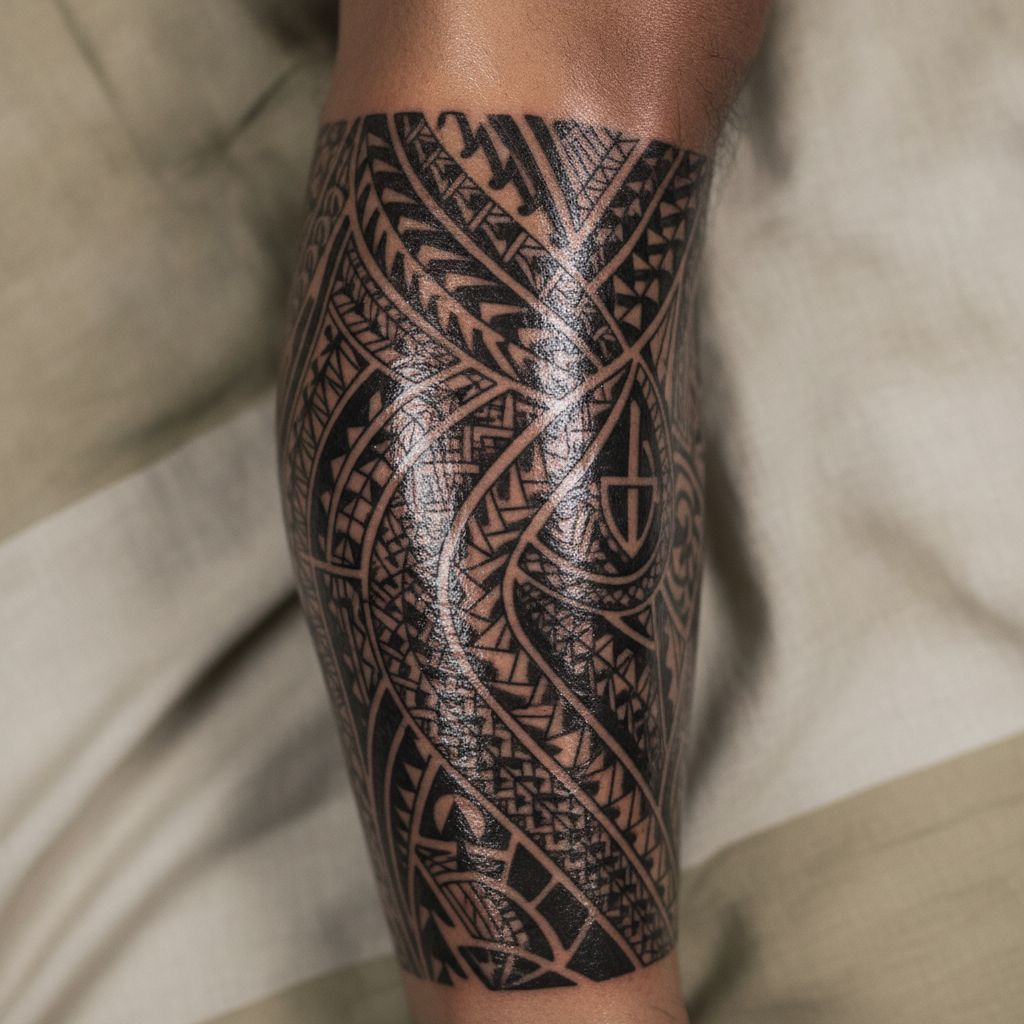
These are working ranges, not promises. A design built mostly from open-space elements costs less than one packed with solid black fill, even at the same square inch. For placement-level numbers across other styles our full sleeve tattoo cost breakdown gives useful side-by-side context.
Why specialist artists charge more
Polynesian tattooing is a visual language built around motifs that carry meaning. Enata figures represent people and ancestors. Shark teeth signal protection. Spearheads mean courage. A generalist who copies motifs from Pinterest will produce something that looks tribal but reads as nonsense to anyone who knows the tradition, and the composition will often fight the body rather than flow with it. Specialist artists, particularly those with Pacific Islander heritage or formal apprenticeship under a master, charge a 30 to 60 percent premium for that fluency.
The premium also reflects longer design time. A good Polynesian piece is built around your body, your family story, and the specific placement. Expect one or two unpaid consultations plus 4 to 10 hours of design work baked into the hourly rate. Some artists charge a separate design fee of $200 to $600 that is non-refundable if you cancel.
Hand-tap vs machine pricing
Traditional tatau is tapped into the skin with a hafted comb and mallet rather than a coil or rotary machine. The technique is slower, hurts more, and heals differently, but it is the authentic method for Samoan, Tongan, and Marquesan work. Hand-tap sessions typically cost 50 to 100 percent more per hour than machine work, with full project rates in Samoa running $4,000 to $12,000 depending on scope. Most practitioners outside the Pacific do machine-only work, and that is fine for the vast majority of clients. If authenticity by method matters to you, budget for travel and a longer healing window.
The costs most people forget
The sticker price on an hourly quote is not what leaves your bank account. Here is what else to plan for.
- Deposit: $100 to $500, applied to your final session but forfeited if you no-show. Our tattoo deposit guide covers the usual studio terms.
- Tip: 15 to 20 percent per session is standard in the US, which adds $300 to $1,000 across a full sleeve.
- Aftercare supplies: $30 to $80 for ointment, unscented soap, Saniderm or similar second-skin wrap, and sunscreen for later months.
- Touch-ups: often free in the first 6 months if the artist's healing instructions were followed, otherwise $100 to $400 per short session. Our touch-up cost breakdown explains when a touch-up is actually needed.
- Travel: if you fly to a specialist, factor in flights, 3 to 5 nights of accommodation per session, and realistic recovery time before the flight home.
A specialist Polynesian piece on a $3,000 hourly estimate often costs $3,800 to $4,500 all-in once deposits, tips, aftercare, and a touch-up are included.
How to pay less without ruining the piece
There are smart places to trim and dumb places to trim. Starting smaller is smart. A well-executed shoulder cap or calf band at $1,200 ages better than a rushed half-sleeve at the same price. Giving the artist more creative latitude is smart, because tight reference requirements add design hours. Booking weekday sessions at shops that offer off-peak rates can shave 10 to 15 percent in some markets.
Dumb places to trim include switching to a generalist to save $50 per hour, chasing an apprentice for a full sleeve, or splitting the work across two artists to speed it up. Polynesian designs rely on continuity of hand and composition. Breaking that for a short-term discount almost always leads to a cover-up or rework bill that erases the savings.
Frequently asked
Why are Polynesian tattoos more expensive than other tribal styles? The designs are denser, the compositions are custom to your body, and the specialist pool is small. Those three factors push both hourly rates and total hours above most other blackwork traditions. You are paying for lineage and design time, not just needle time.
Can I negotiate the hourly rate? Rarely with specialists, who are usually booked months out. You can sometimes negotiate the total by scoping a smaller piece or by committing to multi-session packages paid upfront. Pushing on the hourly number itself tends to end the conversation.
Is a Samoan pe'a or Maori ta moko appropriate if I am not Pacific Islander? Pe'a and ta moko carry specific cultural meaning and are generally reserved for people with the right heritage and standing in those communities. Many artists will design a Polynesian-inspired piece for non-Islander clients that respects the visual language without using restricted motifs. Expect to discuss this openly at consultation.
How many sessions should I expect for a half-sleeve? Two or three sessions of 4 to 6 hours each is typical. Dense black fill is draining to sit for, so artists tend to split the work rather than push a single 10-hour marathon. Healing between sessions also lets them refine the next panel against the final look of the last one.
Does skin tone affect the cost? Not directly, but it affects how the artist builds contrast. On deeper skin tones, specialists often use more negative space and vary line weight to keep motifs legible. That design time is already priced into a specialist's hourly rate, which is one more reason the specialist premium is worth it.
How much should I budget for a first Polynesian tattoo? If this is your first serious piece and your first time in a Polynesian chair, plan for a $1,000 to $1,800 shoulder cap or calf band at a specialist. It gives you a real example of their work on your body, builds the relationship, and leaves room to extend into a larger composition later without compromise.