cost guides
Small Tattoo Cost: What You'll Pay for a Micro Piece in 2026
Real 2026 pricing for small tattoos: minimum charges, why a coin-sized piece rarely costs $50, and what a $150 to $400 budget actually gets you.
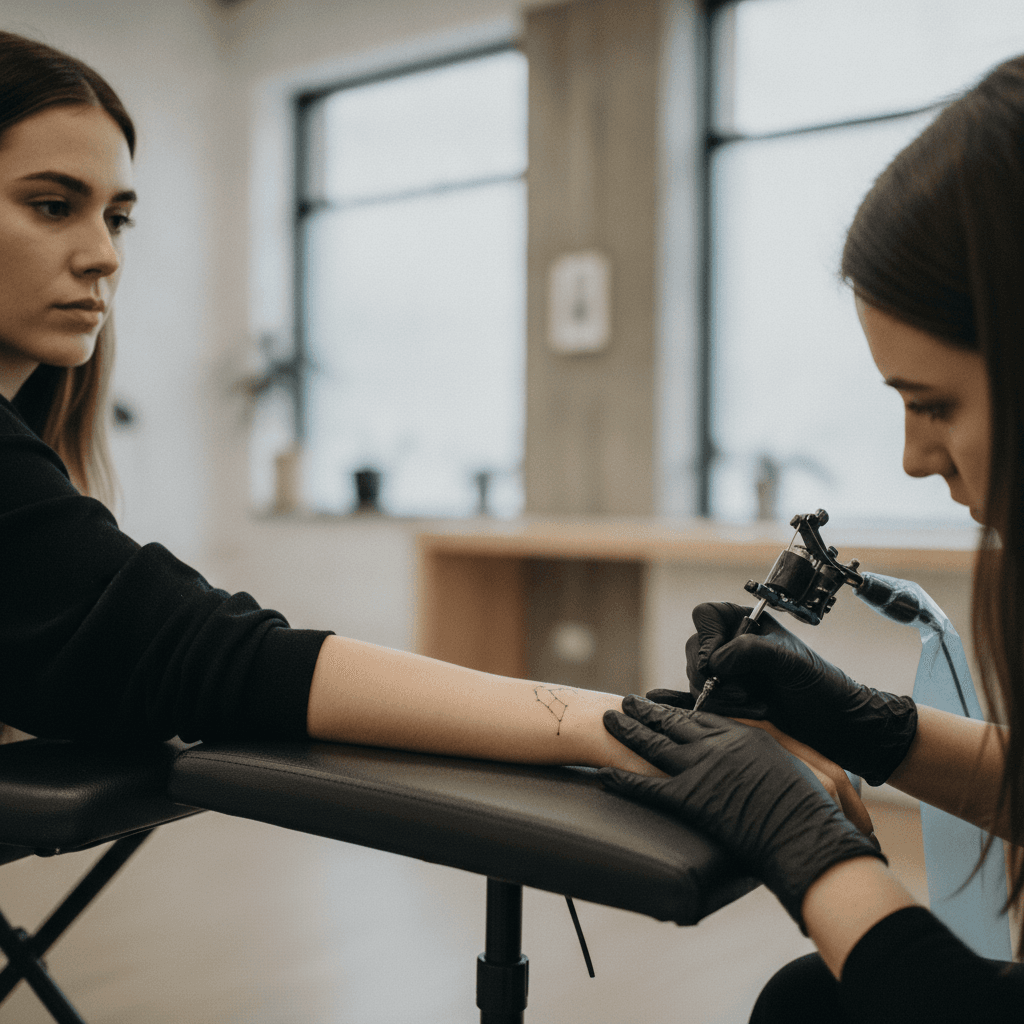
Most people walking in for their first small tattoo assume the price scales with the ink. A dime-sized heart should cost pocket change, a two-inch flower somewhere in the middle, and only sleeves should feel expensive. Real shop pricing does not work that way. A reputable studio has a floor price called the shop minimum, and that number sets the actual cost of anything under roughly three inches, no matter how quick the piece is. Understanding where the minimum sits, why it exists, and what pushes a small tattoo above it is the difference between a smooth first appointment and a confused argument at the counter.
What a shop minimum actually is
The shop minimum is the smallest amount a studio will charge for any tattoo, regardless of how tiny or fast. In 2026 the typical U.S. shop minimum sits between $100 and $200, with big-city studios in New York, Los Angeles, and San Francisco often starting at $150 to $250. Smaller markets and suburban shops sit closer to $80 to $120. That minimum covers setup, sterile supplies, needle cartridges, ink caps, disposable machine bags, and the artist's time booking and prepping the station. A single-needle line tattoo that takes eleven minutes still eats a full cartridge, a fresh grip, and a slot on the artist's calendar, which is why "it's only tiny" is not a discount argument that lands anywhere.
Some artists list the minimum publicly on their booking page. Others quote it during the consultation. If you are hunting a bargain the smart move is to filter by that listed number before you fall in love with an artist whose floor is $250. Under $100 minimums do exist, mainly at street shops, apprentice chairs, and flash days, but check portfolios carefully because low floors often correlate with less selective booking.
Real 2026 price ranges by size
Small tattoos usually fall into three practical bands. Below is where each one lands at a mid-tier professional studio in a mid-to-large U.S. city.
- Under 1 inch (single symbol, tiny script, dot cluster): $100 to $180, essentially the shop minimum
- 1 to 2 inches (small floral, minimalist animal, short word): $150 to $300
- 2 to 3 inches (detailed micro piece, small ornamental, palm-sized fine-line): $250 to $450
Fine-line and single-needle work usually sits at the top of each band because the technique demands slower passes, steadier hand control, and often a more experienced artist. Traditional bold-line small pieces tend to sit at the bottom because the line weight forgives faster work and the style has a deep bench of artists competing at every price tier. A small color piece can add $50 to $150 to any of those numbers because color takes extra time to pack and blend, and it burns through more ink.
Placement changes the price more than people expect
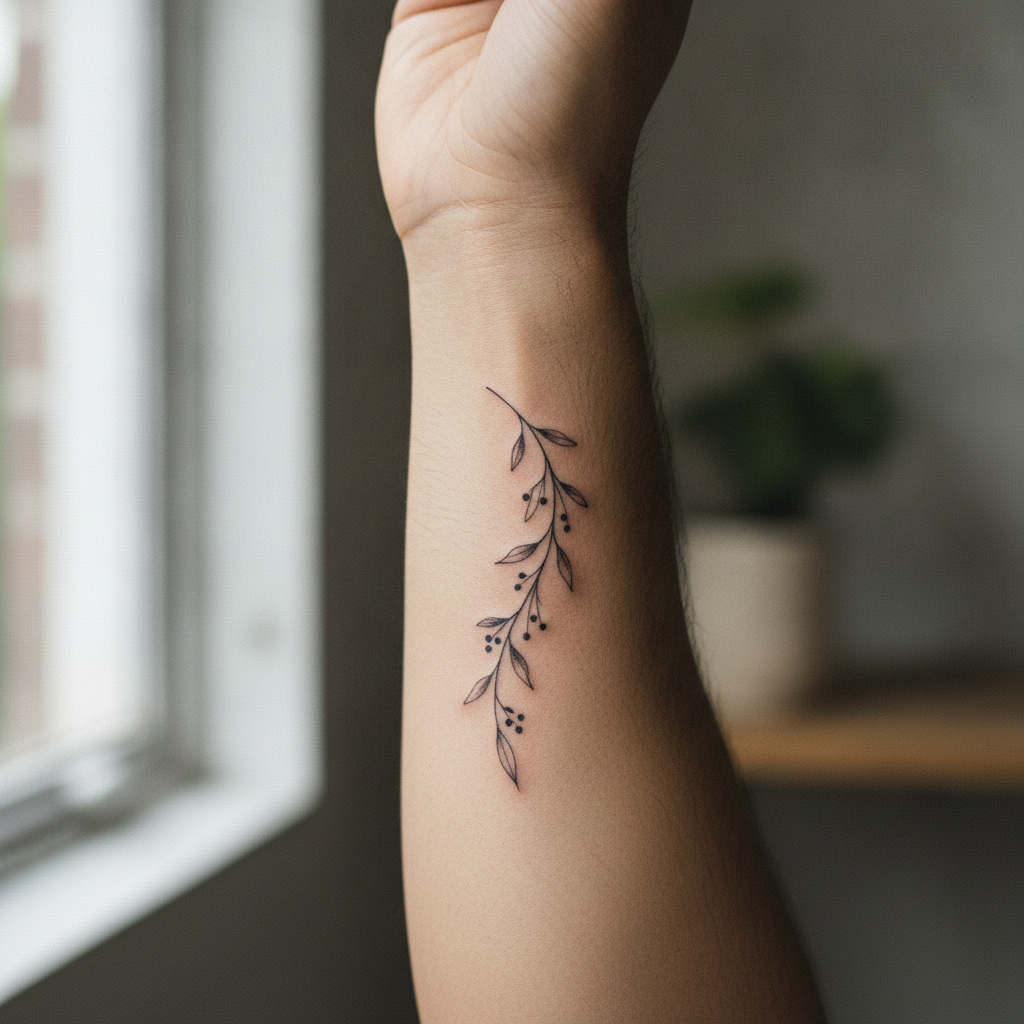
Two identical designs can price twenty to forty percent differently based on where they land on the body. Fingers, hands, feet, inner ears, and behind the ear all charge a premium because the skin is thin, uneven, or high-movement, which slows the artist and raises the risk of touch-ups. Ribs and sternums add time for the same reason plus client pain management, which usually means more breaks. A quarter-sized flower on a forearm might be a clean $150 minimum. The same flower on a middle finger from the same artist can quote at $250 to $350, with a warning that fingers fade fast and may need a paid touch-up inside a year. Neck and behind-the-ear placements sit in the middle, priced up because the artist has to reposition constantly to reach the skin at the right angle.
Wrists and ankles are the sweet spot for first-timers because the surface is flat, the pain is manageable, and artists can knock out clean small work quickly without pricing hazard pay into the quote. If you are budgeting a first small piece and are flexible on placement, one of those two spots gives you the most tattoo for the money. For more context on how location shifts pricing across the body, see the wrist tattoo cost guide and the finger tattoo cost guide.
Artist tier is the biggest price lever
Skill tier moves small-tattoo pricing more than size does. Apprentices at a supervised studio often charge $60 to $100 for a small piece, sometimes for free during their first months while they build a portfolio. Solid mid-career artists with a booked calendar and three to seven years of experience sit at the $150 to $300 range for small work. In-demand artists with a waitlist, a signature style, and social media traction routinely charge $300 to $600 for a piece that fits on a business card, and specialists in micro-realism or hyper-detailed fine-line can push $500 to $900 for a two-inch design because the work takes two to four hours instead of thirty minutes.
The math to remember: for anything under three inches, you are mostly paying for the artist, not the surface area. If the artist you love charges $400 for a tiny piece and you can only spend $200, either pick a different artist or wait and save. Trying to negotiate a name-tier artist down to a mid-tier rate is the fastest way to sour the relationship before the machine turns on. If you want a deeper look at how hourly and flat-rate quotes work at different tiers, the hourly vs flat-rate pricing breakdown is worth reading before your consultation.
The full budget: what you actually spend
The sticker price on the tattoo is not the full spend. A realistic first small tattoo budget in 2026 looks like this:
- Tattoo itself: $150 to $300 for a solid mid-tier piece
- Deposit: $50 to $100, applied to the final price at most shops
- Tip: 15 to 25 percent, so $30 to $75 on a $200 tattoo
- Aftercare supplies: $15 to $35 for a healing balm, unscented soap, and a Saniderm-style bandage
- Optional touch-up: usually free within 6 to 12 months at reputable shops, occasionally $50 to $100 elsewhere
Total realistic outlay for a first small tattoo: $250 to $450 all in. Coming in expecting a clean $100 flat is where most first-timers get frustrated. Coming in with $350 budgeted gives you room to choose the right artist, tip well, and heal properly without cutting corners on any part. If deposits or tipping etiquette are unfamiliar territory, the tattoo deposit guide and the tipping guide both cover the specifics.
When a small tattoo isn't actually cheaper
Certain small tattoos punch well above the shop minimum for reasons that catch first-timers off guard. Portraits under two inches usually cost as much as a palm-sized portrait because the tight scale demands the same or more precision. White ink and UV-reactive small tattoos price higher because the inks are harder to work with and fade faster, meaning the artist is factoring rework risk into the quote. Cover-ups of small existing tattoos rarely cost less than $200 to $300 even when the original was tiny, because covering requires a larger new design plus color and shading work to disguise the old ink. Watercolor micro pieces sit at the pricey end of small work too, since the style depends on layered pigment washes that add session time.
The rule of thumb: if the style or placement is technically demanding, the "small" adjective stops discounting the price. Simple linework in a common style at a normal placement is where small stays affordable.
Frequently asked
Can I get a small tattoo for under $50? Almost never at a legitimate studio. Anything under $50 is either an apprentice piece, a flash special that a friend is doing at cost, or a street-shop rate you should investigate carefully before booking. The shop minimum exists because supplies, setup, and sterilization have real costs the studio has to cover. Chasing sub-$50 pricing usually means trading hygiene, skill, or both.
Is a flash tattoo cheaper than a custom small tattoo? Usually yes, sometimes significantly. Flash designs are pre-drawn pieces the artist can execute quickly, which is why flash days often offer small pieces at $80 to $150 flat, well below the artist's normal minimum. The trade is that you cannot customize the design meaningfully, and popular flash sheets get inked on many people. If you want a one-of-one piece, custom is worth the premium.
Do small tattoos hurt less? Somewhat, mainly because the session is shorter. The needle sensation is the same at any size. On soft placements like forearm or thigh a small piece is easily tolerable for most first-timers. On bony or thin-skin placements like fingers, sternum, or ankle bone, even a tiny tattoo can feel sharp because the intensity per minute is the same as on a bigger piece.
How long does a small tattoo actually take to do? The tattoo itself usually runs 15 to 45 minutes for a piece under two inches, with fine-line work taking longer. Add another 20 to 30 minutes for stencil placement, consent forms, station setup, and aftercare instructions at the end. Plan for a full hour at the studio even for the tiniest piece.
Do small tattoos need touch-ups more often? Fine-line and single-needle small tattoos can soften faster than bold-line traditional work because the lines are thinner and the ink deposit is shallower. Small tattoos on fingers, hands, and feet nearly always need a touch-up inside 12 to 24 months due to skin turnover and friction. Small pieces on the forearm, thigh, or upper arm in bold linework can hold clean for many years without any touch-up at all.
Is it worth traveling to a cheaper city for a small tattoo? Only if you were traveling anyway. The savings on a small piece rarely cover flights, hotels, and time. Traveling makes financial sense on larger multi-session work where the savings can hit four figures. For a $200 to $400 piece, book locally with the best artist you can afford and skip the logistics.