aftercare
Stick-and-Poke Tattoo Aftercare: Healing a Handpoked Piece
Stick-and-poke tattoos heal faster than machine work but scab differently and drop dots more often. Here is how to care for a handpoked piece across the full two-week window.

Stick-and-poke tattoos sit shallower in the skin than machine tattoos, which changes almost everything about how they heal. The scabs are thinner, the redness fades faster, and ink drop-out is more common because each dot was placed by hand rather than driven in by a coil or rotary motor. If you just got a handpoked piece, whether from a studio artist or a friend with a sterile setup, the two-week window ahead is where you either lock in a crisp result or watch half your dots wash away in the shower.
Why stick-and-poke aftercare differs from machine tattoos
A machine tattoo pushes ink at 80 to 150 hits per second, driving pigment consistently into the dermis at a depth of about 1 to 2 millimeters. A stick-and-poke deposits ink one hand-driven dot at a time, and the depth varies with the artist's pressure, angle, and needle grouping. That means a handpoke sits closer to the surface on average, so your body treats it more like a deep scratch than a punctured layer of full-saturation color.
The practical effect is that scabs form in patchy islands instead of one continuous crust, and those scabs are thin enough to flick off accidentally. You also lose more ink during healing than you would with a machine tattoo. Even a well-executed handpoke commonly drops 10 to 20 percent of its dots in the first month, and heavy aftercare mistakes can push that number past 40 percent. The goal is not to prevent all dot loss, since some is baked into the process, but to keep it in the lower range so a single touch-up finishes the piece.
Shallow ink placement also means faster healing overall. Most stick-and-pokes are surface-closed by day 7 and fully healed by day 14, compared to the 2 to 4 week range for a comparable machine tattoo. That shorter window is generous but unforgiving. Every mistake counts more because there is less scab to protect the ink underneath.
The first 24 hours
Whatever wrap the artist put on, leave it alone for the length of time they specified. Plastic cling wrap comes off in 2 to 4 hours. Second-skin adhesive bandages like Saniderm stay on for 24 hours on the first change. If you did the piece yourself or a friend used no wrap at all, gently rinse the area with lukewarm water and unscented soap within the first hour and pat it dry with a clean paper towel.
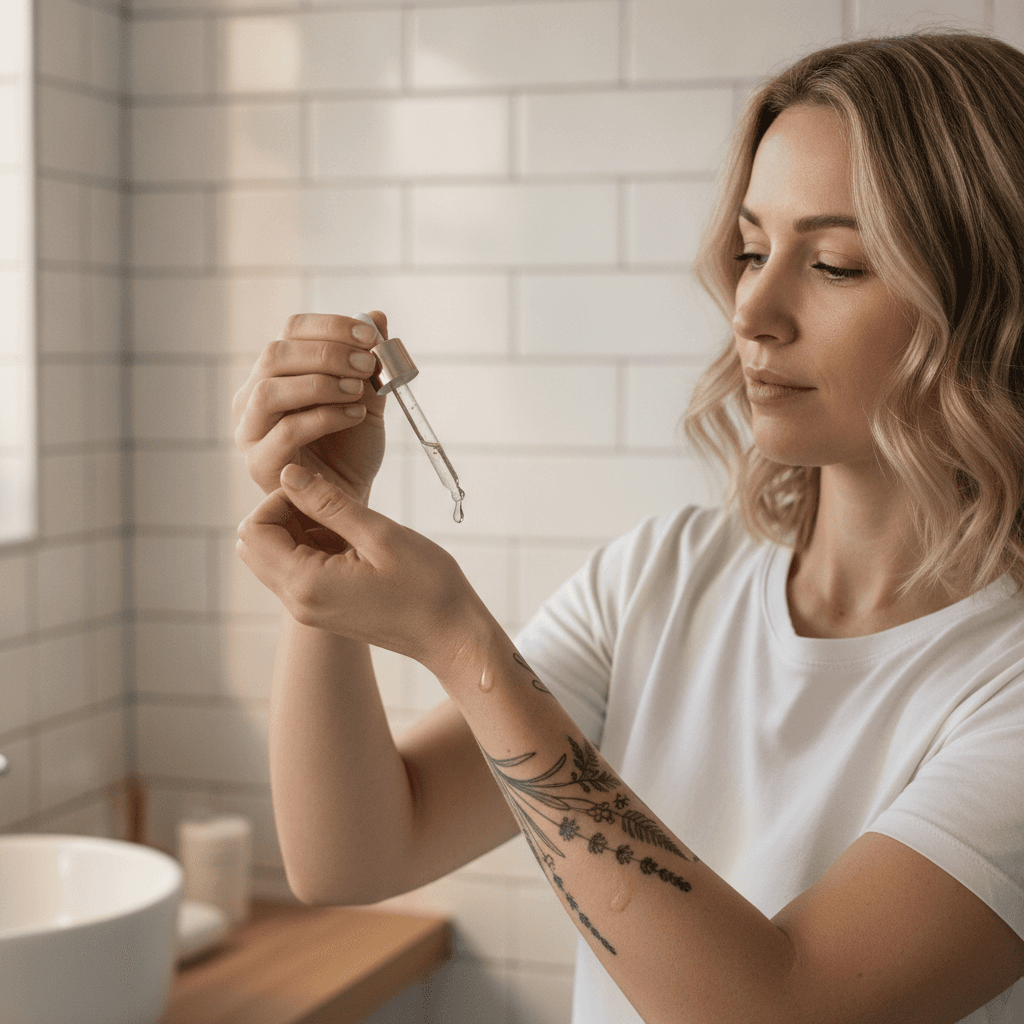
After the wrap comes off, wash the tattoo with fragrance-free soap and clean fingertips. Never use a washcloth on a fresh handpoke. The loose weave will catch on the raised dots and pull ink out. Rinse until the plasma and excess ink stop coming off, pat dry, and apply a rice-grain-sized amount of unscented ointment or a thin tattoo balm. Aquaphor works but tends to be too heavy for shallow handpokes and can pool in the punctures, so many handpoke artists prefer a lighter option like Hustle Butter or a plain shea-based balm. See our best lotion for a new tattoo breakdown for the full comparison.
Expect some clear-to-yellow plasma weeping for the first 12 hours. That is your body sealing the wound, not infection. If you sleep on that first night, put a clean cotton sheet over the area rather than pressing the tattoo directly against the mattress.
Days 2 through 7: scabbing and dot loss
By day 2, thin scabs start forming over the dots. On a handpoke, these look like tiny raised islands rather than a solid film, and the color underneath can look muddy or faded, which is normal at this stage. Wash the tattoo twice a day with lukewarm water and unscented soap. Apply a thin layer of ointment or unscented lotion two to three times a day, no more. Over-moisturizing is one of the top three reasons handpoked dots fall out, because saturated skin cannot form the scab needed to hold pigment in place while it settles.
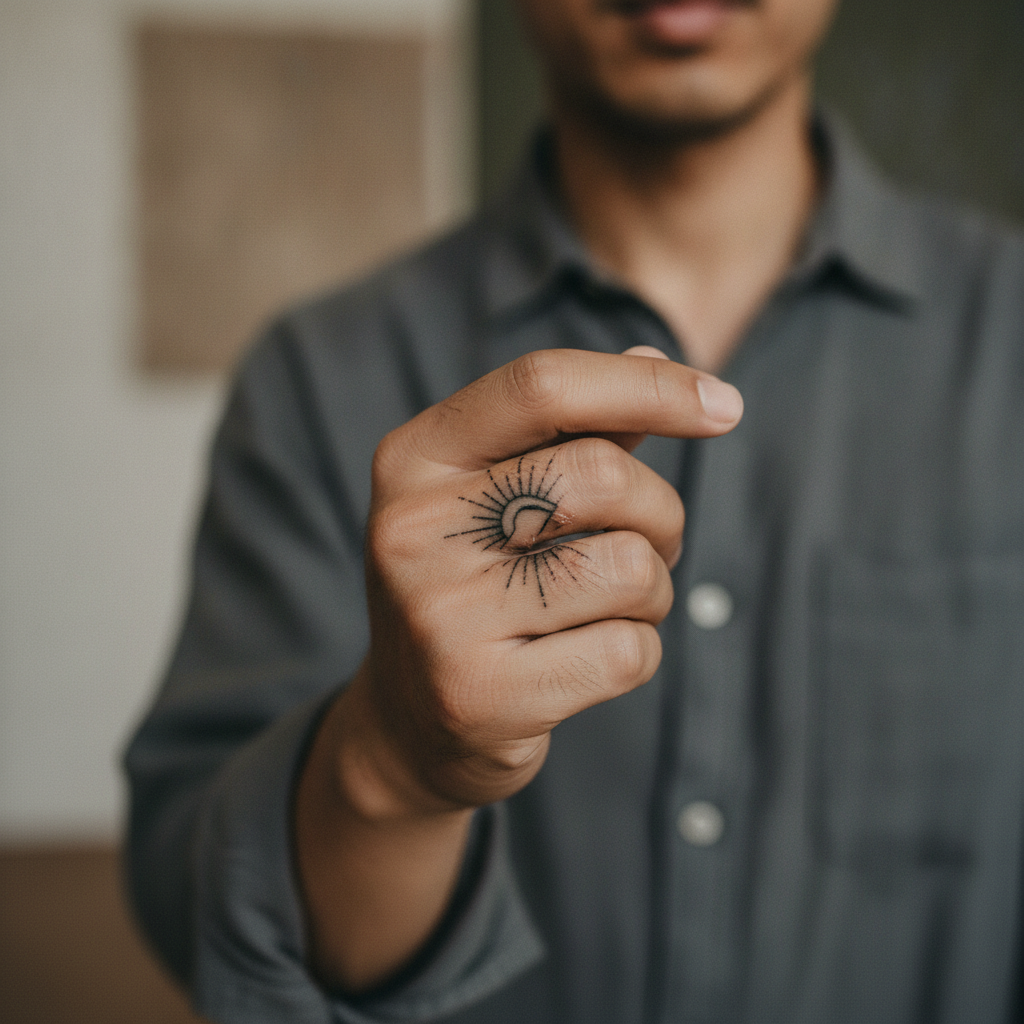
Around day 4 to 6, the itching starts. Do not scratch. Slap the area if you have to, or press a cool clean cloth against it for 30 seconds. Scratching a handpoke lifts scabs at exactly the moment your body is still anchoring pigment underneath, and the ink loss from a single scratched patch can be visible for the life of the tattoo. This is also the window where people wreck their pieces in the shower. Keep water pressure off the tattoo, keep showers under 10 minutes, and never soak the area in a bath, hot tub, or pool. If you need a refresher on shower discipline, our showering with a new tattoo guide covers the specifics.
Days 8 through 14: peeling and the final look
By day 8, the scabs start flaking off on their own. Handpoked scabs are so thin that they often come off during a normal wash without you noticing. Do not pick, even at a scab that is 90 percent lifted. Let the last 10 percent go on its own schedule.
Underneath the peeled skin you will see the true saturation for the first time. It is common for handpoked tattoos to look 20 to 30 percent lighter than they did on day 1, and stippled or dot-shaded work often looks patchy where individual dots dropped. Do not panic. The skin above the pigment is still slightly cloudy for another week or two, and true color emerges around day 21 to 28. Only assess touch-up needs after the one-month mark.
Switch from ointment to a plain unscented lotion around day 7 to 10. Continue moisturizing daily for another two weeks after visible healing, because the skin above your handpoke is still rebuilding its full barrier and will look ashy or dull without hydration. Once fully healed, sunscreen becomes the single most important thing you can do, since UV fades handpoked tattoos faster than machine tattoos due to the shallower ink depth. SPF 30 minimum, reapplied on any day you will be outside for more than 30 minutes.
Common problems and how to fix them
- Ink pooling under a bandage: If Saniderm traps plasma and ink into a dark puddle, that is normal. Leave the bandage on for the full 24 hours, then peel it off in the shower under running lukewarm water.
- Green or yellow pus, spreading redness, or fever: Signs of infection. See our signs of tattoo infection breakdown and get medical attention if the redness expands past the tattoo outline after day 3.
- Whole sections looking blank after peel: The dots probably came out with an early scab. Wait the full 30 days before deciding on a touch-up.
- Raised, itchy tattoo weeks after healing: Possible ink allergy, usually to red or yellow pigments. Read our allergic reaction guide for next steps.
Frequently asked
Do stick-and-poke tattoos always fade more than machine tattoos? Yes, on average. The shallower ink depth means UV, exfoliation, and skin turnover reach the pigment faster. Expect a well-cared-for handpoke to fade 15 to 25 percent more over 5 years than a comparable machine tattoo, and plan on a touch-up every 3 to 5 years if you want it to stay crisp.
Can I use Saniderm on a stick-and-poke? Yes, but change it more often than you would on a machine tattoo. First bandage comes off at 24 hours. A second bandage is optional and should stay on no longer than 3 days. Handpokes weep less plasma, so the adhesive can start irritating the shallow scabs if left too long.
Why did my handpoke look great on day 1 and washed out on day 14? This is the single most common handpoke healing question and the answer is almost always normal settling. The top layer of skin above the ink is cloudy for the first 2 to 3 weeks. Wait until day 30 to judge the final result, then decide on touch-ups from there.
Is it safe to work out during handpoke healing? Light cardio is fine after day 3. Avoid heavy sweating on the tattoo, contact sports, and anything that stretches the healing skin sharply for the first 10 days. Our working out after a new tattoo guide breaks down the timing by exercise type.
Can I get a touch-up on my own handpoked tattoo, or should I go to an artist? Wait 30 days minimum before assessing, then take it to an artist who does handpoke work. Retouching over recently healed skin risks blowing out the dots, and matching the original dot spacing by hand takes practice. Expect a touch-up to run $50 to $150 depending on size and studio.
When can I put my healed handpoke in the sun without sunscreen? Never. Every day of unprotected UV exposure ages the pigment, and handpokes are hit harder by fading than machine tattoos. If you plan to be outdoors, apply mineral SPF 30 or higher, and reapply every 2 hours in direct sun.