style guides
Surrealism Tattoos: Style Guide, Composition, and Longevity
Surrealism tattoos pull imagery from dreams and distort scale, gravity, and anatomy. Here is how the style works on skin, what it costs, and how it ages.
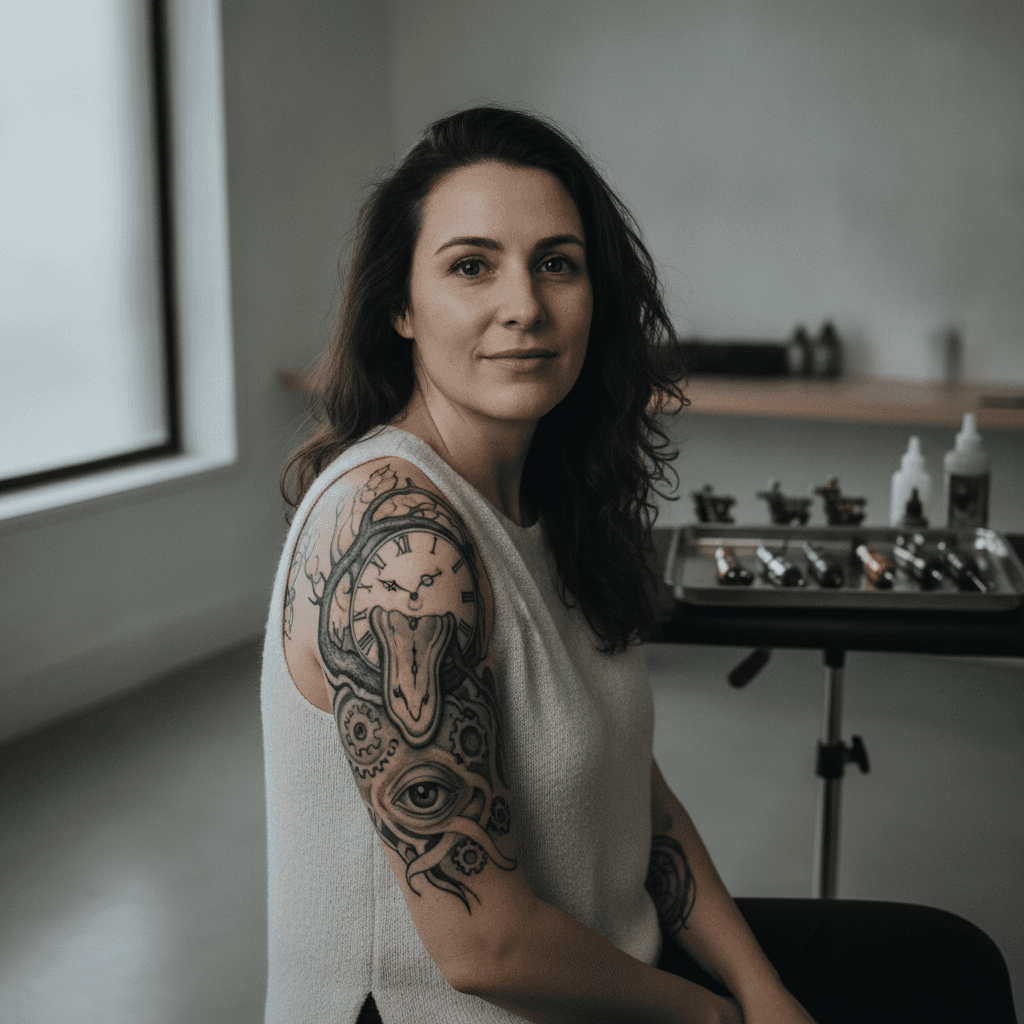
Surrealism tattoos take the visual language of Dali, Magritte, and Ernst and put it on skin: melting clocks, floating eyes, doorways in torsos, staircases that fold into themselves. The style rewards artists who can compose an image the way a painter would, not just render a subject cleanly. If you are considering one, the choices you make about placement, size, and shading will decide whether the piece reads as a dreamscape or a busy collage in five years.
What defines a surrealism tattoo
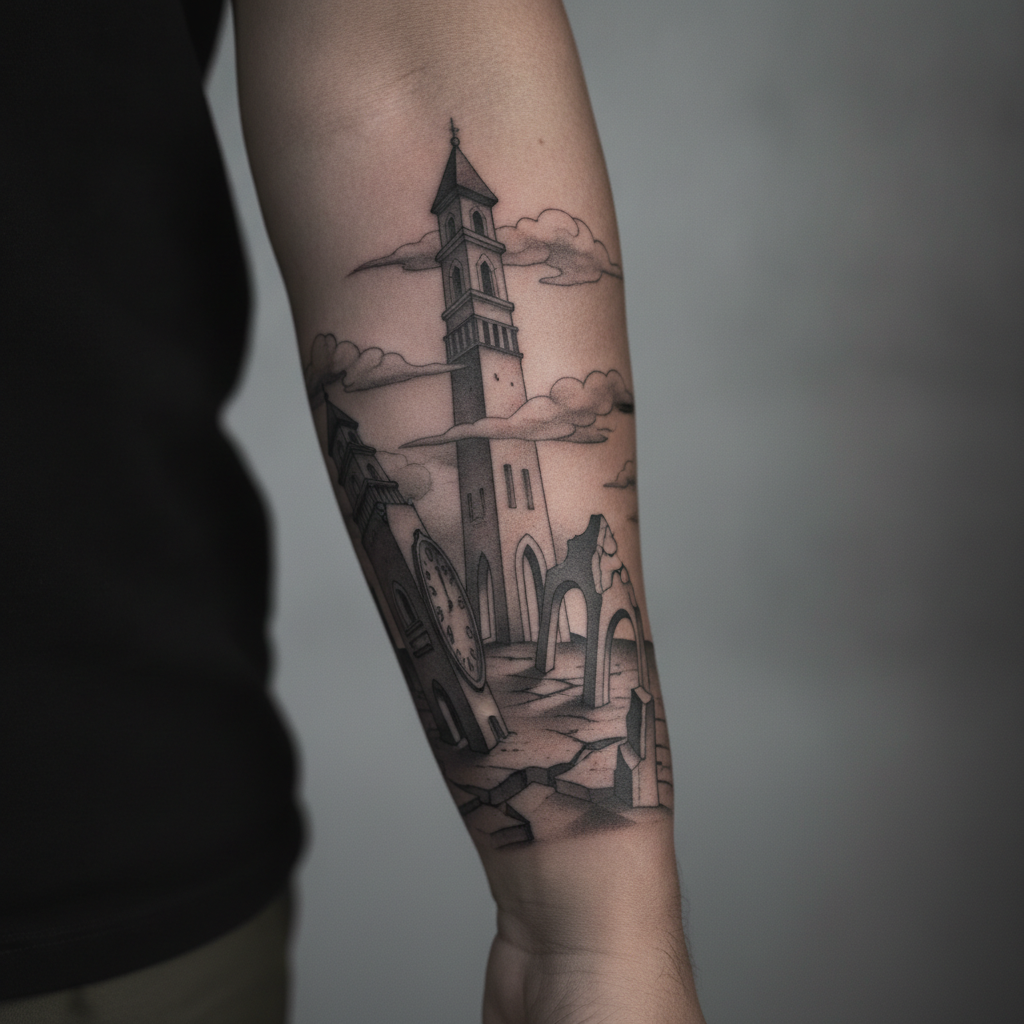
Surrealism is a visual approach, not a technique. The rendering can be photorealistic, illustrative, or fine-line, but the subject matter breaks a rule of the physical world. A pocket watch drips off a branch. A face opens into a corridor. A hand holds a moon the size of an orange. The style descends directly from the 1920s Surrealist painters, and the best tattoo versions treat the source material seriously rather than stitching together stock dream imagery.
Most surrealism tattoos today sit in black-and-grey because grey wash carries atmosphere better than flat color. Soft gradients let one object recede into shadow while another sits sharp in the foreground, which is what sells the illusion. Color surrealism exists and can be striking, but it demands a color specialist and ages faster, especially warm reds and yellows.
The style overlaps with realism in technique and with black-and-grey in palette, but the defining feature is composition. A realism tattoo of a wolf is realism. A wolf whose ribcage opens into a starfield is surrealism.
Composition rules that actually hold on skin
Skin is not canvas. It moves, folds, stretches, and pulls color unevenly across pores and fine hair. Surrealism relies on the eye tracking a clear focal point, and skin punishes cluttered focal points harder than paper does. Strong surrealism tattoos usually pick one anchor subject at eye-level scale and let secondary elements dissolve into wash around it.
The classic beginner mistake is packing three or four distinct dream objects into a forearm panel at equal weight. On the healed skin, everything blurs to the same visual mass and you lose the read. Ask your artist to sketch the composition at 1:1 scale on tracing paper first and hold it against the placement. If you cannot tell where your eye lands from arm's length, the design is too busy.
Symmetry helps. Surrealist painters used strong horizons, mirrored figures, and single central subjects because those anchors let the viewer accept the strange details. On skin the same logic applies: a torso piece built around a central spine axis reads far better than one weighted to one side.
Placement and size
Surrealism needs room. The style trades on gradient and negative space, and both collapse below a certain footprint. As a rough working minimum:
- Wrist or ankle: usable only for a single-object micro composition, not a scene
- Forearm panel: 5 to 7 inches vertical is where scenes start to breathe
- Upper arm or bicep: strong home for medium pieces around 6 to 8 inches
- Thigh, ribcage, back: the natural placements for full dreamscapes, 10 to 18 inches
- Chest and sternum: excellent for symmetric compositions with a central figure
Ribcage and sternum pieces are punishing to sit through and heal, but they give the artist a large uninterrupted canvas with natural symmetry. If you are set on a full-scene surrealism piece and can handle the pain, the thigh is the friendliest large canvas. It heals quickly, ages slowly, and the compound curve gives the artist depth to work with.
Needles, shading, and technique
Most surrealism artists work primarily with round shaders and magnums. A 9 or 11 round shader handles fine detail on eyes, feathers, and small objects. Magnum groupings from 13 to 23 do the wash gradients that build atmosphere. Some artists incorporate a whip-shading pass with a smaller needle for texture on skin, cloth, and shadow transitions.
Ink brands matter less than saturation technique. Consistent grey wash comes from patient dilution and passes, not from a specific brand. What you should look for in an artist's portfolio is the quality of their darkest blacks against their lightest greys in a healed photo. Fresh photos flatter every artist. Healed photos reveal how much of the shading actually stayed.
What it costs
Surrealism sits at the top of the pricing tier because the artists who do it well are usually the same artists who do high-end realism or fine art tattoos. Expect $200 to $400 per hour in the US and Western Europe, with top-tier specialists booking at $500 or more and often requiring flat-rate day sessions.
Rough real numbers for 2026:
- Small single-object piece, 3 to 4 hours: $600 to $1,600
- Forearm scene, 8 to 12 hours across 2 sessions: $1,600 to $4,800
- Half sleeve dreamscape, 20 to 30 hours across 4 to 6 sessions: $4,000 to $12,000
- Full back piece, 60 to 100 hours across 8 to 15 sessions: $12,000 to $40,000
Deposits for surrealism artists tend to run higher than average, often $200 to $500, because the design work upfront is heavier. Expect to pay for a consultation and expect at least one round of revisions before you sit down for line day.
How surrealism ages
The style ages well when it is designed with age in mind. The core question is whether the composition still reads once fine detail softens. Skin migrates a small amount of ink outward every year, and after ten years anything under 1 millimeter of separation between elements tends to fuse into a single tonal mass.
Good surrealism artists design with this in mind. They keep breathing room between subjects, avoid stacking fine detail on top of fine detail, and use grey wash rather than densely packed fine lines to build atmosphere. Poorly designed surrealism pieces, the ones that look impressive in the fresh photo but collapse at year five, almost always failed the negative space test on day one.
Color surrealism ages hardest. Reds, yellows, and pastels fade fastest, and once they lose saturation the illusion of depth in a dreamscape breaks. If you want color surrealism, plan on a touch-up cycle every three to five years and pick an artist who works color routinely rather than as a side skill.
Frequently asked
Is surrealism a good style for a first tattoo? Not really. Surrealism relies on scale and negative space, and first-tattoo instinct is usually to go smaller and safer. If you are set on surrealism as your first piece, get consultations with two or three specialists and be open to sizing up beyond your initial comfort zone. A tiny surrealism tattoo almost always disappoints once healed.
How many sessions will my piece take? A single forearm scene typically runs two sessions. Half sleeves run four to six. Back pieces run eight to fifteen. Most surrealism artists book sessions of four to seven hours each, with two to four weeks between to let the skin heal enough to sit again.
Can I bring reference images from Dali or Magritte directly? Yes, and most good artists welcome it. What they will not do is copy a painting one to one. Fine art paintings are compositions built for canvas, and translating them to a curved body part requires a redraw. Bring references as mood and direction, not as a design brief.
Should I get black-and-grey or color surrealism? Default to black-and-grey unless you have a specific color-driven idea and access to a proven color specialist. Black-and-grey holds better long term, reads cleaner from a distance, and forgives artist limitations more than color does.
How do I vet a surrealism artist? Look at healed photos, not fresh work. Ask for photos at one year and beyond. Look for composition variety across their portfolio: an artist who only draws one type of dreamscape may not be able to design yours from scratch. Ask how they handle revisions on the design before line day.
Will a surrealism tattoo still make sense in twenty years? The style itself will not date the way trend-driven aesthetics do. Surrealist painting is a century old and still reads as timeless. What ages a surrealism tattoo poorly is design choices, not the style. Well-composed pieces with room to breathe will look as intentional at twenty years as they did at one.