aftercare
Tattoo Aftercare in Cold Weather: Winter Healing Guide
Winter air dries a healing tattoo faster than any other season. Here is how to protect ink through cold, wind, and indoor heat without scabbing or cracking.

Cold air pulls moisture out of healing skin faster than any other environmental factor, and indoor heating makes it worse. A tattoo done in July heals in a bathroom that sits around 45 to 55 percent humidity. The same tattoo done in January often heals in a room hovering at 20 to 30 percent, which is drier than most deserts. That single variable changes how you wash, moisturize, dress, and sleep for the first three weeks.
This guide walks through the winter-specific adjustments that keep a fresh tattoo saturated, flexible, and evenly healed when the weather turns cold. If you are still deciding on placement or planning a piece for the season, pair this with our tattoo healing timeline day by day so you know which stage matches which symptom.
Why winter healing is different
Cold weather affects a tattoo through three overlapping mechanisms. Outdoor air holds less moisture at lower temperatures, so wind against exposed skin evaporates the plasma and lymph fluid a fresh tattoo weeps in the first 48 hours. Indoor heating systems, especially forced-air furnaces and electric radiators, drop indoor relative humidity into the teens and twenties. And your peripheral circulation slows in the cold, which means blood flow to a healing forearm, calf, or hand tattoo is measurably reduced compared to summer.
The visible result shows up around day 4 to 7. Instead of a soft, flexible layer of dry skin lifting off in small flakes, you get thick, brittle scabs that crack when you bend the joint. Cracked scabs pull pigment with them. That is the mechanism behind most winter blowouts and patchy color loss, and it is almost entirely preventable with humidity control and a stricter moisturizing schedule.
Indoor humidity is the biggest lever
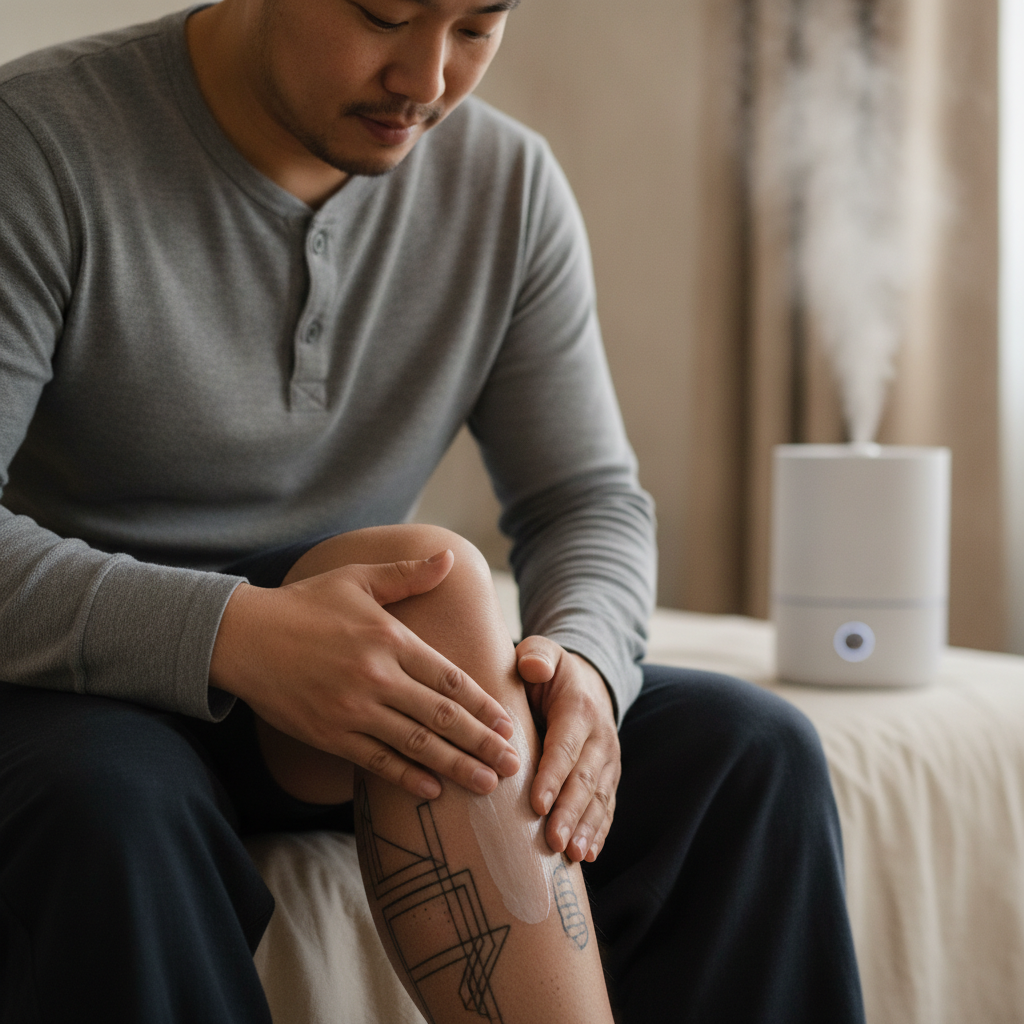
If you get one thing right this winter, run a humidifier in the room where you sleep. Aim for 40 to 50 percent relative humidity, measured with a cheap hygrometer that costs less than $15. A cool-mist humidifier in a standard bedroom needs to run 8 to 12 hours a day to hold that range through the heating season. Warm-mist humidifiers work too, but they raise the ambient temperature slightly and use more electricity.
Position the humidifier within 6 to 10 feet of where you sleep, not across the room. Refill it with distilled water if your tap is hard, because minerals get aerosolized and settle on skin and bedding. Clean the reservoir weekly with a diluted white vinegar rinse. A dirty humidifier is one of the few ways aftercare can actively harm a tattoo, since bacterial aerosol on a raw wound is a real infection route.
Turn down the thermostat by 2 to 3 degrees at night if you can tolerate it. Cooler rooms hold humidity better than hot ones, and sweating under heavy blankets is worse for a healing tattoo than a slightly cool sleep environment.
Wash and moisturize on a tighter schedule
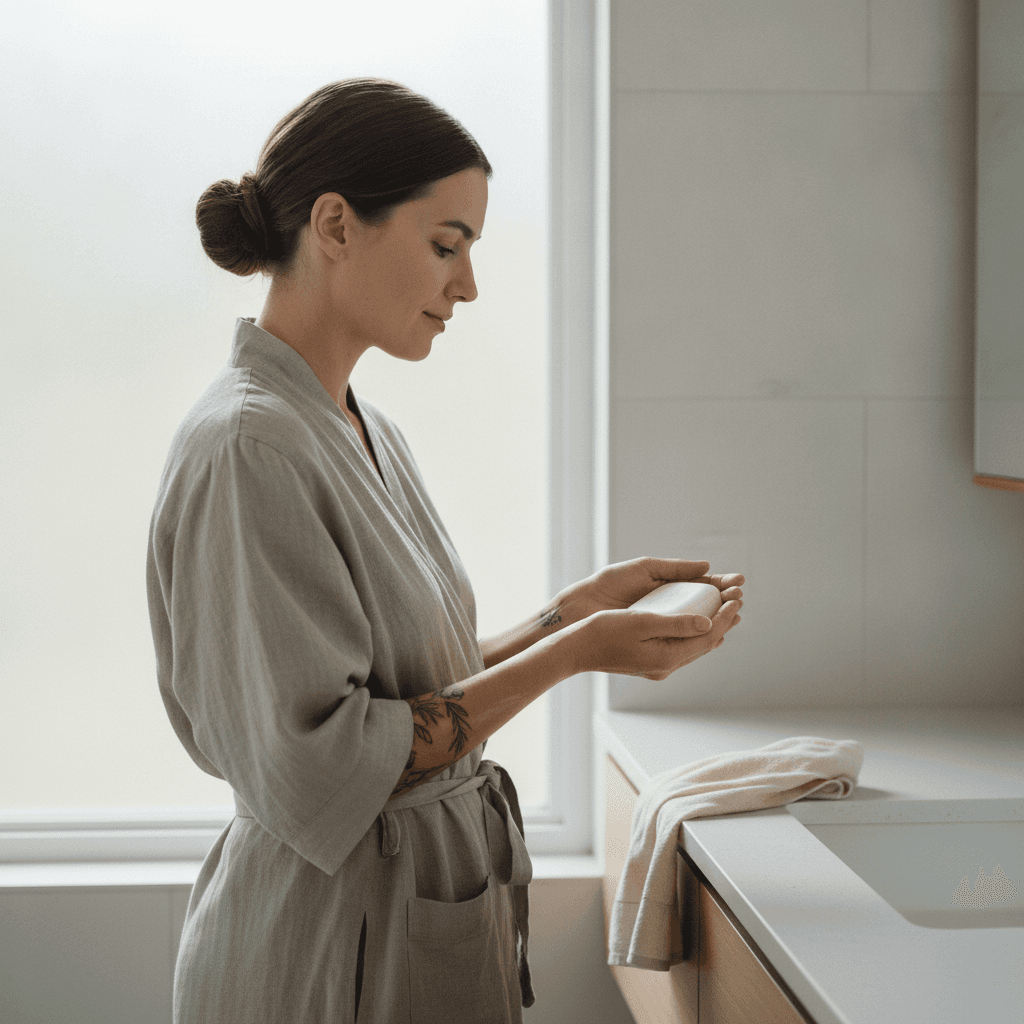
Standard aftercare says wash 2 to 3 times a day and moisturize when the skin feels tight. In winter, both numbers go up. Wash 3 times a day with lukewarm water and a fragrance-free liquid soap for the first 5 days, then drop to twice a day through the peeling stage. Never use hot water on a fresh tattoo, and shorten shower time to 5 minutes if the bathroom air is dry. Long hot showers strip the lipid layer that a healing tattoo relies on to retain moisture between washes.
Moisturize 4 to 6 times a day for the first two weeks, which is roughly double the summer cadence. Apply a rice-grain-sized amount and rub it in until the skin looks matte, not shiny. A greasy layer traps bacteria and slows oxygen exchange. Fragrance-free options that work well in dry climates include Aquaphor for the first 3 to 4 days, then a switch to a lighter lotion like Cetaphil, CeraVe, or Lubriderm unscented. Avoid anything with menthol, eucalyptus, cocoa butter, or "healing" essential oils, since those either sting broken skin or trigger reactions.
The switch from ointment to lotion usually happens earlier in summer. In winter, extend the ointment window by one to two days if the tattoo still feels tight or looks red at the edges after washing.
Clothing, wind, and outdoor exposure
Fabric choice matters more in winter because you are covering the tattoo constantly. The first 3 to 5 days, cover a fresh tattoo with a breathable cotton layer directly against the skin. Merino wool works if it is a fine 17.5 micron or lower base layer, but coarser wool catches on scabs and can pull them off. Never put synthetic thermal fabrics like polyester or polypropylene directly on a healing tattoo for the first week, because they trap sweat against broken skin.
Wind is a specific risk for hand, wrist, neck, and face tattoos. Even 10 minutes of walking in sub-zero wind will visibly dry a fresh tattoo and can cause it to crack by the time you get home. Cover exposed tattoos with a loose cotton or silk layer before going outside, and reapply moisturizer within 30 minutes of coming back in. Gloves over a fresh hand tattoo should be seamless and thin for the first week to avoid mechanical irritation.
Snow, salt, and de-icer chemicals on your hands or feet during a healing hand or foot tattoo are all irritants. Wash the tattoo immediately if it makes contact, and pat dry with a clean paper towel rather than a shared bathroom towel.
Warning signs specific to winter healing
- Deep, plate-like scabs that lift at the edges before day 10, instead of soft flakes. This means your skin is too dry. Increase moisturizing to every 2 hours during waking hours.
- A dull, chalky finish on the healed tattoo at week 4. Usually reversible with 6 to 8 weeks of consistent moisturizing after healing is complete.
- Persistent redness at the edges past day 7. Common in winter because cold slows the inflammatory resolution phase, but should still be improving daily. If it is spreading or warm to the touch, see a doctor.
- Cracking across a joint (elbow, wrist, back of knee) when you bend it. Stop bending as much as possible, moisturize the crack immediately, and consider switching back to a thin layer of ointment for 48 hours.
Most of these resolve if you catch them in the first week. Waiting until week 3 to address dryness means you are already looking at touch-up territory, which typically runs $50 to $150 depending on the piece.
Frequently asked
Does a tattoo take longer to heal in winter? Yes, usually by 3 to 5 days. Full surface healing in summer averages 2 to 3 weeks. In winter, expect 3 to 4 weeks before the top layer is fully closed and matte, and 4 to 6 months for deeper dermal settling regardless of season.
Can I get a tattoo right before a ski trip? Not recommended. Sun reflection off snow at altitude delivers UV exposure equivalent to a summer beach day, and a fresh tattoo under a ski jacket sweats against synthetic base layers for hours. Wait at least 4 weeks after the tattoo before any ski or snowboard trip.
Is it okay to use a heated blanket over a healing tattoo? Skip it for the first 2 weeks. Heated blankets and heating pads dry the skin further and can cause uneven healing on the side that touches the heating element. A regular wool or down comforter is fine.
What about winter tanning beds during healing? Never. Tanning beds are worse than winter sun for a fresh tattoo, and they fade even a fully healed tattoo faster than any other UV source. Wait until the tattoo is fully healed at 4 to 6 weeks minimum, then use SPF 50 on the tattoo before every session.
My hands are always dry in winter. Should I still get a hand tattoo? Hand tattoos are already the highest-maintenance placement, and winter compounds it. If you can commit to moisturizing 6 to 8 times a day for a month and wearing thin cotton gloves outdoors, it works. Otherwise, wait for spring.
Does the ink itself react differently to cold? The ink is inert once deposited. What changes is your skin's ability to seal it in cleanly. Well-hydrated winter skin heals identically to summer skin. The difference is entirely about maintaining that hydration through a harder environment.