cost guides
Tattoo Pricing Explained: What You're Actually Paying For
Tattoo quotes can feel like a black box. Here's what actually drives the price: style, artist tier, placement, geographic market, and whether the design is custom.

Getting a price quote before a tattoo can feel like a black box. One artist says $200, another quotes $600 for what looks like the same design. Neither is lying. Tattoo pricing follows a logic once you understand the factors at play, and this guide breaks them down so you know what you're paying for and why.
Style and complexity drive price more than size alone
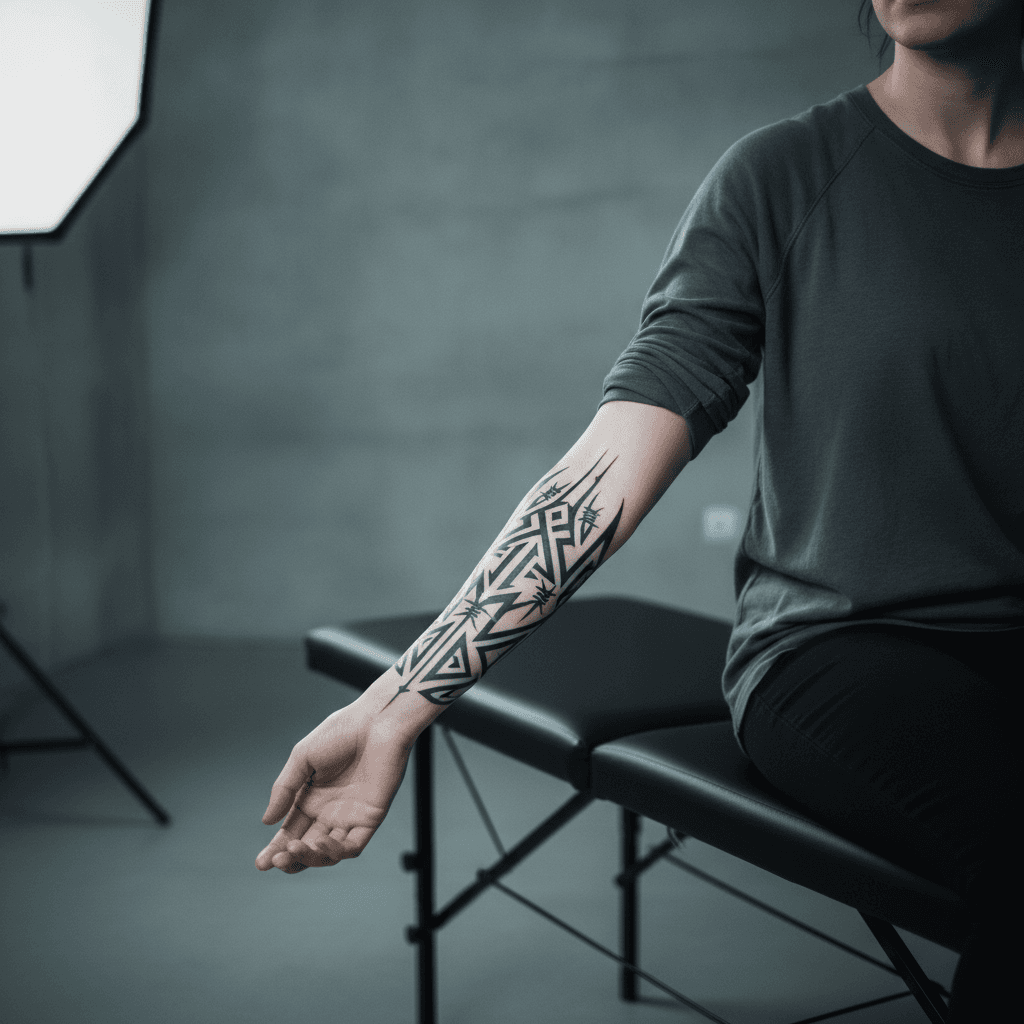
The style of tattoo you choose has a bigger impact on cost than the square inches of skin involved. Fine-line work requires a single needle or tight needle grouping, slow passes, and sustained precision over the entire session. A fine-line botanical sleeve takes longer per square inch than a bold traditional piece of the same area because the line weight is unforgiving. Realism is among the most labor-intensive styles: a photorealistic portrait requires building light and shadow in layers, often across multiple sessions, with each pass adding tonal depth that the eye reads as dimension. Blackwork with solid fills moves faster than realism but can still be slow depending on how large the solid areas are. Simple geometric or linework designs on smaller placements (wrist, ankle, inner arm) typically fall in the $100-$250 range at most studios. Full realistic sleeves run $1,500-$5,000 or more depending on the artist's hourly rate and the number of sessions.
Hourly rates vary by artist tier and market
Most tattoo studios price by hour or by piece. Hourly rates in the United States generally range from $100-$300 per hour, with significant variation by market and artist level. In major cities like New York, Los Angeles, and Chicago, rates at established studios commonly sit at $175-$300 per hour. In smaller markets or mid-size cities, strong artists often work at $100-$175 per hour. Guest artists and internationally recognized names can charge $300-$500 per hour or more. The flat-rate pricing model is common for smaller, simpler pieces where the artist knows it will take under an hour. A walk-in flash tattoo in the $80-$200 range is usually priced as a flat rate. For anything larger or custom, most artists move to hourly billing. Shops with fixed minimum charges ($60-$100) cover setup costs, needles, ink, and sanitation regardless of how fast a small piece goes.
Placement affects both price and session length
Placement matters because some body areas take longer to work on than others. The ribs, stomach, sternum, and inner arm are technically slower to tattoo because the skin is less taut, moves with breathing, and can be more sensitive, leading to shorter sessions or more breaks. If you're planning placement in one of these areas, expect slightly higher session costs even for a comparable design. The back is the most cost-effective canvas per square inch for large work because it's flat, easy to access, and offers a consistent working surface. For reference, where tattoos hurt most maps out which placements come with the most physical challenge, and those areas often correlate with longer session times.
Location and geographic market shift the baseline
Studio location changes the pricing floor significantly. A tattoo that costs $250 in Nashville might run $400 for the same quality work in San Francisco. This reflects rent, cost of living, and local market competition, not a difference in skill. Internationally, you can find high-quality work at lower prices in places with a strong tattoo culture and lower cost of living. Studios in Bali can produce excellent work at $50-$100 per hour from experienced artists, though research is essential since quality varies. Metro Manila studios follow a similar pattern, with competitive pricing and strong technical talent at established shops.
Custom designs add design time to the total cost
Walk-in flash and pre-drawn designs carry no design fee because the artwork already exists. Custom work is different. When you commission a design built around your brief, the artist spends time outside the session on sketching and revision. Many artists fold this into the session rate; others charge a separate design fee of $50-$200 depending on complexity. If you go into consultation asking for a full custom back piece, expect at minimum one design session fee plus the tattoo sessions themselves. Coming in with clear reference images (mood board, specific elements, placement photo) reduces design time and tends to lower the final cost.
What cheap tattoos actually cost long-term
A low-priced tattoo from an artist who cuts corners on technique, ink quality, or needle selection will cost more over time. Blown-out lines (when ink migrates under the skin beyond the intended line) are permanent. Ink that hasn't been seated properly heals patchy and requires touch-ups. Touch-up sessions at a new studio can run $100-$300, and if the original work was poor enough, a cover-up may be the only option. Cover-up tattoos require a design that is significantly darker and larger than the original piece, which limits your design choices substantially. The math usually favors paying more for a competent artist the first time.
A single well-executed tattoo from a $200/hr artist will outlast three rushed pieces from a $60/hr shop. The skin doesn't forget.
General price ranges by scope:
- $100-$250: small, simple, flat-rate (palm-size or under, flash designs)
- $250-$600: medium custom pieces, 2-4 hours of work
- $600-$1,500: large custom work, half-sleeves, chest pieces
- $1,500-$5,000+: full sleeves, back pieces, multi-session realism
Frequently asked
How much should I tip a tattoo artist?
The standard in the US is 15-20% of the total session cost. For a $300 session, $45-$60 is appropriate. If the artist went out of their way on a complex custom design or stayed late to finish a piece, 20% or more is a fair signal of appreciation. Tipping is not mandatory but is standard practice at most studios.
Why does the same tattoo cost more at one studio than another?
Overhead, artist experience, geographic market, and studio reputation all factor in. A studio in a high-rent urban location with senior artists charges more than a solo artist working from a low-cost studio in a smaller city. The price difference does not always mean a quality difference, but portfolio reviews matter more than price when choosing.
Can I negotiate the price of a tattoo?
Asking for a quote is normal. Negotiating down from that quote is generally frowned upon and creates a poor working relationship with the artist before the session starts. If a price is outside your budget, say so and ask if there is a smaller or simpler version of the design that fits your range.
Does the number of colors affect price?
Multiple colors require needle changes, ink palette management, and often additional passes for saturation. A fully saturated color piece typically takes 20-30% longer than a comparable greywash piece. Black-and-grey work is generally faster per session for the same design complexity, which is part of why it tends to cost less overall.
How do I know if an artist's rate is fair?
Review their portfolio for work in the style you want. If their healed work looks clean (no blowout, solid saturation, clean lines), their rate reflects real skill. Cheap rates combined with inconsistent healed results are a warning sign. Understanding the healing process helps you evaluate healed work accurately when you see it in photos.
Is it cheaper to get a tattoo during off-peak times?
Some studios offer walk-in specials or flash day pricing on slower days, typically mid-week. Following studio social media accounts is the best way to catch these. Flash day pieces are pre-drawn by the artist and priced below custom rates, often $80-$150 for palm-size work.