aftercare
Tattoo Scarring: Causes, Prevention, and What to Do
Tattoo scarring shows up as raised, ridged, or shiny skin along healed lines. Here is what causes it, how to prevent it, and what actually helps once it forms.
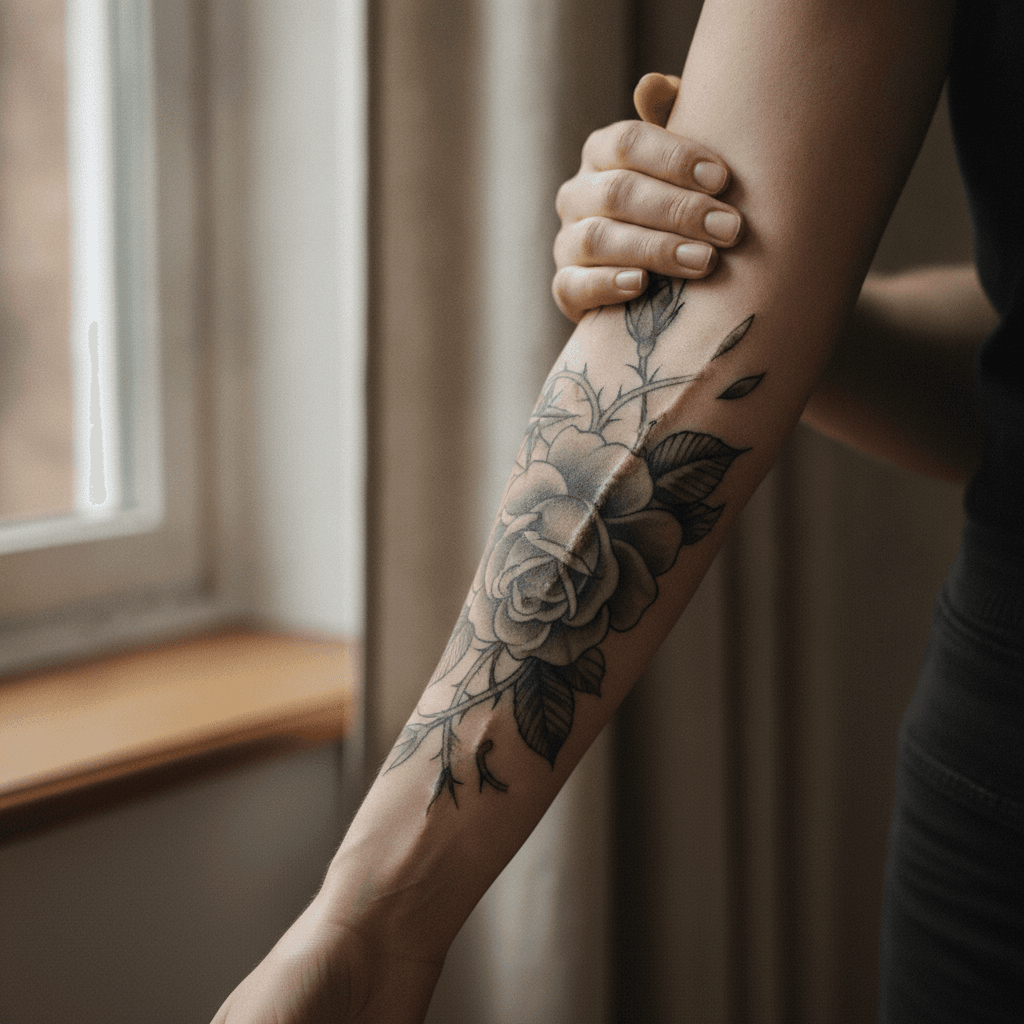
Every tattoo is technically a scar. The needle punches ink through the epidermis into the dermis, and your body heals around the pigment. When healing goes right, the scar tissue is invisible and the piece looks flat and crisp. When it goes wrong, you end up with raised ridges along the lines, shiny patches over solid black, or dense keloids that stand a few millimeters above the surrounding skin. This guide covers what actually causes tattoo scarring, how to prevent it during the fresh-heal window, and what works once a scar has already formed.
Why tattoos scar in the first place
Scarring beyond the normal invisible tissue happens when the dermis gets damaged more than a clean tattoo requires. The three usual drivers are artist technique, aftercare mistakes, and your own skin's tendency to overproduce collagen. A heavy-handed artist who runs the needle too deep or goes over the same line repeatedly for saturation will shred more dermis than needed, and that extra tissue trauma triggers a hypertrophic response as the skin repairs itself. This is the single most common cause and it is why artist selection matters more than any product you will ever put on a healing tattoo.
Aftercare mistakes come second. Picking scabs, letting the tattoo dry-crack and pull open, sleeping on it so it sticks to sheets, or exposing it to a swimming pool at day four all disrupt the healing seal and force the dermis to repair the same spot twice. Each additional round of inflammation stacks collagen. The third factor is genetic. Some people scar heavily from any wound, including paper cuts and acne. If you have visible raised scars from past injuries or piercings, you have a higher baseline risk of a raised tattoo, and no amount of perfect aftercare fully eliminates that. Our tattoo blowout guide covers the related problem of ink migrating into the wrong skin layer, which often runs alongside scarring from the same over-deep needle work.
The three types of tattoo scarring
Not all raised tattoo tissue is the same, and the treatment path depends on which one you have.
- Hypertrophic scars: raised, red or pink, follow the exact line of the tattoo, usually appear 4 to 8 weeks post-session, and often flatten over 6 to 18 months on their own.
- Keloid scars: raised, extend beyond the original tattoo lines, darker or purplish, feel firm and rubbery, do not resolve without intervention, and are far more common on chest, shoulders, and upper back.
- Atrophic or indented scars: sunken patches where a scab was picked off too early and the tissue healed under the skin's surface. These often show up as pale spots inside solid color fill.
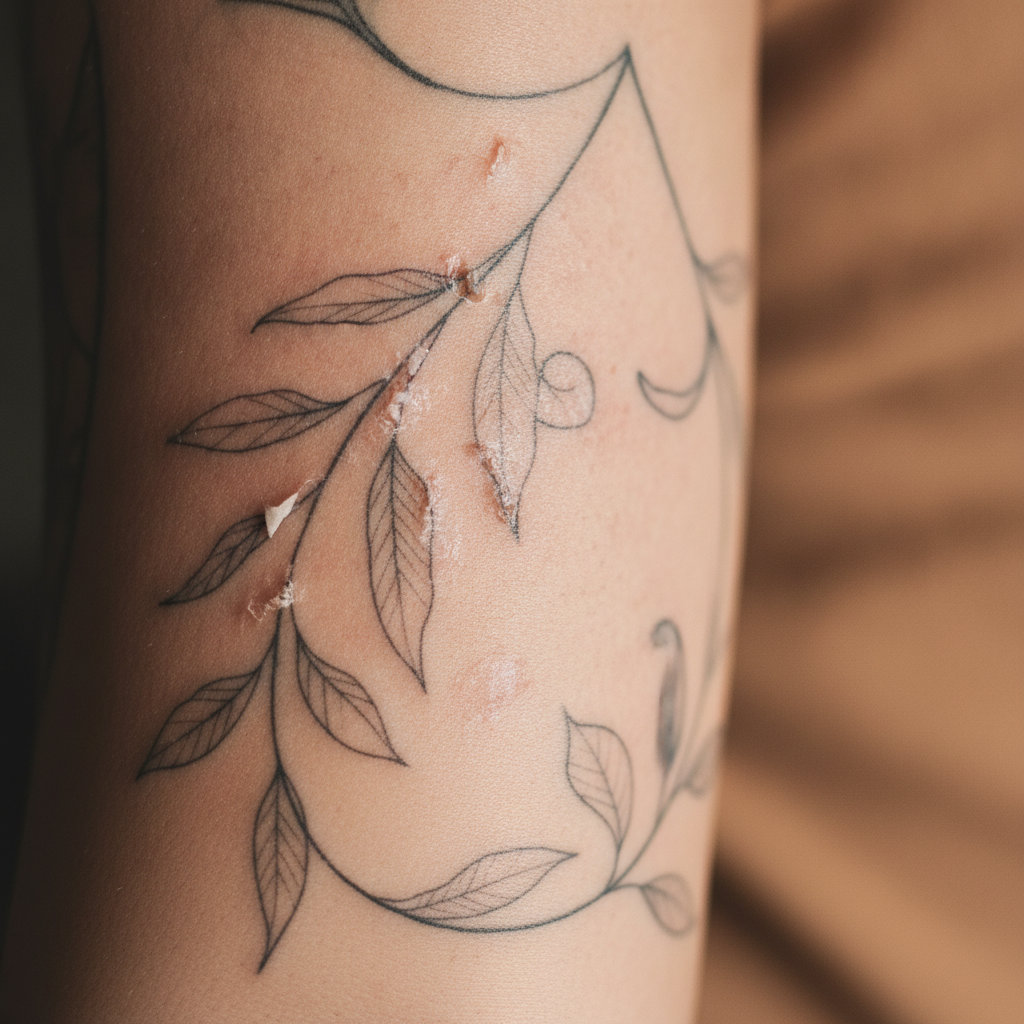
The visual cue that separates a hypertrophic reaction from normal healing is timing. Fresh tattoos are supposed to feel slightly raised for the first 10 to 14 days. If you run your fingertip across a piece at week six and still feel a ridge that traces every line, that is scar tissue setting in and it is time to intervene. Our day-by-day healing timeline covers what a normal raised phase should look and feel like week by week so you can spot the divergence early.
Preventing scars during healing
Prevention starts before the needle touches skin. Vet your artist by looking at healed work, not fresh photos. Fresh tattoos always look sharp. Ask to see pieces at 6 months and 2 years old. Lines should sit flat, saturation should be even, and there should be no raised tracks along the outlines. If a portfolio only shows day-one shots, that is a signal.
Once the session is done, the first 14 days do most of the work. Keep the tattoo clean with a fragrance-free wash twice a day. Moisturize thinly with an unscented lotion once the initial plasma weep stops, usually day 3 or 4. Do not glob on ointment. A thick layer suffocates the skin and traps bacteria against a wound, which extends inflammation and increases scar risk. Sleep in loose cotton, avoid direct sun, and stay out of pools, hot tubs, saunas, and the ocean until fully closed, typically around day 14 to 21. See our first 24 hours aftercare guide for the exact wash and wrap sequence.
The single hardest rule is do not pick, scratch, or peel. When the tattoo enters the itchy flaking phase around day 7 to 10, tap or slap it if the itch is unbearable. Peeling a scab off early exposes fresh dermis to air, drags pigment out, and forces the skin to repair the same wound twice, which is exactly the mechanism that produces raised scar tissue.
What actually helps once a scar has formed
If you feel raised tissue at week six or beyond, start conservative treatment immediately. Early intervention on hypertrophic scarring is dramatically more effective than waiting a year and trying to reverse it.
- Silicone sheets or gel: apply 12 to 22 hours per day for 8 to 12 weeks. Silicone is the only over-the-counter treatment with consistent clinical backing for hypertrophic scars.
- Daily massage: firm circular pressure for 5 minutes twice a day, starting once the tattoo is fully closed. Massage breaks up collagen bundles as they form and is free.
- Sun protection: UV exposure darkens scar tissue and stalls remodeling. SPF 50 mineral sunscreen daily for the first year is non-negotiable if you want the scar to flatten and fade.
- Corticosteroid injections: for stubborn hypertrophic scars or keloids, a dermatologist can inject triamcinolone every 4 to 6 weeks. Cost runs $150 to $400 per session and typical courses are 3 to 6 sessions.
- Laser resurfacing: fractional CO2 or pulsed-dye laser can flatten and lighten mature scars, but it will also lighten or remove tattoo pigment in the treated area, so this is a trade-off, not a free fix.
For atrophic indented scars inside color fill, the fix is usually a touch-up session with the original artist once the piece is fully mature at 3 to 6 months. A skilled artist can re-pack pigment into the indent and level the surface visually. Our touch-up timing guide walks through when to book and what to ask for.
When to see a dermatologist versus wait it out
Most mild hypertrophic reactions self-resolve inside 12 to 18 months with silicone and sun protection. See a dermatologist sooner if the raised tissue spreads beyond the tattoo outlines, if it itches or aches persistently past week 8, if it is on your chest or shoulder area where keloids are common, or if you have a personal or family history of keloid scarring. Insurance rarely covers tattoo scar treatment because it is classified as cosmetic, so budget for out-of-pocket. Steroid injection courses typically run $600 to $2,000 total, and laser series can run $1,500 to $5,000 depending on scar size.
Do not attempt to laser or resurface a tattoo scar yourself with at-home devices. Consumer IPL and microneedling pens can push scar formation deeper and damage remaining pigment in unpredictable patterns. This is the one aftercare situation where a $200 dermatologist consult is genuinely worth more than any product on Amazon.
Frequently asked
Is a raised tattoo always a scar? No. Every tattoo feels raised for the first 10 to 14 days as the skin heals. If the ridges persist past week 4 to 6 and follow the tattoo lines exactly, that is scar tissue. A brief raised reaction triggered by heat, exercise, or an allergen that goes down within a few hours is a different phenomenon called an allergic or vasomotor response.
Can you tattoo over a scar? Yes, once the scar is fully mature, usually 12 to 18 months after it formed. Scarred skin holds ink differently: pigment saturation is uneven, lines can bleed, and healing is slower. A good artist will consult first, may recommend a session of laser scar softening before tattooing, and will often charge a premium for the extra difficulty.
Do numbing creams cause scarring? Numbing creams themselves do not cause scars, but they can indirectly contribute. Numbed skin swells more during a session, which changes how the artist reads pressure and depth. Some artists find it harder to control needle depth in numbed skin, which can lead to going too deep and increasing scar risk. Use them selectively, not on every piece.
Will a scarred tattoo fade faster? Scarred pigment tends to look duller and less crisp because scar tissue is denser and cloudier than normal skin, so light diffuses through it differently. The actual pigment does not fade faster, but the visual result reads as faded. This is why prevention is worth more than any fix.
Does skin tone affect scarring risk? Yes. Darker skin tones, particularly Fitzpatrick types IV through VI, have a significantly higher baseline risk of keloid and hypertrophic scarring from any dermal injury including tattoos. This is a real factor, not a myth, and it means aftercare discipline matters even more.
How long should I wait before treating a suspected scar? Start silicone sheets and daily massage as soon as you notice persistent raised tissue at week 4 to 6. Waiting until month 6 to see if it resolves on its own means the collagen bundles have already set and are harder to break down. Early is cheap and easy. Late is expensive and slow.