aftercare
Tattoo Sunscreen Guide: How to Protect Your Ink Long-Term
Tattoo sunscreen is the biggest factor in how long ink stays sharp. Here's what works after week three, with the SPF math and a 30-second daily routine.
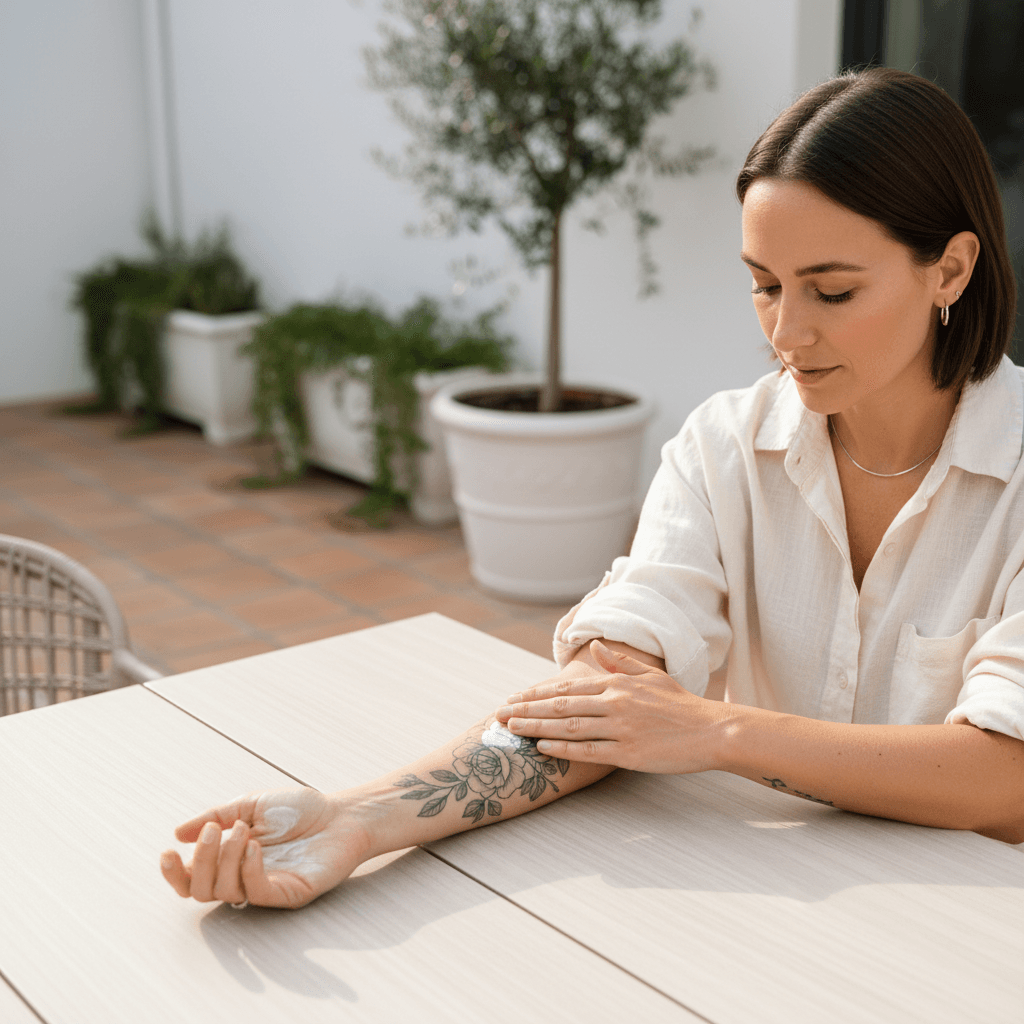
A healed tattoo looks the same on day 30 as it does on day 3,000 only if you protect it from UV light. Sun exposure is the single biggest cause of tattoo fading after the first month, ahead of skin chemistry, ink quality, and placement. Here is what works, what to skip, and how to build a maintenance routine that takes thirty seconds a day.
Why UV light fades tattoo ink
Tattoo ink sits in the dermis, the layer of skin about 1 to 2 millimeters below the surface. UVA rays penetrate that deep, and they break apart the pigment molecules over time. UVB rays sit closer to the surface but still drive inflammation and accelerate cellular turnover, which slowly pushes ink particles out as the skin renews itself. Black ink is made of carbon and holds up best, while reds, yellows, and pastel tones fade fastest because their organic pigments oxidize under sunlight.
Studies on tattoo longevity show consistent fading patterns within five years on unprotected skin, especially on hands, forearms, and any placement that gets daily sun. The same tattoo on the inner bicep or upper back, both rarely exposed, can look crisp at the fifteen-year mark with no maintenance at all. The fade is not always uniform either. Color sections lose vibrancy first, fine lines blur as ink particles shift, and grey washes can take on a green or yellow undertone.
When to start using sunscreen on a new tattoo
Skip sunscreen entirely for the first two to three weeks. The skin is still healing, and most chemical sunscreens contain ingredients like avobenzone, oxybenzone, and octocrylene that can sting an open wound and slow recovery. Mineral sunscreens with zinc oxide are gentler but still leave a film that traps bacteria during the early healing phase. Cover the tattoo with loose clothing instead, and stay out of direct sun for the entire healing window.
Once the skin is fully closed, no scabs, no peeling, no shiny new layer that itches when stretched, you can introduce sunscreen daily. For most people, that point arrives around day 21 to 28. Look for SPF 30 or higher, broad-spectrum protection, and ideally a mineral formula on the tattoo itself. Apply a teaspoon-sized amount per arm or comparable area, and reapply every two hours of direct exposure.
What kind of sunscreen works best
Mineral sunscreens with zinc oxide or titanium dioxide give the most reliable physical block and are the standard recommendation from dermatologists for tattooed skin. They sit on top of the skin and reflect UV rays, which means less penetration into the dermis and less long-term fade. The downside is the white cast, which is more visible on darker skin tones. Newer micronized zinc formulas reduce that without sacrificing protection.
Chemical sunscreens are easier to apply and feel lighter, but the active ingredients absorb UV by reacting with it, which can produce free radicals at the skin surface. For tattooed skin specifically, that extra oxidative stress can accelerate fading even with high SPF coverage. If you only have a chemical sunscreen on hand, it still beats no sunscreen, but for daily use on visible tattoos, mineral wins on every metric except cosmetic feel.
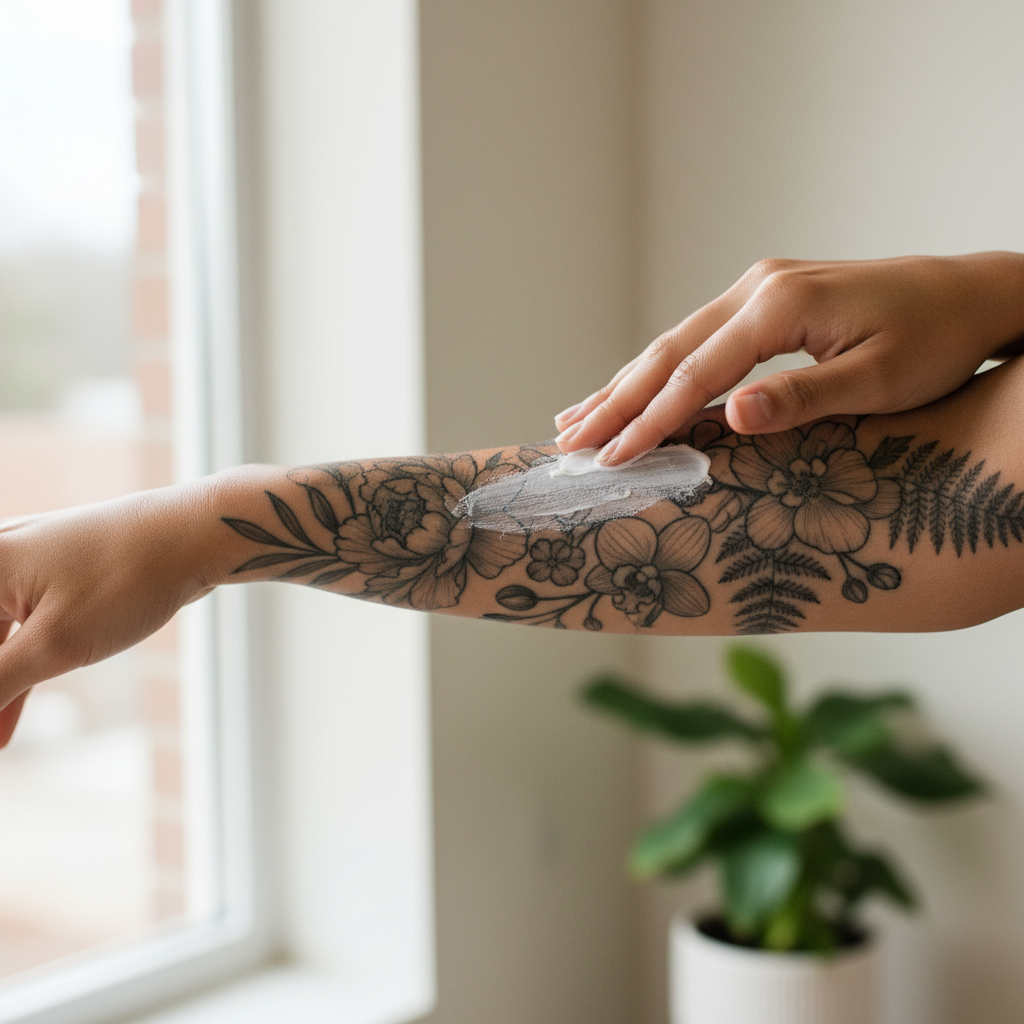
A few format notes that matter more than brand. Sticks and lotions both work, but stick formulas are easier to control over a small tattoo without flooding the surrounding skin. Sprays underdeliver because most people apply too thin a layer, and the alcohol in them can dry out healed tattooed skin over months of daily use. For a deeper look at how care choices in the first month set up the next decade, see our tattoo aftercare guide for the first 24 hours and the day-by-day healing timeline.
A daily and seasonal maintenance routine
Daily protection does not need to be elaborate. Here is what a low-effort routine looks like for someone with visible tattoos:
- Morning: SPF 30 mineral lotion on any exposed tattooed skin, applied after moisturizer
- Midday reapplication on days with more than thirty minutes outside
- Evening: a fragrance-free moisturizer with ceramides or hyaluronic acid to keep the skin barrier intact
Hydration matters because dry, cracked skin scatters light differently and makes a tattoo look duller even before any actual fade. A simple cream like CeraVe, Vanicream, or Eucerin used nightly keeps the surface smooth and the underlying ink visible at full saturation.
Seasonal adjustments matter more than people realize. Summer routines should bump to SPF 50 mineral with reapplication every ninety minutes during outdoor activity. Winter routines can drop SPF on covered skin but should keep it on hands, neck, and face tattoos because UV passes through clouds and reflects off snow at up to 80 percent intensity. Beach and pool days require a full reapplication after every swim, regardless of "water-resistant" label claims, which legally only need to last forty to eighty minutes.
A 2019 review in JAMA Dermatology found that daily SPF use slowed visible skin aging by 24 percent over four years. The same protection translates to tattoos: less photodamage to the skin holding the ink, less pigment breakdown.
When to schedule touch-ups, and how sunscreen affects timing
Even with perfect sun habits, most tattoos benefit from a touch-up at the five-to-ten-year mark, especially color work and fine line pieces. Sunscreen extends that window. A fine line tattoo on a sun-exposed wrist might need a touch-up at year three without protection, but year seven or eight with consistent SPF use. Color sleeves can stretch from a four-year touch-up to seven or eight years.
If you are already noticing fade, do not panic. Most artists charge a reduced rate for touch-ups on their own work, often $50 to $150 for a small piece or 50 percent of the original session rate for larger work. Going to a different artist usually means full price. Bring photos of the original if you have them. For a wider view on what touch-ups cost and when, our tattoo pricing explained guide covers the full picture.
Common mistakes that accelerate fading
The biggest one is treating sunscreen as a beach-only product. Daily incidental sun, the walk to the car, the lunch outside, the drive with one arm on the window, adds up to more cumulative UV than the occasional vacation. Skipping it on cloudy days is the second biggest mistake, since UVA passes through cloud cover at 60 to 80 percent of clear-sky levels.
Tanning beds are flat-out brutal on tattoos. The concentrated UVA dose in a single session equals roughly an hour of midday summer sun, and the fade is visible within months for color and within a year or two even for solid black work. If you tan regularly, expect to need touch-ups every two to three years instead of every seven to ten.
The last one is aggressive exfoliation with retinoids, AHAs, or scrubs on tattooed skin. These products thin the upper layers and increase sun sensitivity, which compounds UV damage to the ink. Use them sparingly on tattooed areas, and never combine an active retinoid routine with low or zero SPF.
Frequently asked
Can I use SPF 50 instead of SPF 30 on tattoos? Yes, and for sun-exposed placements like forearms or hands it is the better choice. SPF 50 blocks about 98 percent of UVB versus 97 percent for SPF 30, but it also tends to use higher zinc concentrations, which means more reliable broad-spectrum coverage in real-world conditions where people underapply.
How long does a healed tattoo need to wait before sun exposure? A fully healed tattoo, meaning no peeling, no scabbing, and no shiny new layer, can handle moderate sun with SPF protection from week four onward. Heavy sun exposure without protection should be avoided indefinitely if you care about how the tattoo ages.
Does sunscreen actually prevent fading or only slow it? Sunscreen slows fading rather than stopping it. UV is the largest single fade driver, but skin turnover, pigment chemistry, and placement also play roles. With consistent SPF use, expect a tattoo to retain crisp lines and saturated color two to three times longer than an unprotected version.
Is mineral sunscreen really better for tattoos? For long-term use on tattooed skin, mineral formulas with zinc oxide or titanium dioxide are the safer pick. They block UV physically rather than absorbing it, which means less oxidative stress on the skin surface and on the ink particles in the dermis below.
What about sunscreen for color tattoos versus black ink? Color tattoos need more aggressive protection. Reds, yellows, and pastel pinks fade fastest because their pigment molecules are organic and break apart under UV exposure. Black ink, made from carbon, holds up better but still fades over years of unprotected exposure. SPF 50 mineral daily is reasonable for any color work on visible placements.
Can I get a tattoo if I tan often? You can, but the tattoo will not last. Frequent tanning, whether outdoor or in a bed, accelerates fade by three to five times compared to sun-protected skin. If you are not willing to give up the tan or commit to heavy SPF use, talk to your artist about styles that age better in those conditions, like bold solid blackwork over fine line color.