aftercare
When Can You Shave Over a Tattoo? A Safe Healing Timeline
Shaving over a fresh tattoo can ruin the linework. Here is the safe timeline, the razor to use, and how to protect your ink long-term.
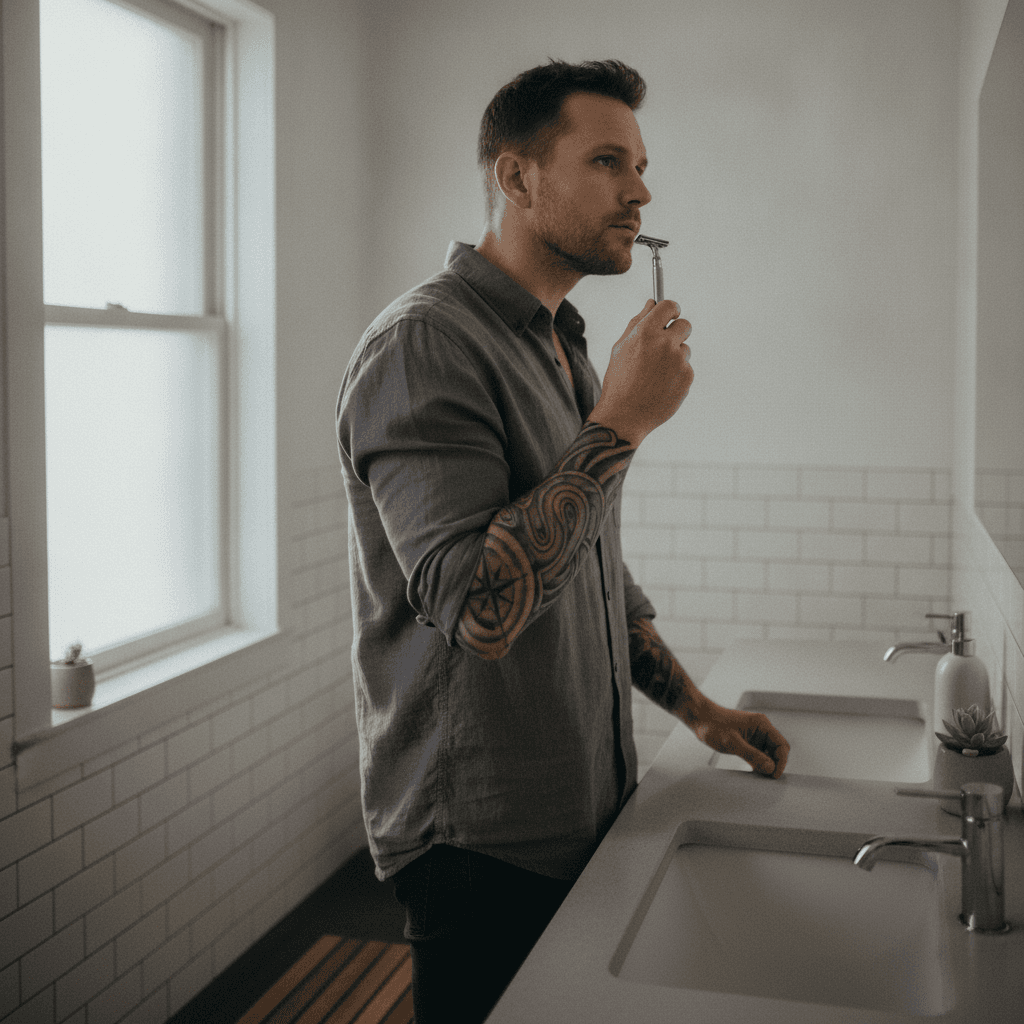
Shaving over a new tattoo is one of those small choices that can undo weeks of good aftercare in about thirty seconds. Run a razor over ink that is still forming a new epidermal layer and you can lift scabs, scrape out pigment, and turn crisp linework into patchy grey. This guide walks through when it is genuinely safe to shave over a healing tattoo, what the peeling stage does to your skin, and how to keep your ink sharp for years once you are back in your normal routine.
The short answer: about three to four weeks
For most healthy adults, the safe window to shave directly over a new tattoo starts around day 21 and lands more comfortably at day 28. That is when the outer skin layer has fully closed, scabs have finished sloughing, and the surface has stopped flaking. Shave before that and you are dragging a blade across compromised skin that is still knitting itself back together. The exact day varies by placement, size, and how heavily the artist packed color, but three to four weeks is the range every reputable artist will quote you.
There is a second, deeper layer of healing that keeps going for four to six months. During that window the tattoo is safe to shave, but the dermis is still remodeling underneath. That has almost no impact on your shaving routine, but it is why some people notice the tattoo looks slightly hazy for the first few months before settling into its final crispness. Patience beats trying to speed anything up.
Why shaving early ruins ink
A fresh tattoo is a controlled wound. In the first week the top layer of skin is essentially missing, replaced by a plasma-and-ink slurry that dries into a thin film. Any friction lifts that film. A razor is friction at maximum intensity — a thin metal edge dragged across the exact plane where new skin is forming. Even a "gentle" swipe can shear off scabs before they are ready to release their pigment back into the healed skin.
The visible damage shows up as scattered light patches, thinning of solid black areas, and blurred edges where the outline should be crisp. Blowouts are a separate problem tied to needle depth, but a shaved-out tattoo has the same washed appearance. Once pigment is dragged out by a blade it does not come back on its own. You are looking at a touch-up appointment, another healing cycle, and a second aftercare period.
Cheaper cartridge razors compound the problem because they use multi-blade heads that hydroplane and lift skin between each pass. Electric rotary and foil shavers are safer once healed but still risky during the flaking stage because the oscillating head snags on loose skin.
The week-by-week timeline
Here is the general shape of it. Adjust by a few days in either direction based on how your specific tattoo is healing.
- Days 1 to 3. Plasma weep, redness, initial scab formation. No shaving anywhere near the tattoo. Do not shave the area you tattooed even if the piece is only a small section of the leg or arm.
- Days 4 to 10. Scabs harden and darken. Itching begins. This is the highest-risk window for accidental damage. Keep the razor away.
- Days 11 to 20. Peeling and flaking dominate. The tattoo looks patchy and dull as dead skin lifts off. Still no shaving over the ink. You can shave surrounding skin carefully as long as your razor never touches the tattooed area.
- Days 21 to 28. Surface heals over. Skin feels smooth again. Most people can safely resume shaving with a single-blade safety razor and no pressure by the end of week four.
- Month 2 onward. Normal shaving with any razor is fine. The deep dermis is still settling but the surface tolerates a blade like any other skin.
How to shave around a healing tattoo without touching it
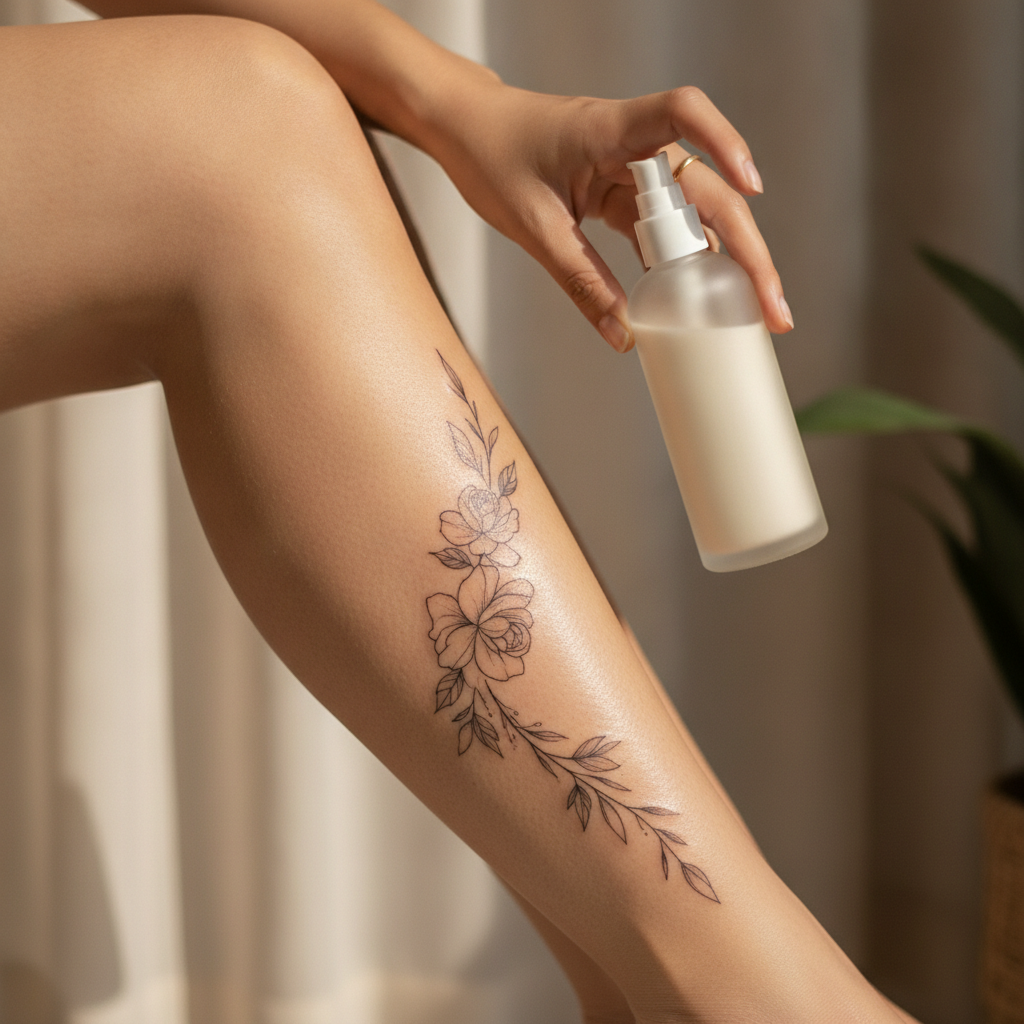
You do not have to abandon your grooming routine for a month just because you got inked on your calf or forearm. Shave the surrounding skin as normal, but treat the tattoo like a small exclusion zone with a two-centimeter buffer. Use short, careful strokes that move away from the tattoo rather than across it. Never shave downhill toward the ink, because a slip carries the blade straight over the healing area.
Rinse the razor between every pass so you are not dragging accumulated hair and skin toward the tattoo. Skip shaving cream and gel within a few centimeters of the ink itself. Most drugstore shave creams contain menthol, alcohol, or fragrance that will sting a healing tattoo and can interfere with the aftercare ointment or lotion you are already using. Plain water and a soft touch is enough for the buffer zone.
If the tattoo sits in a hair-dense area like the chest, thigh, or lower leg, some regrowth over the tattoo is unavoidable during weeks one through three. Leave it alone. Hair grows straight through healing ink without issue. Once the skin is fully closed you can shave normally and the tattoo will not care.
The right razor for the first shave over healed ink
When you finally shave over a fully healed tattoo, use a single-blade safety razor or a sharp new cartridge with the fewest blades you can find. Fewer blades mean less lift, less friction, and a lower chance of nicking. Warm water and a plain, unscented shave soap or a light layer of your aftercare lotion works better than menthol-heavy foams. Go with the grain on the first pass. Do not apply pressure. Let the weight of the razor do the work.
Rinse with cool water, pat the area dry, and apply a fragrance-free lotion afterward. If you get any razor burn on the tattoo it will typically clear within a day and does not damage the ink underneath. If you notice pigment coming up on the blade or unusual bleeding, stop immediately and give the area another week. That means the surface was not as healed as it looked.
Long-term care once you are shaving normally
Healed tattoos are more resilient than most people assume, but a few habits keep the ink looking sharp for decades. Shaving is one of them. Keep your blades fresh so you are not dragging a dull edge across the skin. Dull razors cause micro-abrasions that add up over years and can slightly fade fine detail on small or intricate pieces.
Long-term fading has less to do with shaving and more to do with sun exposure. A high-SPF sunscreen over your tattoo whenever it will be exposed outdoors is the single biggest factor in how the ink ages. Pair that with regular moisturizing and you are doing everything the ink needs. Our tattoo sunscreen and long-term care guide covers the specific SPF and formula recommendations. For a full picture of what happens during the first month, cross-reference the day-by-day healing timeline. If any signs of infection show up during that window, our signs of tattoo infection guide covers what to watch for.
What if you shaved too early
It happens. Most people who shave a tattoo before it is ready notice within a few hours because the skin gets angry, red, and tender. Wash the area with unscented soap and cool water, pat dry, and apply your normal aftercare ointment. Do not scrub. Do not apply hydrogen peroxide, rubbing alcohol, or anti-bacterial creams meant for cuts because those disrupt the healing process and can bleach pigment.
Wait to see the outcome. If you only removed loose flakes without disturbing scabs, the tattoo will look fine once the remaining peeling finishes. If you sheared off scabs prematurely, you will likely need a touch-up. Book a follow-up with your artist once the tattoo has fully healed, usually around week eight. Most reputable studios offer free or low-cost touch-ups within six months of the original session if the damage is minor. Read our touch-up timing guide before you book so you understand what the artist will and will not fix.
Frequently asked
Can I shave the area right before my tattoo appointment? Yes, and your artist will thank you. Shave the area twelve to twenty-four hours before your session so any minor razor irritation has time to calm down. Do not use scented shave cream or aftershave that day because residual chemistry can affect how the stencil adheres and how the ink sits during the session.
How long should I wait to shave over a small fine-line tattoo? Fine-line pieces heal faster on the surface, often looking closed by day 14. Still wait until day 21 minimum. Fine-line work has thin, delicate outlines that show every scrape, so the cost of shaving too early is proportionally higher than on a bold traditional piece.
Is waxing over a healed tattoo safe? Yes, once the tattoo is fully healed at four to six weeks. Waxing does not damage ink because it removes hair from the follicle without abrading the skin surface. Skip waxing entirely during the healing window because the pulling force can tear delicate new skin.
What about laser hair removal on a tattooed area? Laser hair removal targets pigment, so it will destroy your tattoo. The laser cannot distinguish between hair melanin and tattoo ink and will effectively try to remove both. Book laser hair removal well outside the tattooed area or accept that the tattoo will be damaged if the laser passes over it.
Do electric shavers cause the same problems as blades during healing? Electric shavers are safer than blades once the surface has closed, but during the peeling stage they still snag on lifting flakes and can pull scabs off. Wait the same three to four weeks before using an electric shaver directly over a new tattoo.
Will hair grow back differently over my tattoo? Hair grows normally over healed tattoos. The needle depth reaches the dermis but does not damage the follicles, which sit slightly deeper. Some people notice regrowth looks slightly darker against light-colored ink for the first couple of cycles, but that evens out as the ink settles.