aftercare
Color Tattoo Aftercare: How It Differs from Black-and-Grey
Color tattoos heal slower, peel heavier, and fade faster than black-and-grey. Here is how to adjust your aftercare so reds, blues, and yellows still pop at year five.

Color tattoos and black-and-grey tattoos finish in the same chair but heal on completely different schedules. The trauma is deeper, the saturation is higher, and the pigments themselves behave differently under your skin. If you treat a color piece the same way you treated your last linework forearm tattoo, you will end up with a duller, blotchier, faster-fading result. This guide walks through what actually changes when ink turns colorful, and what to do about it from the first day to the five-year mark.
Why color tattoos heal harder than black-and-grey
Black-and-grey tattoos lean on diluted black ink (often called grey wash) and require fewer needle passes to build tone. Color saturation works the opposite way. To get a true red or a clean yellow that reads as vibrant instead of muddy, the artist has to pack pigment densely, often going back over the same area two or three times within a single session. That extra passing means more skin trauma per square inch, which translates into more swelling, more plasma seeping during the first 24 hours, and a thicker scab layer once healing kicks in. You can read the full tattoo healing timeline day by day for the baseline schedule, but expect color pieces to run two to four days longer at every phase.
The pigment chemistry also matters. Modern color inks are typically organic pigment particles suspended in a carrier solution, with particle sizes that vary by hue. Yellows and whites use smaller particles that the immune system clears more aggressively over the years. Reds frequently contain pigments that a small but real percentage of people react to, with itching, raised lines, or delayed healing showing up weeks after the session looks fine. Blues and greens tend to be the most stable, which is why old-school sailor tattoos from the 1960s still read as blue even when their reds have ghosted out.
The first 48 hours: more drainage, more ointment changes
Day one and day two of a color tattoo look messier than a black-and-grey of the same size. Expect more plasma weeping through any second-skin bandage, and expect that plasma to be visibly tinted with whichever colors sit closest to the surface. This is normal. It is your skin pushing out excess ink along with the lymphatic response to the trauma. If you are using Saniderm or a similar adhesive bandage (see the Saniderm aftercare guide), you may need to change it earlier on a color piece, especially if the bandage starts to bubble with fluid past the 24 hour mark.
If your artist sends you home with traditional ointment-and-cling-film aftercare, plan on:
- Removing the wrap after 4 to 6 hours, never longer than overnight
- Washing with lukewarm water and fragrance-free soap, fingertips only, for 30 to 60 seconds
- Patting dry with a clean paper towel, never a cloth towel that has been through fabric softener
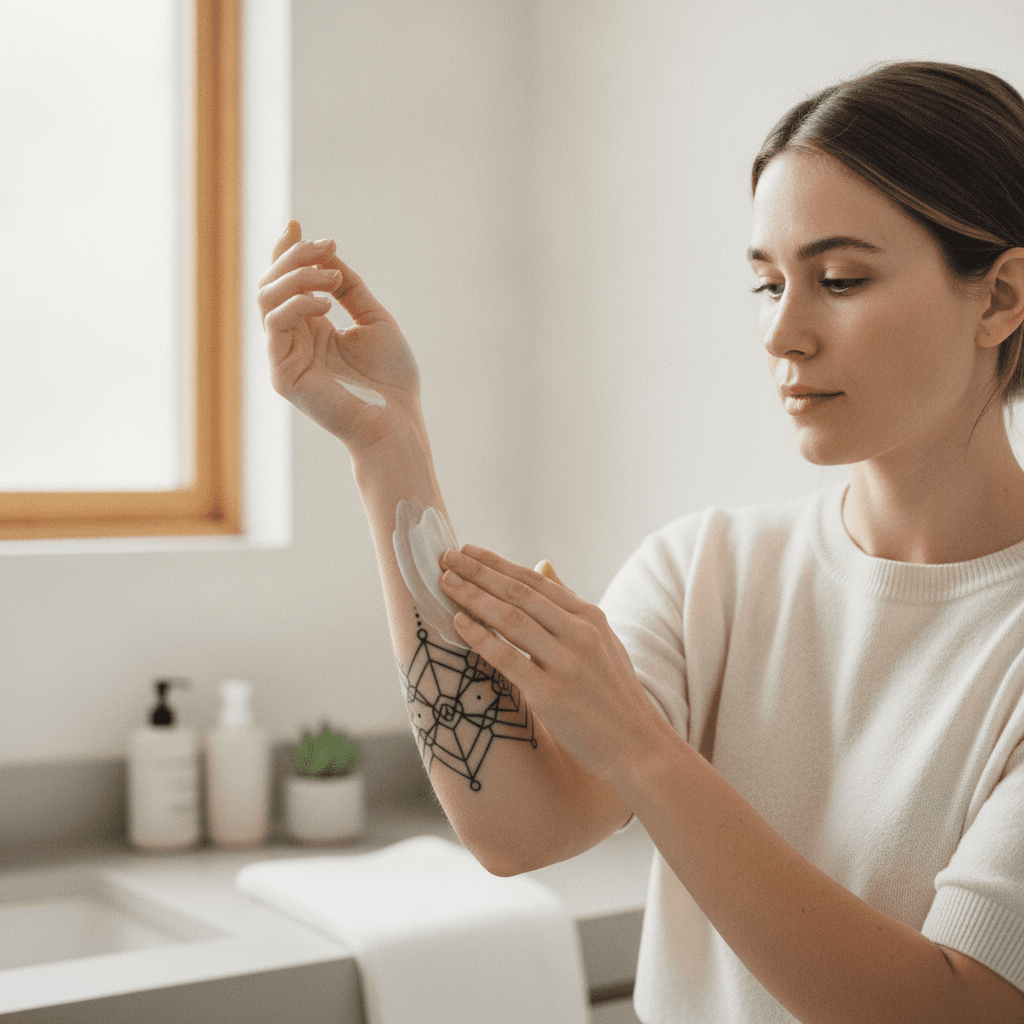
- Applying a pea-sized amount of unscented ointment, then leaving the tattoo uncovered to breathe
For color tattoos specifically, do not over-moisturize during this window. A thick ointment layer traps plasma and pigment against the skin, which can cause uneven healing and small ink-loss spots that show up later as faded patches. Less is more for the first two days.
Peeling: colored flakes are normal, color loss in the flakes is not
Around day five through day ten, your tattoo will start to peel. With color pieces, the flakes themselves come off tinted, sometimes dramatically so. People panic when they see a fingernail-sized flake of red skin peel off in the shower and assume the tattoo is ruined. It is not. What you are seeing is dead epidermis carrying surface pigment off the skin while the deeper layers of color settle into the dermis where they belong. The same thing happens with black-and-grey, just less visibly because black-tinted skin flakes blend into shadows.
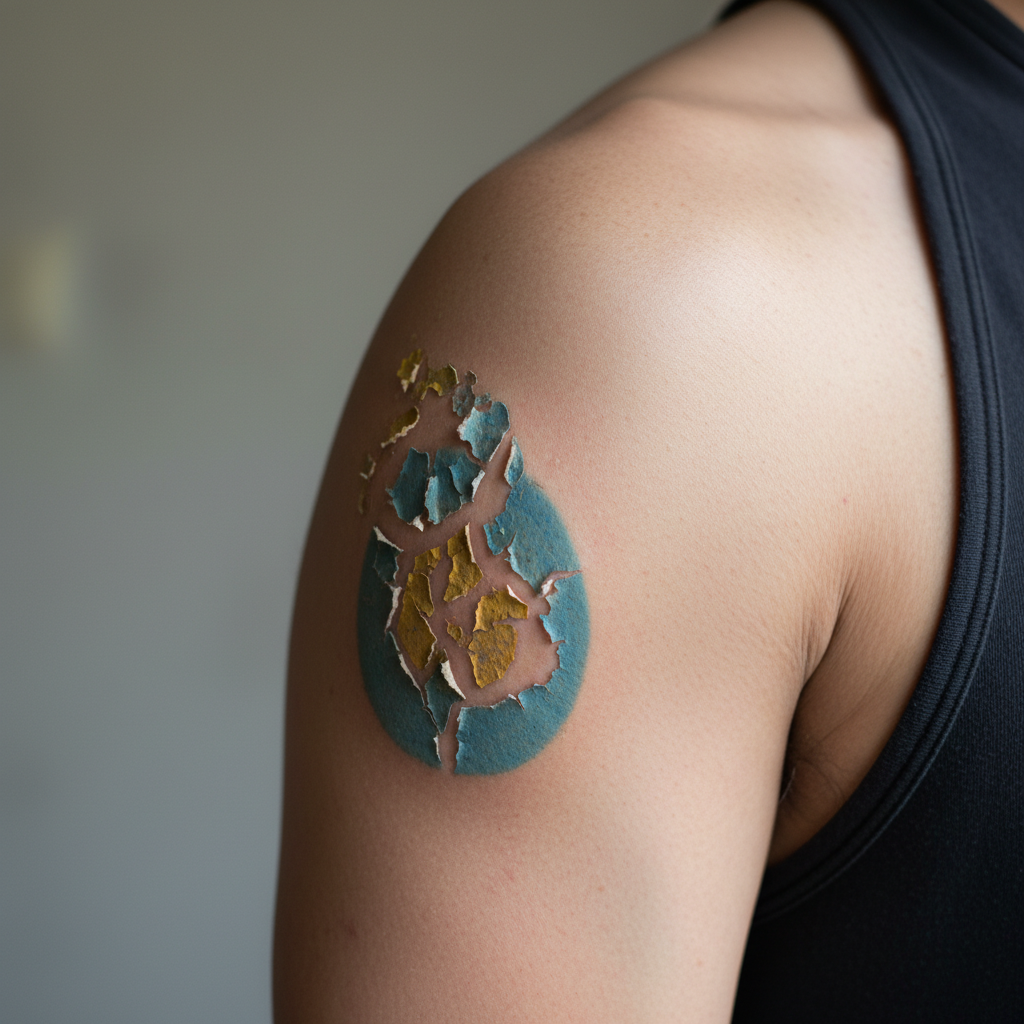
What is not normal is wet, gooey color coming off in chunks, or a section of your tattoo looking dramatically lighter than the surrounding pigment once peeling finishes. Either of those points to ink rejection or an early infection, and you should photograph the area, compare it to the day-after-session photo your artist took, and contact the studio. Full color loss in patches almost always means a touch-up will be needed, and reputable artists offer one free touch-up within 60 to 90 days for exactly this reason. Compare healing flakes against the normal peeling guide if you are unsure.
For lotion during the peel phase, switch from ointment to a fragrance-free, water-based moisturizer. Brands like Aquaphor, Hustle Butter, and Lubriderm fragrance-free are widely recommended by artists. The best lotion for new tattoos breakdown lists what to look for and what to avoid. Apply two to three times a day, never enough to leave a visible sheen on the skin.
Sun, water, and the long game
Sun exposure is the single largest factor in how a color tattoo ages, and it affects color pieces far more than black-and-grey. UV radiation breaks down pigment molecules over time, with yellows and reds degrading first, then greens, with blues and blacks holding longest. A color sleeve that gets daily sun without sunscreen will look noticeably faded in 18 to 24 months. The same sleeve with consistent SPF 50+ application can stay vivid for a decade.
For the first 30 days, the rule is simple: no direct sun on the tattoo at all. After that, daily mineral sunscreen application becomes a permanent part of your routine if you want your color to last. Zinc oxide formulations work best because they sit on top of the skin and physically block UV rather than absorbing it, which means less interaction with the pigment underneath. The long-term sunscreen guide covers brand recommendations and reapplication timing.
Water exposure follows the same caution. Swimming pools, oceans, and hot tubs are off-limits for the full first 21 days minimum, and ideally the full 30. Chlorine and salt water both lift surface pigment and bleach exposed color, and warm soak environments soften scabs and pull ink out with them. Showering is fine from day one if you keep it short and lukewarm. Long hot showers, baths, and soaking are the problem.
Touch-ups and the year-one check-in
Plan on a touch-up appointment around week eight to twelve. Almost every color tattoo benefits from one, and most artists build it into their pricing or offer it free within a 60 to 90 day window. The touch-up is when fade spots get repacked, sharp edges that softened during peeling get re-cut, and any patchy color from heavy peeling gets evened out.
Roughly 80 percent of full-color tattoos benefit from at least one touch-up within the first six months. Skipping it is the most common reason people regret their color piece five years later.
After the touch-up heals, the tattoo enters its long aging phase. Year one to year three is the prime window. Year four onward, expect gradual softening of edges and a small but real loss of pop in yellows and reds. Most well-cared-for color tattoos still look great at the ten-year mark, but they look great in the way that aged color tattoos look great. The colors get a slight watercolor quality, the contrast softens, and the piece looks more lived-in. If you want needle-sharp saturation forever, color tattoos are not the right choice. Black-and-grey holds line crispness longer at the cost of having no color in the first place.
Frequently asked
Why is my color tattoo peeling colored flakes?
The flakes are dead skin carrying surface pigment off as your epidermis turns over. The actual ink lives deeper in the dermis and stays put. As long as the flakes are dry and shedding naturally, your color is fine underneath. Wet, gooey, mid-heal color loss is the warning sign, not dry flake.
Do reds heal differently than blues and greens?
Yes. Red pigment causes more itching and inflammation during healing for a meaningful minority of clients, sometimes lasting two to three weeks past the normal heal window. Reds also fade faster under sun exposure than blues or greens. If your reds stay raised, hot to the touch, or itchy past week four, see a dermatologist. You may be developing a pigment sensitivity that can be managed but not reversed.
How long until I can swim with a color tattoo?
Full submersion in pools, oceans, and hot tubs should wait 21 to 30 days, ideally a full month. Color tattoos are more vulnerable to chlorine and salt fade in the early healing window than black-and-grey, so erring on the longer side pays off in color retention. Quick lukewarm showers are fine from day one.
Should I get a touch-up appointment for my color piece?
Almost certainly yes. About four in five full-color tattoos benefit from a touch-up at the eight to twelve week mark, and most artists offer one free within 60 to 90 days. Use it. The touch-up is what separates a color tattoo that looks great at year five from one that looks tired at year two.
Is daily sunscreen really necessary on a color tattoo?
Yes, and it is the single largest factor in long-term retention. UV breaks down pigment molecules over time, with yellows and reds going first. SPF 50+ mineral sunscreen with zinc oxide, applied daily once the tattoo is fully healed, can double or triple the visible life of vibrant color.
Can I use Aquaphor on a color tattoo?
Yes, in moderation. A pea-sized amount, two to three times a day during the first week, is the standard recommendation. Over-applying creates a barrier that traps plasma and pigment against the skin, which can cause patchy healing and small fade spots. After the peel phase ends, switch to a lighter fragrance-free lotion for daily maintenance.