aftercare
Best Lotion for a New Tattoo: What Actually Works in 2026
The right lotion can shave days off your healing and keep the ink crisp. Here are the brands that work, the ones to skip, and the routine that locks color in.
A new tattoo is an open wound for the first three to five days, then a flaking puzzle for another two weeks. The lotion you use in that window decides how clean the lines stay, how fast the itch passes, and whether the color sets even. The wrong product can clog pores around fresh ink, trap bacteria, or pull pigment out with the scabs. The right one is boring, fragrance-free, and costs under twenty dollars.
This guide breaks down when to start moisturizing, which ingredients matter, and which specific products consistently come out ahead in artist surveys and dermatology recommendations.
When to start moisturizing a new tattoo
Most artists tell you to wait 48 to 72 hours after the wrap comes off before applying any lotion. That window lets the surface plasma dry into a thin protective film, which seals the tattoo enough that you are no longer dealing with an open wound. If your artist used a second-skin film like Saniderm, the timing shifts. You typically keep that on for three to five days, then begin moisturizing once the film comes off and you have done a final wash.
Before that point, all you should be doing is gentle washing with unscented soap and patting dry. Applying lotion too early traps moisture against an open wound and gives bacteria something to feed on. The first sign you are ready to moisturize is a tight, slightly itchy feeling and the start of a dull sheen on the surface. That is the skin transitioning from raw to flaky, and that is when lotion earns its keep. From day four through about day fourteen, you will moisturize two to three times a day, and that habit matters more than the brand on the bottle.
Once you are past the peeling stage, around the start of week three, the routine shifts to once-daily maintenance and then to general body lotion plus sunscreen for the long haul. The full timeline is mapped out in our day-by-day healing guide if you want to know what each phase actually looks like.
What makes a good tattoo lotion (the ingredients)
The shortlist is short: fragrance-free, dye-free, lanolin-free, alcohol-free. Fragrance is the biggest offender because it sensitizes healing skin and can cause delayed contact dermatitis around the tattoo. Lanolin is a common allergen and tends to come up in old-school tattoo balms that have not updated their formulas. Denatured alcohol dries out skin that needs the opposite of that.
What you want present: humectants that pull water into the skin (glycerin, hyaluronic acid), occlusives that lock that water in (petrolatum, dimethicone, shea butter), and minimal everything else. Ceramides and niacinamide are nice bonuses because they support the skin barrier while it rebuilds. Avoid anything labeled "antibacterial" because you do not need it, and triclosan-based products can irritate fresh ink.
A useful test: read the first five ingredients. If you see water, glycerin, and a recognizable emollient like shea butter or petrolatum in the top half, you are probably fine. If you see fragrance, parfum, or a herbal essential oil in that range, put it back on the shelf.
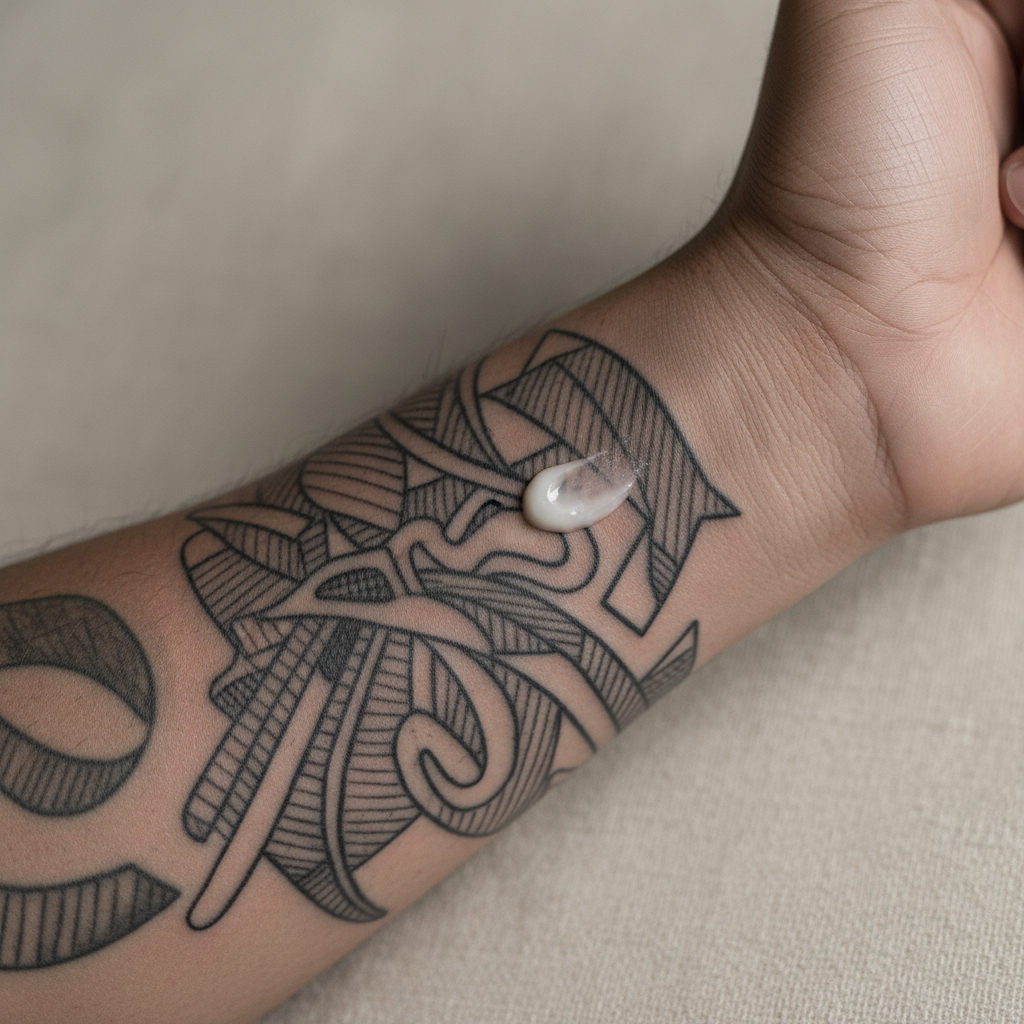
The lotions worth buying in 2026
A few products consistently come up in artist recommendations and have ingredient lists that hold up to scrutiny. Prices are 2026 US retail.
- Aquaphor Healing Ointment ($6 to $15). Petrolatum-based and very occlusive. Use it sparingly in the first three to four days after you switch off second skin. Too much creates a shiny, suffocated tattoo. A pea-sized amount per palm-sized section is plenty.
- CeraVe Daily Moisturizing Lotion ($13 to $18). Fragrance-free, ceramide-rich, and a dermatologist favorite. Works as the day-five-and-onward workhorse once you are past the heavy ointment phase. The pump bottle is more sanitary than a jar.
- Lubriderm Daily Moisture Fragrance-Free ($8 to $12). The classic budget pick. Many traditional artists hand this out at the end of a session because it is cheap, clean, and effective.
- Eucerin Original Healing Cream ($14 to $20). Thicker than CeraVe, better for dry climates or winter healing when your tattoo is on an arm or leg that lives under sleeves.
- Hustle Butter Deluxe ($20 to $25). The most popular tattoo-specific balm. Shea, mango, and coconut base, vegan, no petroleum. Some artists love it, some find it too heavy. Works well for color tattoos because it is less likely to pull pigment.
Pick one. Rotating between three products is a quiet way to over-moisturize and confuse your skin.
Lotions and habits that wreck your healing
The damage usually comes from one of four sources. First, scented body lotions: Bath & Body Works, scented Vaseline, any "spa" line. The fragrance compounds irritate healing skin and can leave you with raised, blotchy reactions that take weeks to fade. Second, coconut oil or any pure oil on its own. Oils sit on the surface and do not deliver moisture; they just trap heat and bacteria.
Third, the over-application trap. People panic when their tattoo looks dry on day six and slather on a thick coat every two hours. That softens the scabs prematurely and pulls them off, which often takes ink with them. A thin layer that absorbs in under a minute is the right amount. If your tattoo still looks shiny twenty minutes after application, you used too much.
Fourth, going back to old habits too soon. Hot showers, the gym, and direct sun all undo what the lotion is doing. Our guide to working out after a fresh tattoo covers the timing on that side. The lotion can only do its job if you are not actively beating up the skin between applications.
How to apply without overdoing it
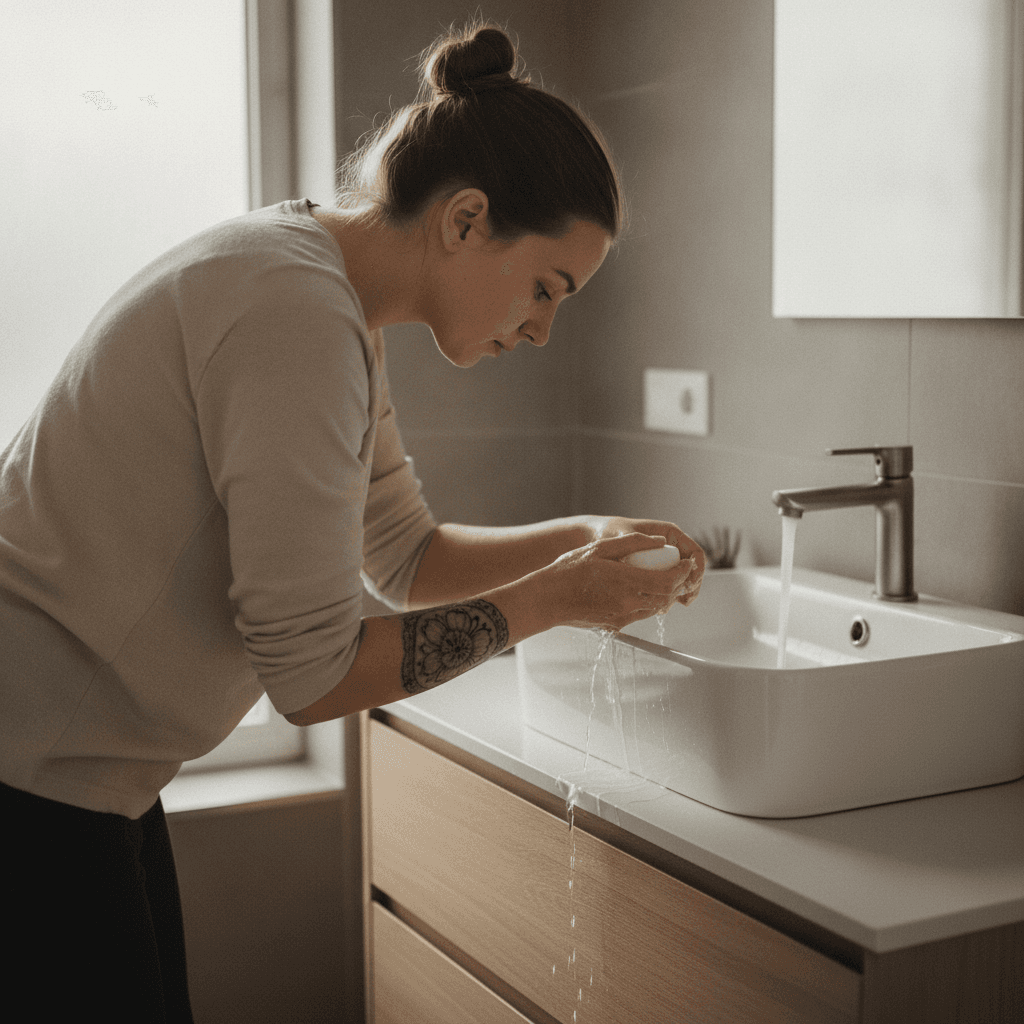
The routine is simple and worth doing the same way each time. Wash your hands with unscented soap. Gently clean the tattoo with lukewarm water and a small amount of unscented soap, using your fingertips, not a washcloth. Pat dry with a clean paper towel. Wait two or three minutes so the surface is fully dry.
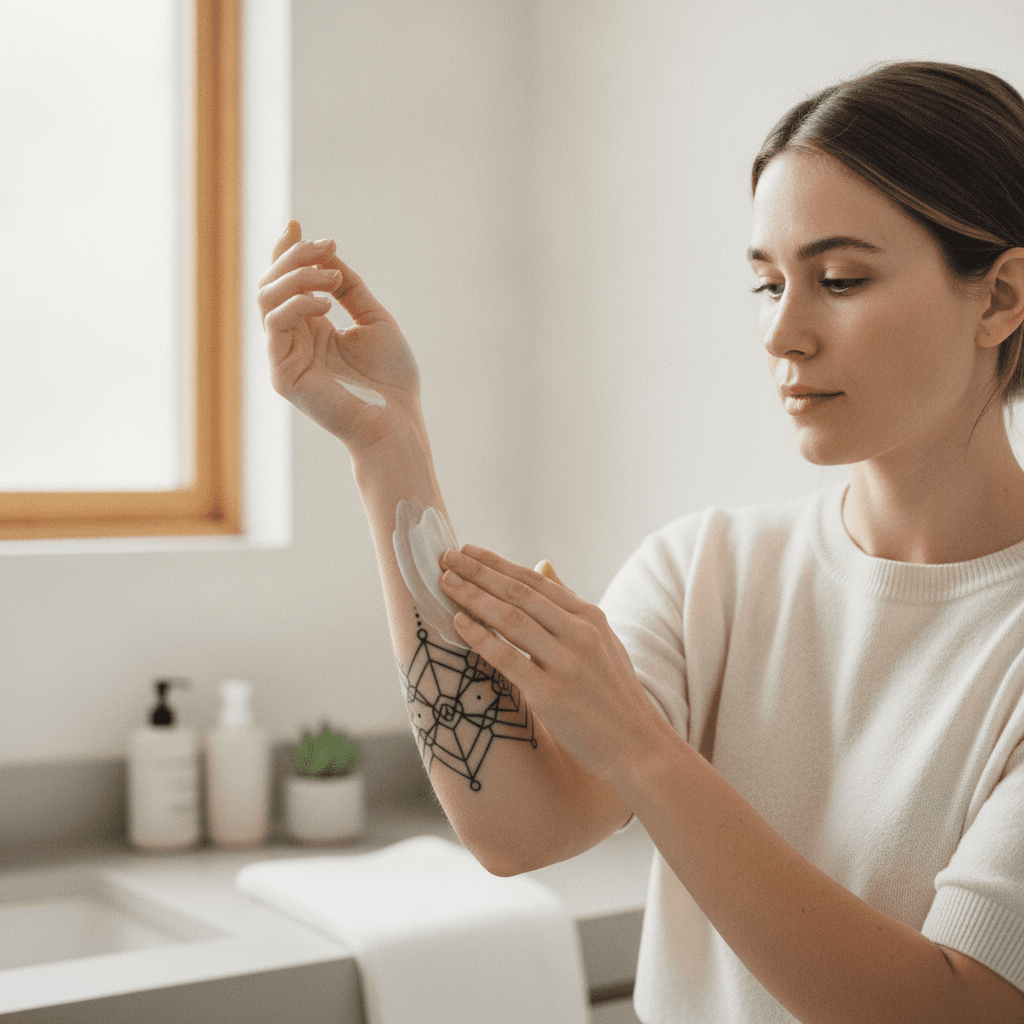
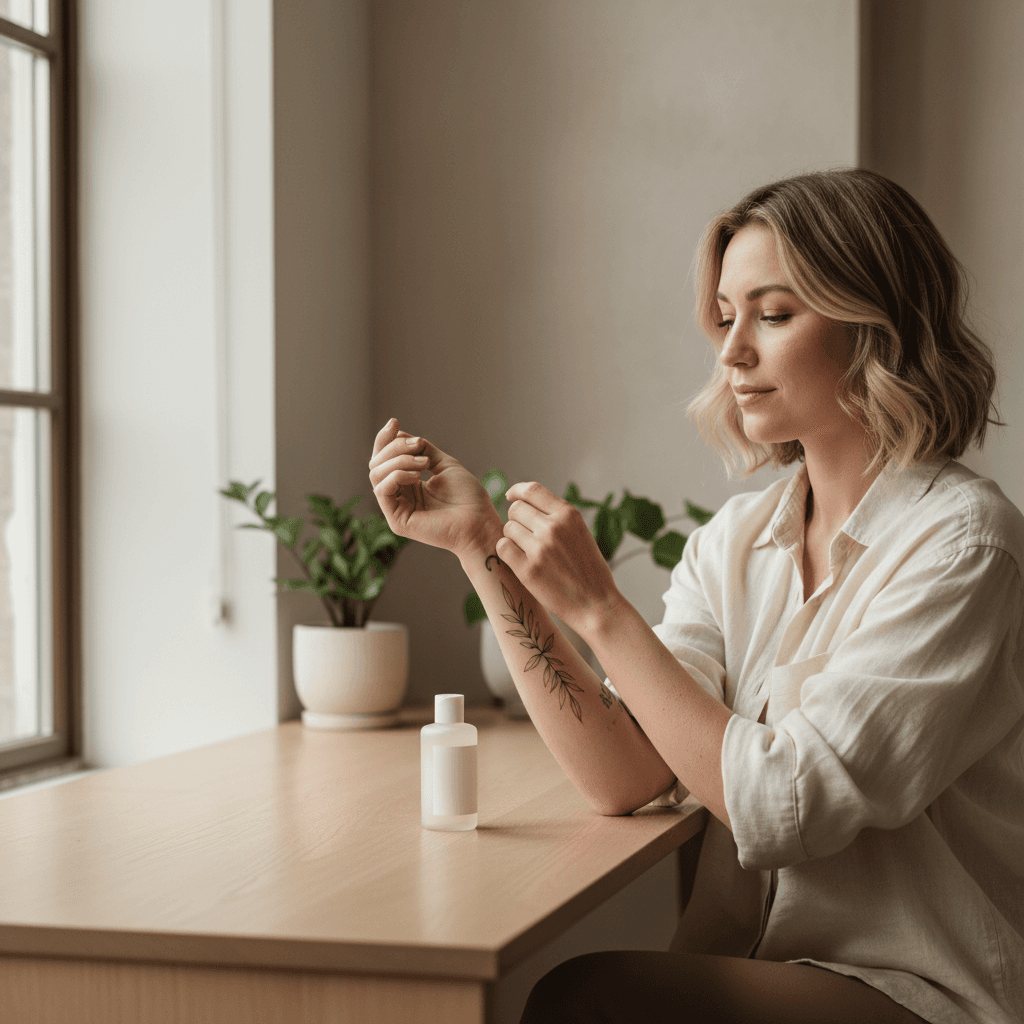
Then squeeze out a small amount of lotion, warm it briefly between your fingers, and spread it across the tattoo in a thin, even layer. The goal is sheen, not gloss. If the tattoo looks wet, gently dab the excess off with a clean paper towel. Repeat two or three times a day for the first two weeks. Once the peeling phase ends, drop to once a day, then to general moisturizing whenever the area feels dry.
A few small things matter more than people think. Use a pump bottle when you can, because dipping fingers into a jar contaminates the rest of the product. Keep one bottle just for the tattoo so you are not cross-contaminating from a shared family lotion. And if you travel, decant a small amount into a travel-sized bottle rather than buying a new fragranced one at the hotel.
Frequently asked
Can I use Vaseline on a new tattoo? Plain unscented Vaseline is acceptable in the first few days as a thin occlusive layer, but it is heavier than necessary. Aquaphor is the more refined version with added humectants and is generally preferred. Avoid any scented or "cocoa butter" Vaseline products.
Is coconut oil good for new tattoos? Not as a primary moisturizer. Pure coconut oil sits on the surface, can clog pores, and offers no humectant action. Some tattoo balms include it as one ingredient in a larger formula, which is fine. Standalone coconut oil is not a good replacement for a proper fragrance-free lotion.
How often should I lotion my new tattoo? Two to three times a day during days four through fourteen. Less often risks tightness and cracking; more often risks over-saturation and lifted scabs. A useful rule: if it still feels slightly damp from the last application, skip this one.
Will lotion fade my tattoo? A small amount of well-chosen lotion will not. Over-application during the peeling phase can pull pigment with the scabs, which causes patchiness rather than overall fade. Long-term fade comes from sun, not lotion, which is why daily SPF after week three is the bigger lever.
Does the same lotion work for color and black-and-grey tattoos? Mostly yes, but color tattoos heal slightly slower and benefit from a non-petroleum option once you are past day four. Hustle Butter or a ceramide cream like CeraVe tends to be gentler on heavy color work than a thick layer of Aquaphor in the second week.
Should I use the tattoo aftercare product my artist sold me? If the ingredient list is clean (fragrance-free, no lanolin, no essential oils), yes. If it is a heavily scented balm with a $40 price tag, you are paying for branding. The drugstore options above outperform most boutique products on ingredient quality.