aftercare
Saniderm and Second Skin Tattoo Bandages: The Complete Guide
Saniderm is the most common second-skin tattoo bandage and it changes how your fresh ink heals. Here is how long to keep it on, when to swap, and when to skip it entirely.
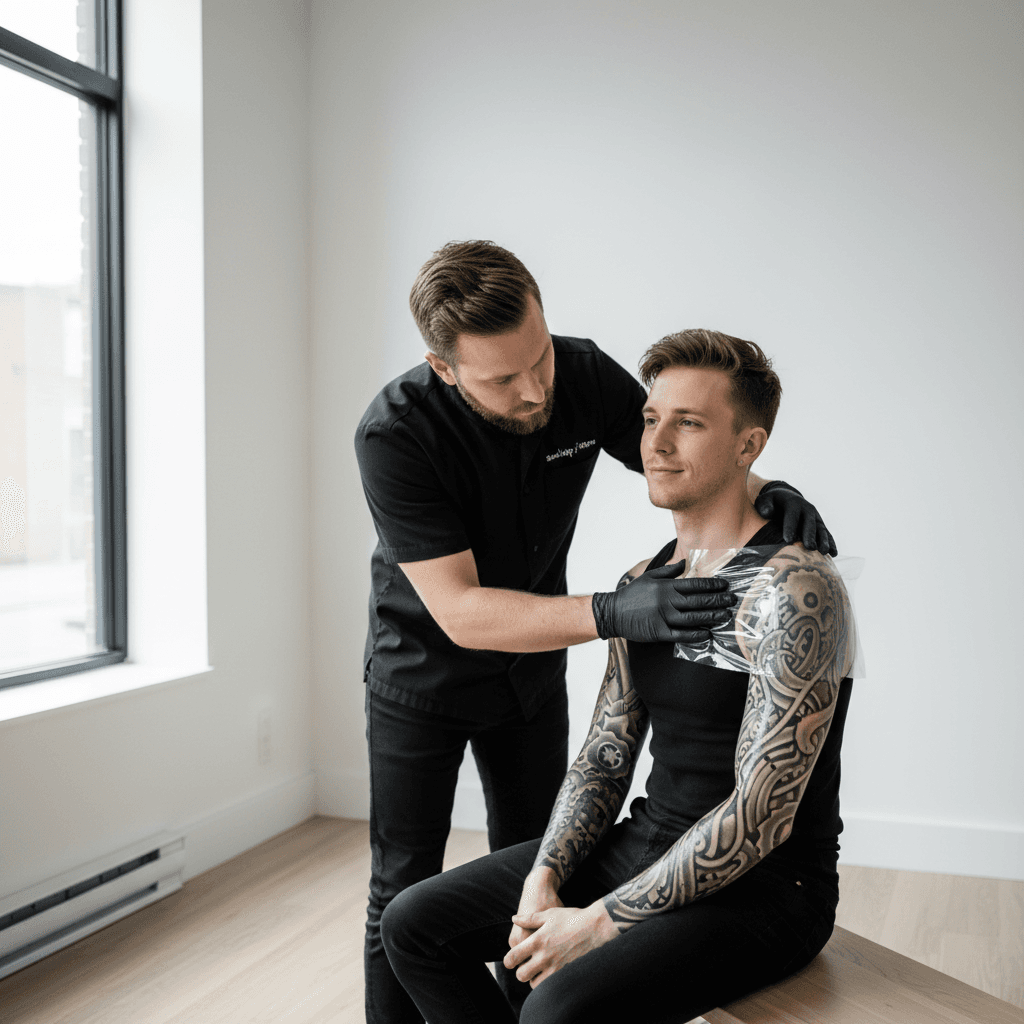
Saniderm has quietly become the default tattoo bandage in most modern shops. It is a thin transparent adhesive film that locks moisture against the skin while keeping out bacteria, friction, and stray fabric. If your artist sent you home with a clear plastic-looking wrap instead of cling film and gauze, that is what it is. This guide covers what it does, how long to wear it, the right way to remove it, and the situations where you should ask your artist for a different approach.
What Saniderm actually is
Saniderm is a brand name for a medical-grade polyurethane bandage originally developed for burn and surgical wound care. The category includes other names like Tegaderm, Recovery Derm Shield, Second Skin, Dermalize Pro, and Hustle Butter's Recovery Film. They all work on the same principle: a breathable adhesive layer that traps the wound's own plasma against the skin so healing happens in a controlled moist environment. Studies on moist wound healing going back to the 1960s consistently show faster epithelial regrowth and less scarring compared to dry healing. For a fresh tattoo, that means less scabbing, less itching during peel, and ink that settles cleaner with fewer touch-ups down the line.
The film is waterproof and breathable in opposite directions. Water vapor and oxygen move out, but liquid water and bacteria cannot move in. That is why you can shower with it on without ruining the seal. The adhesive is hypoallergenic for most people, though a small percentage react to the acrylic-based glue and need to switch to a hydrogel alternative or skip film altogether. The film comes in pre-cut sheets or in a roll, and most artists will apply the first piece for you before you leave the studio.
How long to keep each piece on
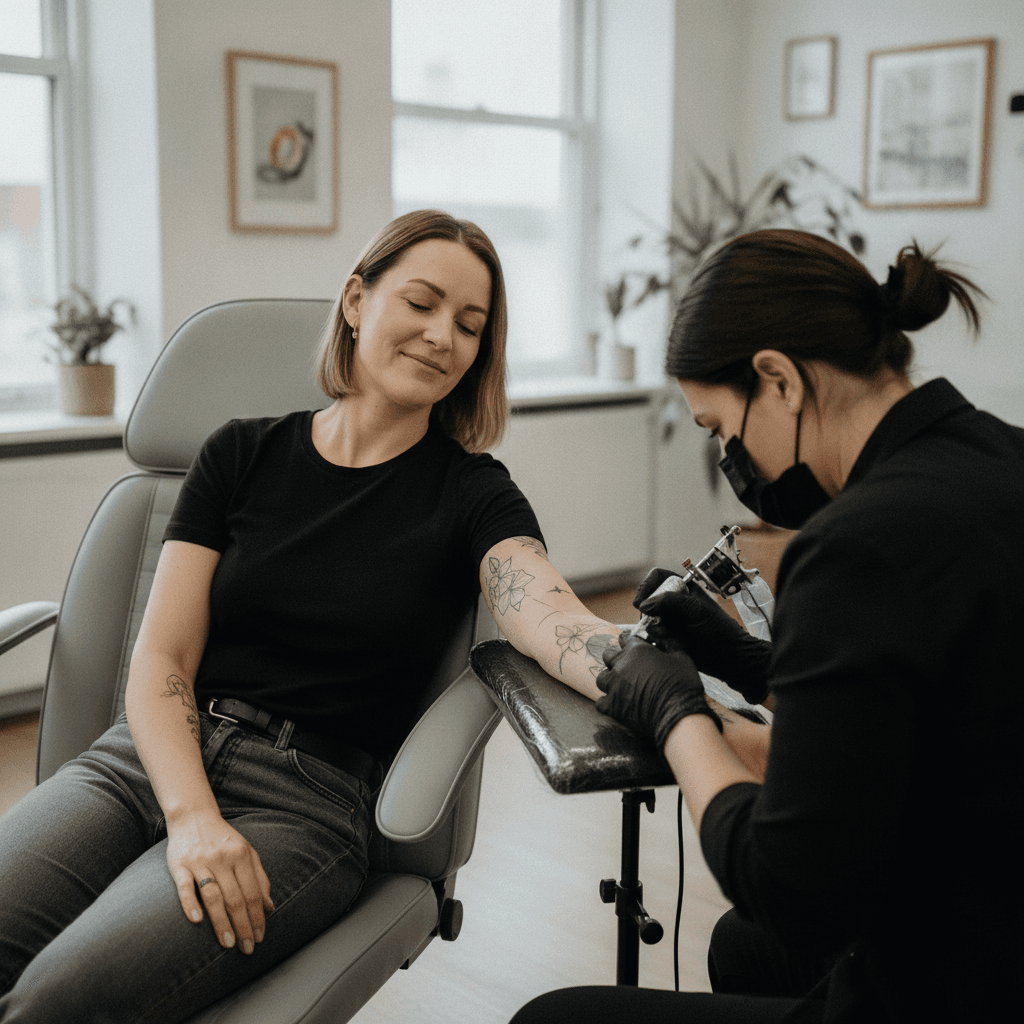
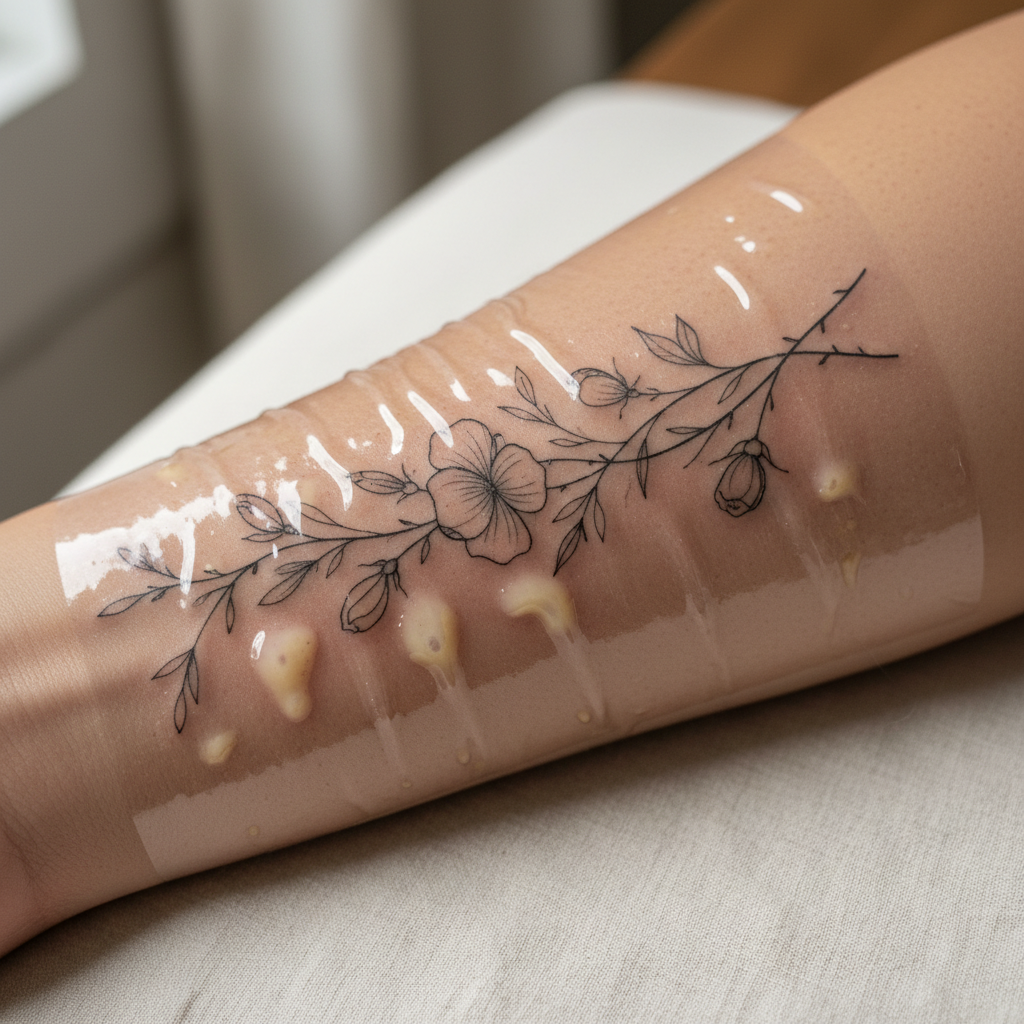
The standard protocol most artists follow is two pieces over five to seven days. The first piece goes on at the shop right after the session and stays on for 24 hours. During this window plasma, ink, and a small amount of blood will pool under the film. That fluid looks alarming but is completely normal and is part of the design. Removing too early breaks the moisture seal and forces you to restart with a less effective process.
After 24 hours you remove the first piece, gently wash the tattoo with fragrance-free soap, pat it dry, and apply a fresh sheet. This second piece stays on for three to five more days depending on how the tattoo is doing. The whole second-skin window typically ends between day four and day seven. Past seven days the adhesive starts to lift on its own, the film traps less useful fluid, and most artists recommend switching to traditional aftercare with a light unscented lotion for the remaining two to three weeks of healing.
For larger pieces like full sleeves or back work, you may go through three pieces because the second sheet gets overwhelmed by the volume of plasma. For small fine-line tattoos under three inches, one piece for five days is often enough.
Removing Saniderm without damaging the tattoo
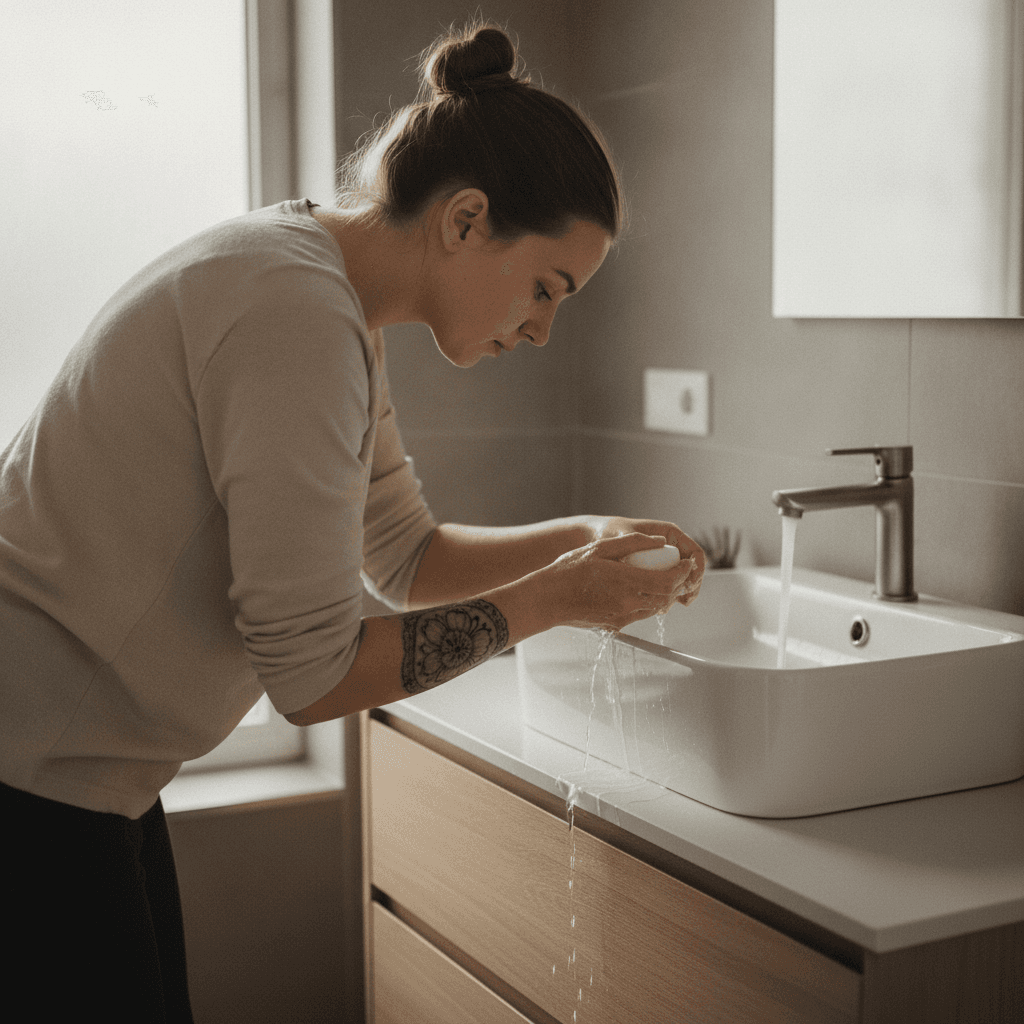
This is where most people mess up. Do not peel Saniderm off dry like a band-aid. The adhesive bonds to the skin and pulling it straight off lifts hairs, healing tissue, and sometimes pieces of fresh ink along with the film. The correct method is to remove it in a warm shower or under warm running water from a sink.
Step by step: stand under the warm shower for one to two minutes to soften the adhesive, then find a corner of the film and pull it back on itself parallel to your skin, not straight up. Pull slow and low, keeping the angle as close to your skin as possible. The film should release in a long strip with minimal resistance. If you feel sharp pain, stop and run more warm water on the area before continuing. The whole removal should take two to three minutes for a forearm-sized piece.
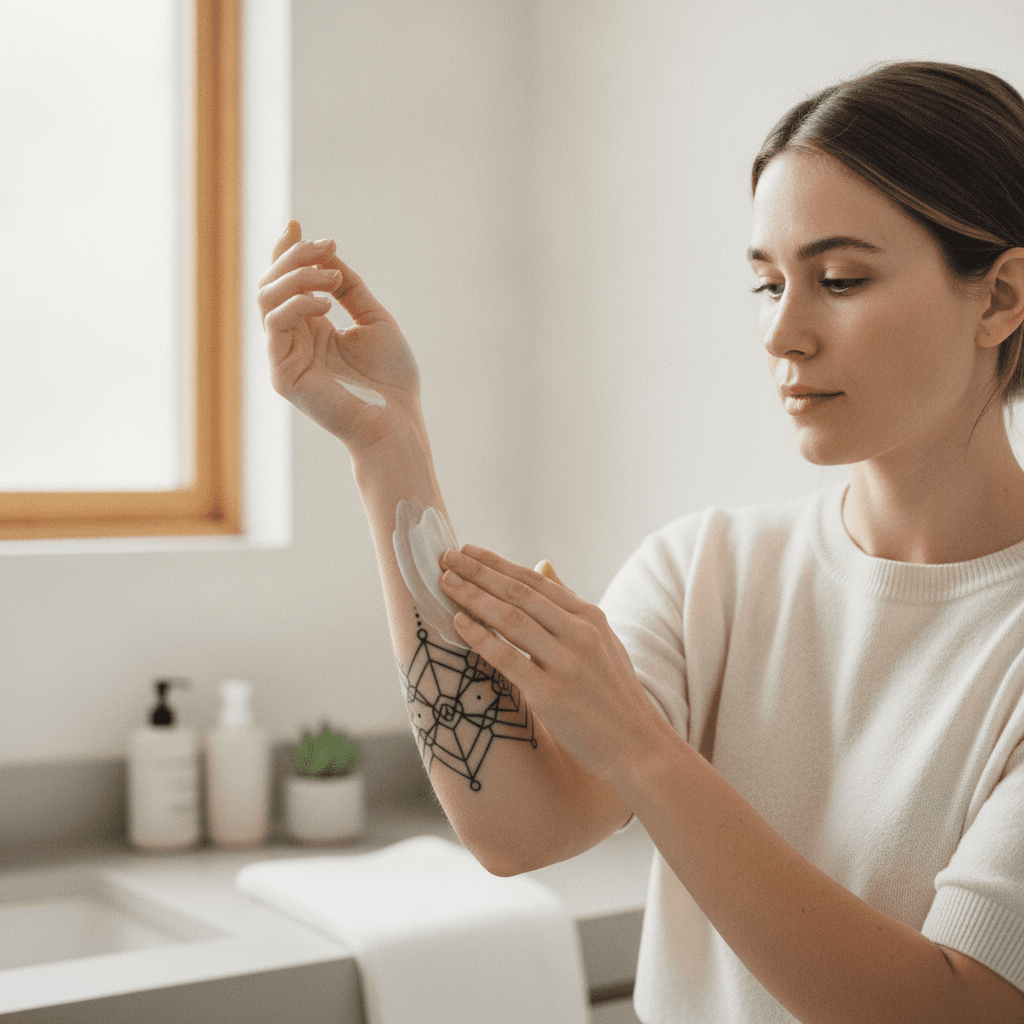
Once the film is off, wash the tattoo with fragrance-free antibacterial soap, pat dry with a clean paper towel, and either apply your next sheet or move to a thin layer of unscented lotion if you are done with film. For a fuller breakdown of what those first hours look like with or without film, our tattoo aftercare first 24 hours guide walks through it hour by hour.
When Saniderm is not the right call
Second-skin film is not universal. There are real situations where dry healing or traditional plastic-and-gauze wrap is the better choice for the specific tattoo you got.
Skip Saniderm if any of the following apply:
- You have a known adhesive allergy or sensitive skin that reacts to medical tape
- The tattoo is on a high-flex area like the inner elbow, behind the knee, or armpit where the film will not stay sealed
- The tattoo is on the hand, foot, or fingers where waterproofing creates more problems than it solves
- You are healing in extreme heat and humidity where the trapped plasma can encourage bacterial growth
- You have eczema, psoriasis, or another chronic skin condition in the planned area
Some artists also avoid film on the upper chest and ribs because the curvature makes a clean seal hard to maintain past 24 hours. If your artist does not offer Saniderm, that is usually why. The trade-off is more visible scabbing and a slightly longer healing window with traditional methods, but the outcome on a properly cared-for dry-heal tattoo is similar at year one. Color saturation and line crispness do not depend on which aftercare method you use as long as you do not pick at scabs.
Saniderm vs traditional dry healing
The honest comparison comes down to convenience versus simplicity. Saniderm reduces total active aftercare time from about two weeks of multiple daily washes and lotion applications to roughly one week of film changes plus a shorter lotion phase. There is less itching during peel because the skin never fully scabs over. Most people report fewer touch-ups on heavily saturated black-and-grey pieces and color work when film is used correctly through the first week.
Dry healing requires no adhesive, no upfront cost beyond standard aftercare, and avoids any allergy risk. The trade-off is more daily attention from you. You wash the tattoo two to three times a day, apply a thin lotion layer five to six times a day in the first week, and accept visible scabbing and flaking during peel. For first-time tattoos in small sizes, dry healing is still a perfectly good option. Many old-school traditional artists still prefer it for everything they do.
Cost note: a roll of name-brand Saniderm runs $25 to $40 and is enough for two or three medium tattoos. Cheaper second-skin alternatives on Amazon work but vary significantly in adhesive quality.
The decision usually comes down to what your artist is comfortable with. If they sent you home with film, follow their protocol exactly. If you want film and they did not offer it, ask before booking next time. For more on the broader healing window, see our tattoo healing timeline day by day. If you notice unusual itching once the film comes off, the itchy tattoo guide covers when itching is normal and when it is a warning sign worth checking out.
Frequently asked
Can I shower with Saniderm on? Yes, the film is waterproof. Warm showers are fine and actually help when it is time to remove the piece. Avoid hot water, long soaks, baths, hot tubs, swimming pools, and the ocean for the full healing window. The seal can fail under prolonged submersion and bath water carries bacteria the film was specifically designed to keep out.
Is the fluid under my Saniderm normal? Yes. The pooled mix of plasma, lymph, and trace ink is exactly what the bandage is designed to hold against the skin. It often looks dark or murky because it contains pigment that worked its way out in the first few hours. If the film stays sealed, leave it alone. Only remove early if the seal breaks and fluid starts leaking out the edges.
What if the Saniderm leaks? A small leak at the edge means the seal failed and bacteria can now get in. Remove the film in a warm shower, wash the tattoo gently, dry it, and either reapply a fresh piece or switch to traditional aftercare. Do not patch a leaking piece with extra tape. The contaminated fluid needs to come off the skin and the area needs to be cleaned before any new bandage goes on.
Can I sleep on a tattoo with Saniderm on? Yes. That is one of the bigger reasons artists use it. The film protects the tattoo from sheets, blankets, pillow friction, and any random fabric contact during the night. You still want to avoid lying directly on a fresh piece for the first night when the pressure can squeeze out useful plasma, but the protection during sleep is one of Saniderm's main selling points for restless sleepers.
Does Saniderm work on all skin tones? Yes. The film and adhesive perform the same on every skin tone. The only variable is that darker pigmentation may make any adhesive irritation slightly harder to spot visually. If you feel burning, itching, or unusual pain under the film and you have not previously tested it on your skin, remove the piece and switch to traditional aftercare for the rest of the heal.
Are knockoff brands worth it? Some, not all. Tegaderm is medical-grade and works identically to Saniderm. Dermalize Pro and Recovery Derm Shield are reliable. Generic Amazon-brand second-skin films are inconsistent on adhesive quality, with some failing within twelve hours and others holding the full window. If you are buying your own film, stick to a brand your artist recommends or one with a long track record in the tattoo community.