style guides
Negative Space Tattoos Style Guide: Design and Longevity
Negative space tattoos use uninked skin as the subject. Here is how the technique works, where it holds up long term, and what it costs.
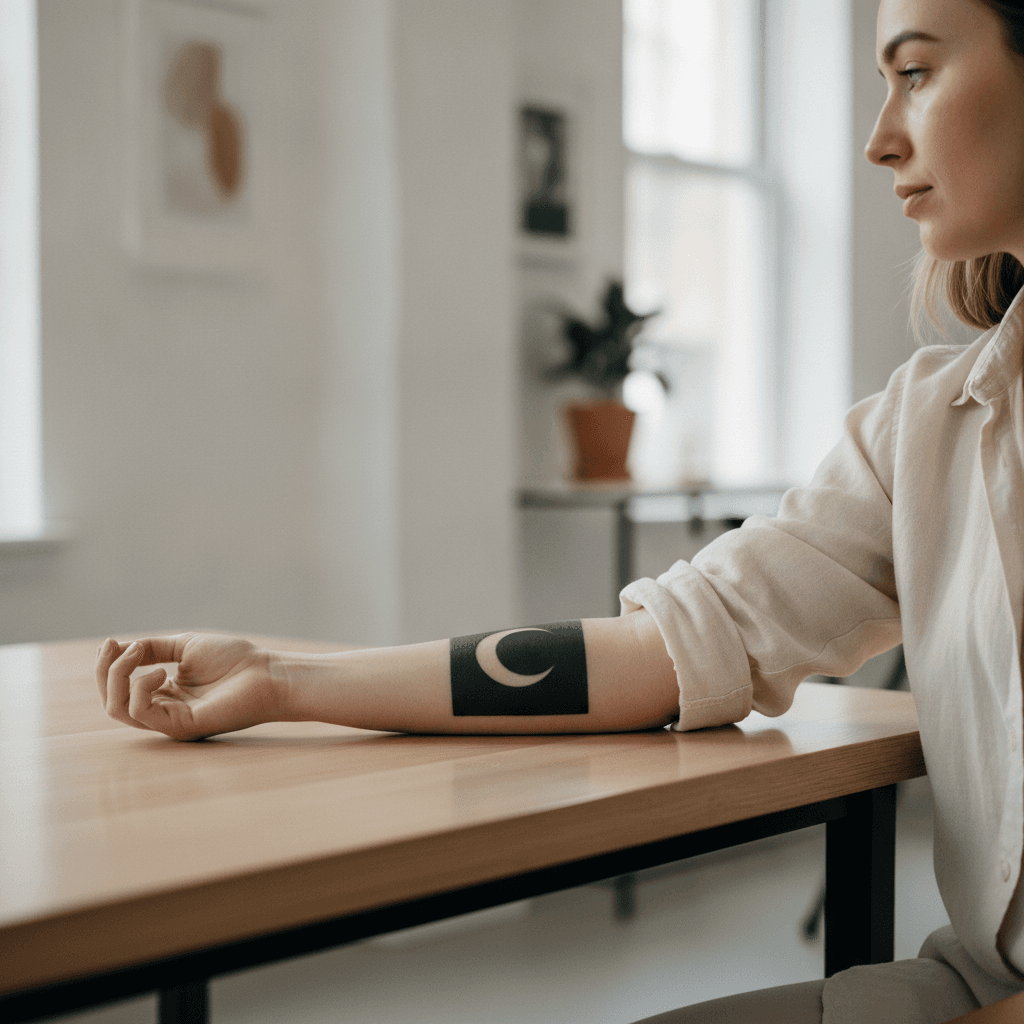
Negative space tattoos flip the rules most people assume about ink. The subject is not drawn in black. It is the uninked skin left behind, framed by heavy fill around it. The effect reads like a stencil cut from a solid panel, and when it is executed well, the eye snaps straight to the empty area rather than the ink. This guide walks through how the technique actually works, which placements survive the long term, pricing bands you should expect, and the aftercare quirks that come with large saturated black fields.
What negative space actually means in tattooing
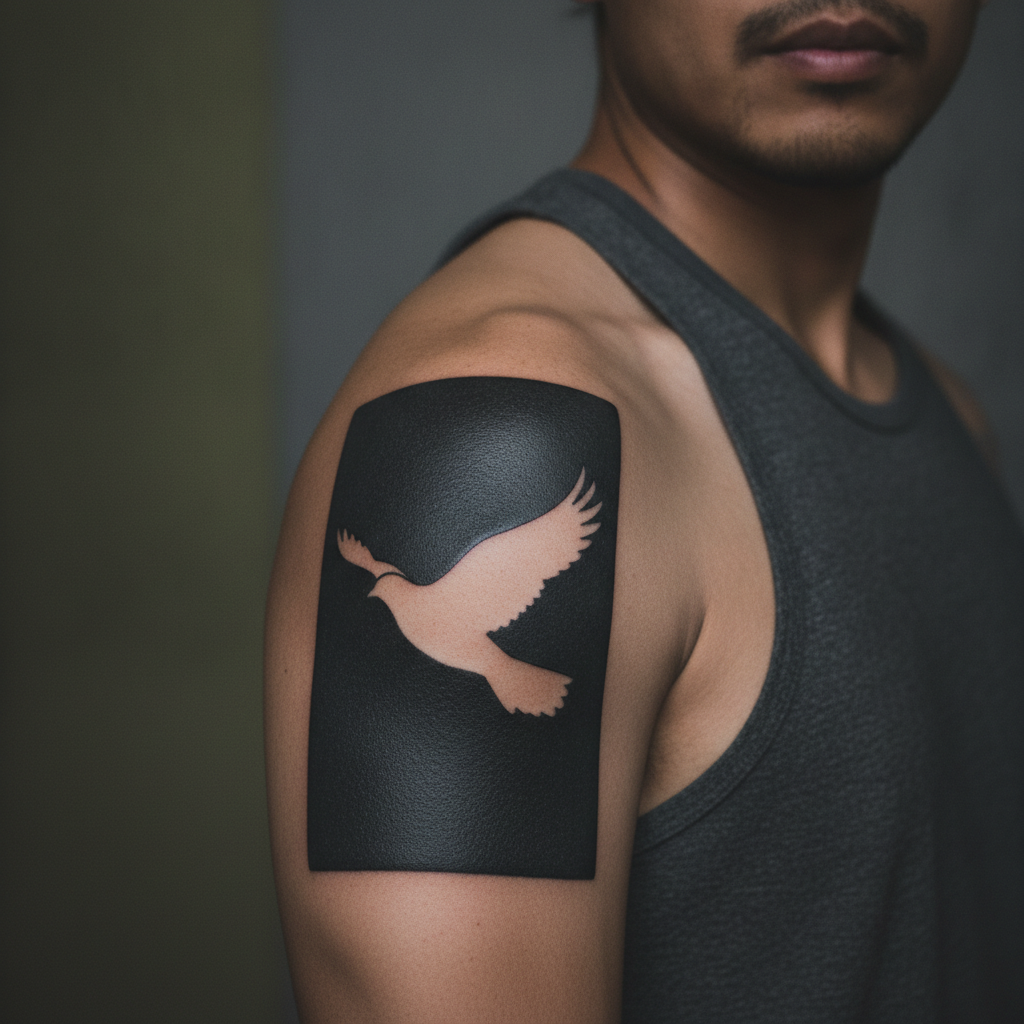
In painting, negative space is the area around a subject. In tattooing, that definition gets inverted. The artist packs black (or occasionally a dark pigment) into the surrounding area and leaves the subject completely untouched, so the picture is formed by the natural tone of the skin. A moon becomes a crescent of bare forearm inside a solid black square. A bird becomes a silhouette of uninked skin inside a dense geometric shape. The reading depends entirely on contrast, which is why the technique sits inside the broader blackwork tradition and borrows heavily from geometric design principles.
Two technical choices define a true negative space piece. First, the black fill has to be uniformly dense, otherwise the subject blurs into a patchy outline instead of standing out as a clean shape. Second, the edges where ink meets bare skin must be sharp and intentional, because any wobble in that boundary is what the viewer will see first. Artists usually tattoo the outline with a liner needle to lock the edge, then switch to a magnum or bugpin configuration to pack the fill in overlapping passes. Expect three to five pack passes in a single sitting for most saturated black fields on medium to large pieces.
Where negative space holds up long term
Negative space works best on areas with stable skin texture and minimal stretch. The forearm, outer bicep, upper back, and calf are the strongest candidates because the skin there holds pigment evenly and the shape of the black field does not warp as the body moves. Pieces on these placements can look crisp for ten to fifteen years with proper sun protection. Rib, stomach, and inner bicep placements have more skin movement and more oil production, which can cause saturated black fills to break down faster, sometimes showing softening at year five or six.
Skin tone matters more than most people expect. On fair to medium skin, the uninked subject reads with high contrast and the design pops immediately. On darker skin, the native skin tone becomes the lighter value, which means a traditionally designed negative space piece can lose definition because the contrast ratio drops. Experienced artists working on deeper skin tones adjust by making the uninked area larger, by adding thin red or ochre accents inside the design, or by choosing shapes with clean geometric outlines rather than fine organic silhouettes.
Design choices that make or break the piece
The strongest negative space tattoos share three design traits. The outer frame is a bold, simple geometric shape like a circle, square, or hexagon. The subject inside is simplified to a silhouette rather than a detailed rendering. And there is enough bare skin inside the shape that the eye has a clear focal point. When any of these breaks down, the design loses legibility. A detailed subject gets eaten by the fill. A thin or irregular outer frame looks accidental rather than designed. A subject that fills too much of the available space turns the piece into a dense blackwork block with no breathing room.
The style pairs well with linework and fine-line accents, especially when the artist runs a few single-needle lines inside the uninked area to add texture without compromising the negative space effect. It also layers beautifully into larger compositions, like a sleeve layout where one or two negative space elements anchor the piece against softer fine-line sections. Mixing it with heavy color is harder, because the saturated black tends to swallow adjacent color pigments over time.
Session count, pain level, and realistic timelines
A palm-sized negative space piece with a simple subject usually fits inside a two to three hour sitting. A forearm panel measuring roughly four by five inches needs four to six hours and may require a touch-up at the three to six month mark to fix any patchy spots in the fill. Full back pieces and large thigh panels can run three to five sessions spaced six to eight weeks apart to let the heavy black heal fully before the next pass.
Pain tends to run higher than average for a comparable sized piece because the artist is packing dense black over a wide area rather than running thin lines. The vibration from the pack passes is cumulative, and most clients notice fatigue in the second hour. Clients with lower pain tolerance should book shorter sessions and expect a longer overall project rather than trying to finish a large piece in one marathon sitting.
Pricing by size and complexity
Pricing follows the standard tattoo cost structure, with a size and fill complexity adjustment. Expect these US ranges for 2026:
- Small negative space piece (two to three inches, simple shape): $200 to $400
- Medium forearm or calf panel (four to six inches): $500 to $1,000
- Large thigh or back panel (eight inches and up): $1,200 to $3,000 across one to three sittings
- Full custom back piece with negative space elements: $3,500 to $8,000 across three to six sittings
Artists with strong blackwork portfolios command a premium because packing dense, even black is a specific skill set. Studio hourly rates for this specialty typically sit between $180 and $300 per hour in major US cities, with high-demand artists charging $350 to $450 per hour.
Aftercare quirks for large black fields
Dense black heals differently than linework. The skin reacts to the volume of pigment and the overlapping needle passes, which means swelling runs higher for the first forty-eight hours and plasma weeping continues longer than it does on a thin linework piece. Expect visible scabbing on days four through seven, and resist the urge to pick even a single flake because losing scab material directly over the fill is what causes the small white specks and gray patches people complain about months later.
Moisturize sparingly during the scabbing phase. Over-greasing a heavy black fill traps moisture under the forming scab and softens the ink underneath, which leads to patchy healing. A thin layer of unscented lotion twice a day is plenty. Sun exposure is the single biggest long-term enemy of negative space work because UV lightens saturated black into a dull gray, which collapses the contrast the whole design depends on. SPF 50 on the piece whenever it is exposed, no exceptions, forever.
Frequently asked
Is negative space the same as blackout tattooing?
No. Blackout tattoos cover entire body parts in solid black, often with no subject visible at all. Negative space keeps a specific uninked shape as the subject, and the surrounding fill exists to make that shape readable. The two techniques share needles and pigments but have opposite design goals.
Do negative space tattoos age well on dark skin?
They can, but the design has to be adjusted. The contrast between uninked skin and black fill is lower on deeper skin tones, so the subject needs to be larger and more geometric to stay readable. Fine or detailed silhouettes tend to blur. An experienced artist will mock up the design against your actual skin tone before starting, and may suggest small red or ochre accents to lift the contrast.
Can I add color to a negative space tattoo later?
Technically yes, but the uninked area is skin tone, not white ink, so adding color there behaves differently than adding color to a healed white ink background. The pigment will shift based on your underlying skin, and placing color near a saturated black fill risks the black bleeding into the color over time. Most artists recommend committing to black and bare skin for the first design and keeping color additions outside the negative space shape.
How often do negative space pieces need touch-ups?
Expect one touch-up at three to six months after the initial session to even out any patchy spots in the fill. After that, a well-healed negative space piece typically needs a maintenance touch-up every five to seven years, mostly to re-saturate black that has lightened from sun exposure. Pieces kept out of direct sun can go a decade or more without needing attention.
What should I bring to the consultation?
Bring reference images that show both the subject you want (bird, moon, mountain, animal silhouette) and examples of negative space execution you like, so the artist can gauge the level of simplification you are comfortable with. Also bring a photo of the exact placement in good light so you both can plan around the natural contour of that body area. The simpler and larger the subject, the better it will age.
Why do some negative space tattoos look fuzzy years later?
Two common causes. First, the black fill was not packed densely enough during the original session, so the edges softened as the ink settled. Second, the piece was exposed to sun without protection and the saturated black lightened unevenly, blurring the boundary between inked and uninked skin. A touch-up to re-pack the fill usually restores the contrast, provided the original outline is still intact.