style guides
Single-Needle Tattoos: Style Guide, Longevity, and Cost
Single-needle tattoos use one round liner needle to draw hairline detail on skin. Here is how the style holds up, what it costs, and who it suits.
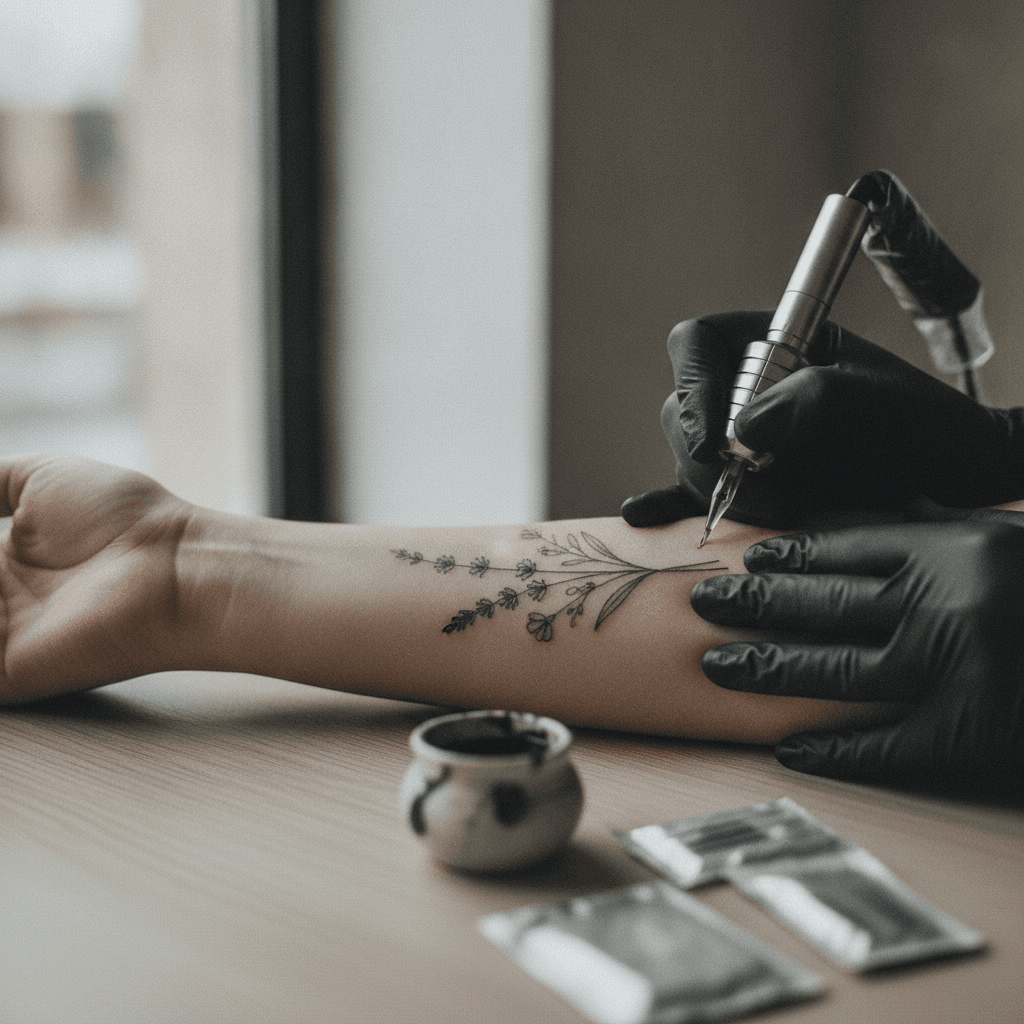
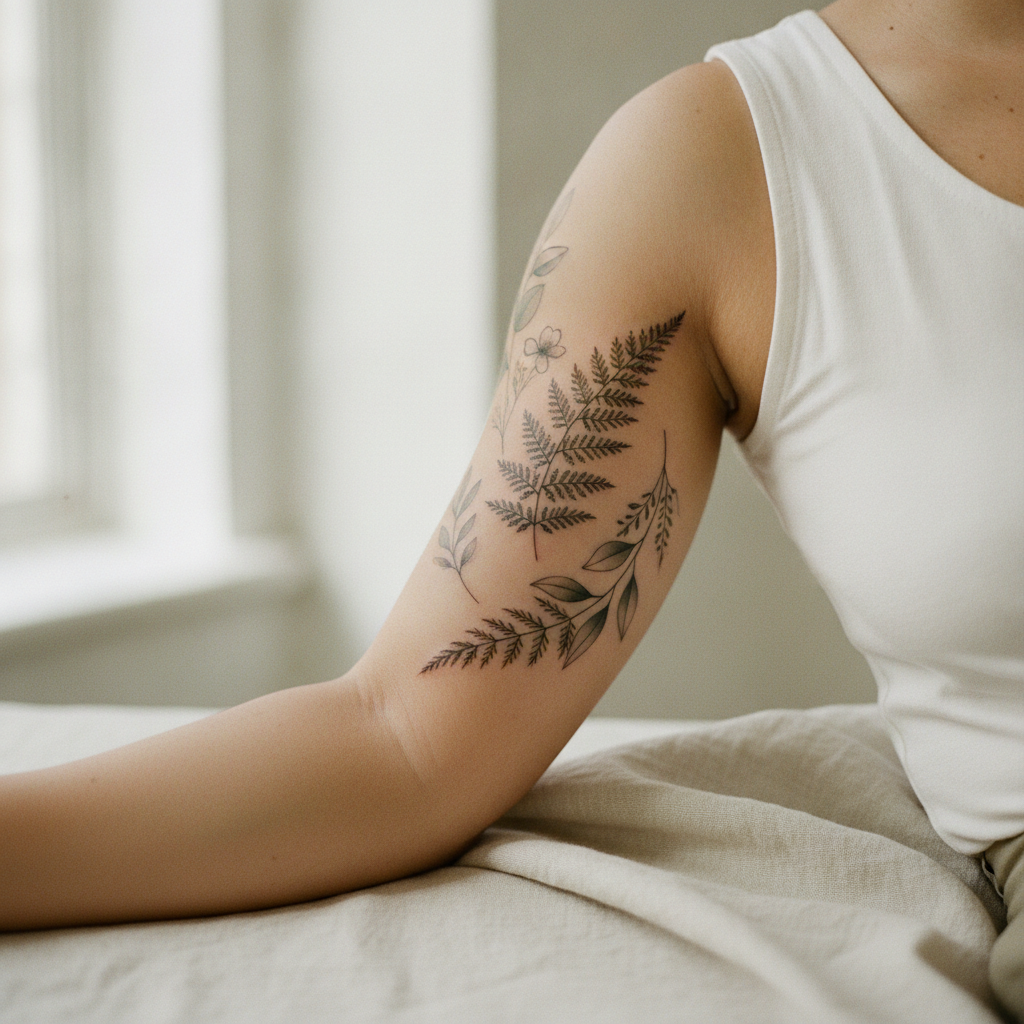
Single-needle tattoos are the most delicate work you can put on skin. One 3RL or bugpin liner draws every line, no shading needle bundles, no color packing. The result is a hairline drawing that looks closer to a pencil sketch than a traditional tattoo. This guide covers what the style actually is, how it ages, what it costs, and how to pick a design that will still read in ten years.
What single-needle actually means
The term refers to the machine setup, not the visual style. A true single-needle setup runs one 0.25mm or 0.30mm needle in a rotary machine at low voltage, usually between 6 and 8 volts. Fine-line tattoos are often marketed as single-needle but many are done with 3RL or 5RL bugpin groupings, which are three or five very thin needles bundled tight. The distinction matters because a single-point needle deposits less ink per pass and requires more passes to build a saturated line, which is why sessions run long relative to the size of the piece.
Artists who specialize in the style tend to come from illustration or graphic design backgrounds. The technique demands a steady wrist, low hand tremor, and the discipline to lift the machine between strokes rather than dragging. Bad single-needle work shows up fast: wobbling lines, uneven weight, ink skips where the needle lost contact. Good single-needle work looks intentional at every point along a curve.
How single-needle ages over time
This is the honest tradeoff. Single-needle lines are shallow by design, sitting in the upper dermis rather than driving deep into the mid-dermis where traditional lines live. Shallow ink migrates less and heals cleaner, but it also fades faster and softens at the edges. Expect noticeable line softening at year three, meaningful fade at year seven, and the need for a touch-up between years five and ten for most pieces.
Placement drives most of the aging outcome. Areas with heavy sun exposure, friction, or stretching age worst: hands, feet, fingers, inner wrists, and the outer forearm on active people. Areas with stable skin and modest sun exposure hold longest: inner bicep, inner forearm, upper back, ribcage, and the back of the calf. Skin tone matters too. Very fair skin holds fine-line black work the longest with the highest contrast. Deeper skin tones read single-needle work beautifully but the contrast ratio drops, which is a physics problem, not an artist problem.
- Best-aging placements: inner bicep, inner forearm, upper back, ribcage
- Worst-aging placements: hands, feet, fingers, side of index finger
- Touch-up window: year 5 to year 10 for most pieces
- Sunscreen SPF 50 daily is non-negotiable after the first month
What single-needle costs
Single-needle work is priced higher per hour than most other styles because the artist pool is smaller and the technique is slower. Expect $200 to $400 per hour in major North American and European cities, $250 to $500 per hour with in-demand artists in Los Angeles, New York, or London, and $150 to $250 per hour outside major metros. Bali and Bangkok run $100 to $200 per hour for solid single-needle work at reputable studios, which is why the style has become a tattoo tourism draw.
Most small single-needle pieces are quoted flat rather than hourly. A hairline script phrase runs $250 to $450, a small floral around the size of a credit card runs $400 to $700, and a delicate half-sleeve of botanical elements runs $2,500 to $5,000 across two or three sessions. For a deeper breakdown by piece and placement, see the fine-line tattoo cost guide which covers the same pricing territory from a placement angle, or the tattoo cost by artist experience level piece if you are weighing an apprentice against a resident artist.
Deposits for single-needle artists usually run $100 to $300 and get subtracted from the final session cost. Booking waits of three to six months are normal for the top names in the style.
Design choices that survive
Simple wins. The pieces that still read at year ten share a short list of traits: enough negative space between elements to prevent blur, line weight variation kept within a narrow band, and no reliance on dense parallel lines that will smudge into a single mass as the ink softens. A three-stem botanical with breathing room ages better than a tight bouquet packed with a dozen leaves.
Script is the highest-risk single-needle subject. Cursive that leans on hair-thin connecting strokes tends to lose those strokes first, which changes readability. If you want lettering in single-needle, request a slightly heavier baseline stroke and avoid tightly kerned words. Fine dotwork stippling holds up surprisingly well because each dot exists independently, so partial loss looks like the intended texture rather than damage.
Photorealistic portraiture in single-needle is a trend that mostly fails at the five-year mark. The soft grey washes that make the portrait read at the start collapse into a flat smudge as they fade unevenly. If you want a portrait, black-and-grey realism using traditional needle groupings is a far more durable choice.
Aftercare that matters for fine work
Fine-line aftercare is stricter than aftercare for a bold traditional piece because there is less ink margin for error. Any scab that lifts too early can pull pigment out of a hairline stroke, and any sun exposure in the first month can flatten the tonal contrast permanently. Use a thin layer of unscented moisturizer three to four times a day for the first two weeks. Skip petroleum-based ointments after day three because they trap heat and can cause bubbling on delicate work.
Keep the piece out of direct sun for a minimum of four weeks. After that, apply SPF 50 mineral sunscreen every time the tattoo will be exposed. Chlorinated pools, hot tubs, saltwater, and gym sweat all count as risks during the first two weeks. For a full protocol, see our tattoo healing timeline day by day which lays out what to expect from day one through week six.
Who single-needle suits and who should skip it
Single-needle suits people who want quiet, personal work that reads at conversational distance rather than across a room. It suits first-timers who want to test how their skin takes ink before committing to a bolder piece. It suits collectors adding a delicate accent to an existing traditional or black-and-grey collection.
Skip single-needle if you want a tattoo that will hold its exact original appearance for twenty years without touch-ups, if you plan to place it on a hand or foot, or if you spend most of your time outdoors without disciplined sunscreen use. Skip it also if you have very oily or thin skin, both of which push single-needle lines to blur faster than average.
Frequently asked
Is single-needle the same as fine-line? No, but they overlap. Single-needle refers to a specific machine setup using one needle. Fine-line is the broader visual category that includes single-needle work along with hairline work done using 3RL or 5RL bugpin groupings. Most tattoos sold as single-needle in Los Angeles and New York are technically bugpin fine-line, which is a slightly more durable variant.
How much does a small single-needle tattoo cost? A small single-needle piece the size of a credit card typically runs $400 to $700 at a reputable studio in a major city. The minimum charge for most single-needle specialists sits between $200 and $350 regardless of piece size, since setup and drawing time cost the same whether the tattoo is one inch or three.
How often will I need touch-ups? Plan for one touch-up between year five and year ten for most placements. Hand, foot, and finger tattoos may need touch-ups every two to three years. Some collectors treat touch-ups as part of the maintenance cycle and rebook every four years to keep pieces looking fresh.
Does single-needle hurt more or less? Less, in most cases. A single-needle setup is closer to a pen scratch than the vibration of a shading group. Long sessions still fatigue the skin, so a three-hour single-needle appointment on the ribs will not feel gentle by hour two, but stroke-for-stroke the sensation is milder than traditional lining.
Can single-needle work be covered up later? Yes, and this is one of the practical benefits. Because single-needle ink is shallow and lightly saturated, it is one of the easiest tattoo styles to cover with a bolder piece or to lighten with laser removal. Expect two to four laser sessions to bring a small single-needle piece down to a coverable base, compared with eight to twelve for a saturated traditional tattoo.
Which cities have the best single-needle artists? Los Angeles has the deepest bench, followed by New York, London, Seoul, and Melbourne. Bangkok and Bali have a smaller but strong specialist pool at lower price points, which is why the style drives measurable tattoo tourism. Vet artists by looking at healed photos at the six-month mark, not fresh work, because fresh single-needle always photographs better than it ages.