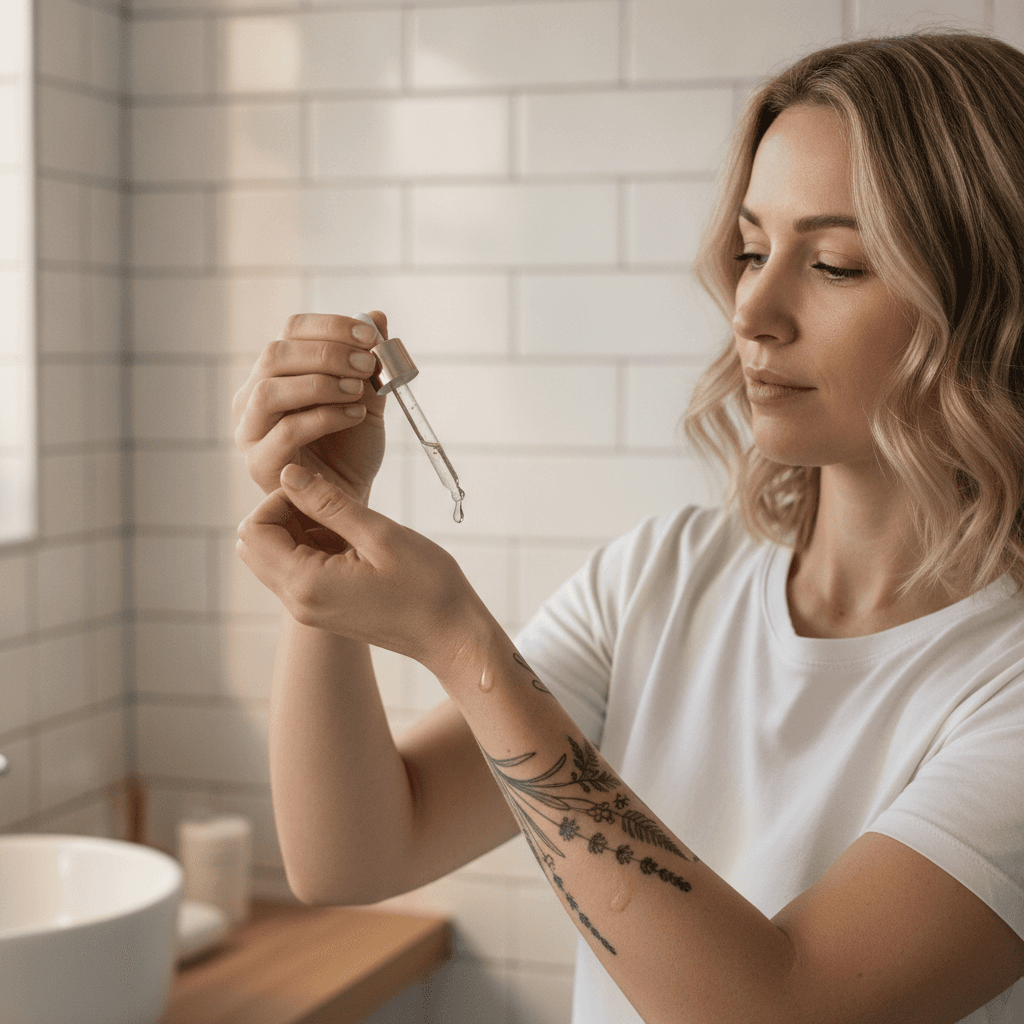
aftercare
When to Switch From Ointment to Lotion on a New Tattoo
Most new tattoos move off ointment around day three to five. Here's how to read your skin and pick the right lotion for the rest of the heal.
Switching from healing ointment to lotion is the single most-flubbed step in tattoo aftercare. Stay on ointment too long and you trap moisture, bubble the scab, and slow the heal. Switch too early and the skin dries out, the scab cracks, and color drops out of the lines. The window is short and your skin will tell you exactly when it's open.
The default timeline most tattoos follow
For a standard dry-heal protocol, most artists put a thin film of ointment on a fresh tattoo for the first three to five days, then move to a thin unscented lotion for the rest of the heal. Day one through two the skin is weepy and oozing plasma. Day three the weeping stops and a soft, shiny film forms over the lines. Day four to five that film tightens into a thin scab that feels like fine sandpaper under your fingertips. Once the weeping has fully stopped and the surface feels dry between washes, you are clear to switch.
The exact day shifts with placement and ink load. A small fine-line wrist piece can be off ointment by day two. A dense color back panel might still be weeping plasma on day four. Trust the skin, not the calendar. If you are still seeing fresh plasma on a paper towel after a gentle wash, you need one more day of ointment.
Why the switch matters
Healing ointments like Aquaphor, A+D, or Hustle Butter are occlusive. They sit on top of the skin and lock in whatever is underneath, which is exactly what you want when the tattoo is an open wound seeping fluid. Once the wound has closed, that same occlusive film traps sweat, bacteria, and dead skin against the surface and creates the textbook bubbling scab almost every artist warns about. Tattoo bubbling is almost always over-moisturization, and the fix is to back off the ointment and let the surface breathe.
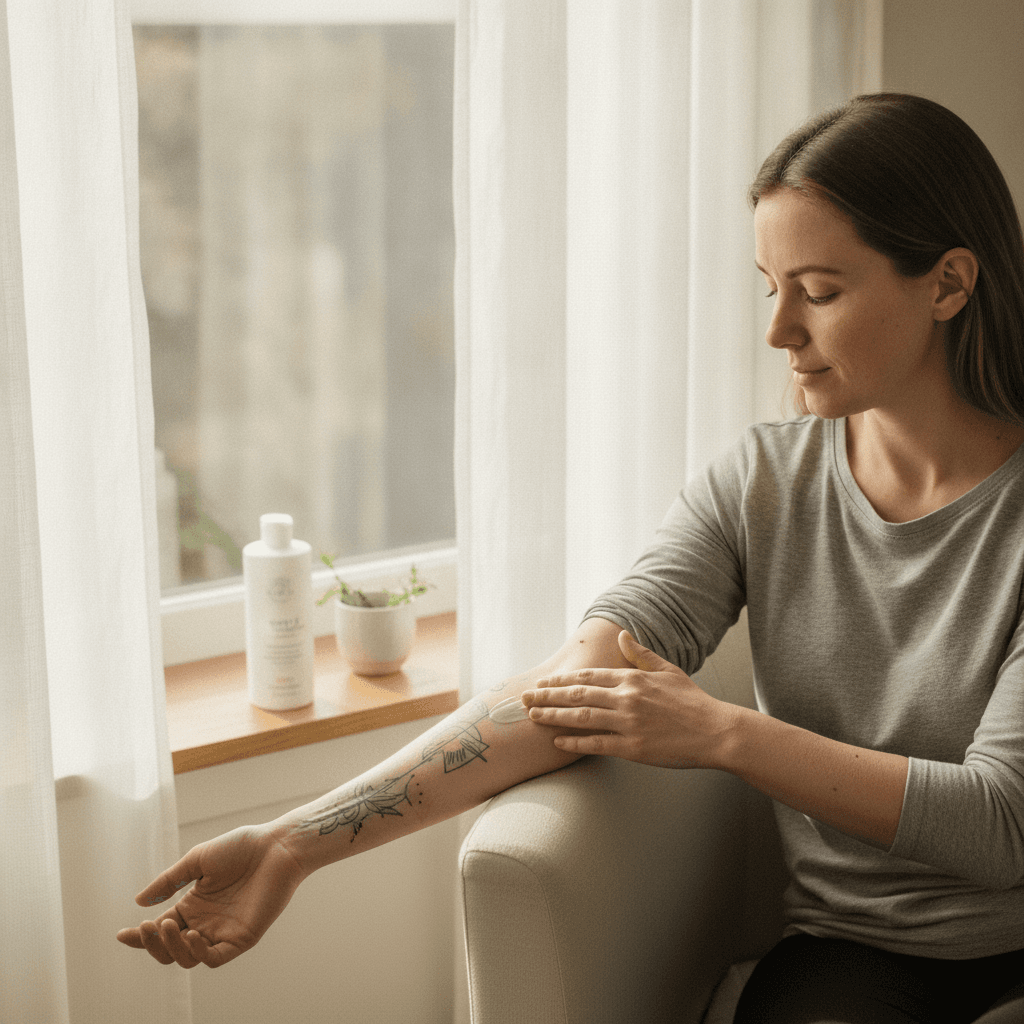
Lotion does the opposite job. A thin water-based lotion hydrates the new skin underneath the scab without sealing the surface, which lets the dead skin slough off on its own schedule. Skipping the lotion phase altogether and dry-healing the rest of the way works for some people, but most tattoos heal cleaner and itch less with a light moisturizer twice a day for the next two weeks.
The five signs your skin is ready for lotion
Run through this quick check before you make the switch. You want most of these true at once, not just one.
- No fresh plasma or blood on the paper towel after a gentle warm-water wash
- The surface feels dry and slightly tight, not tacky or wet
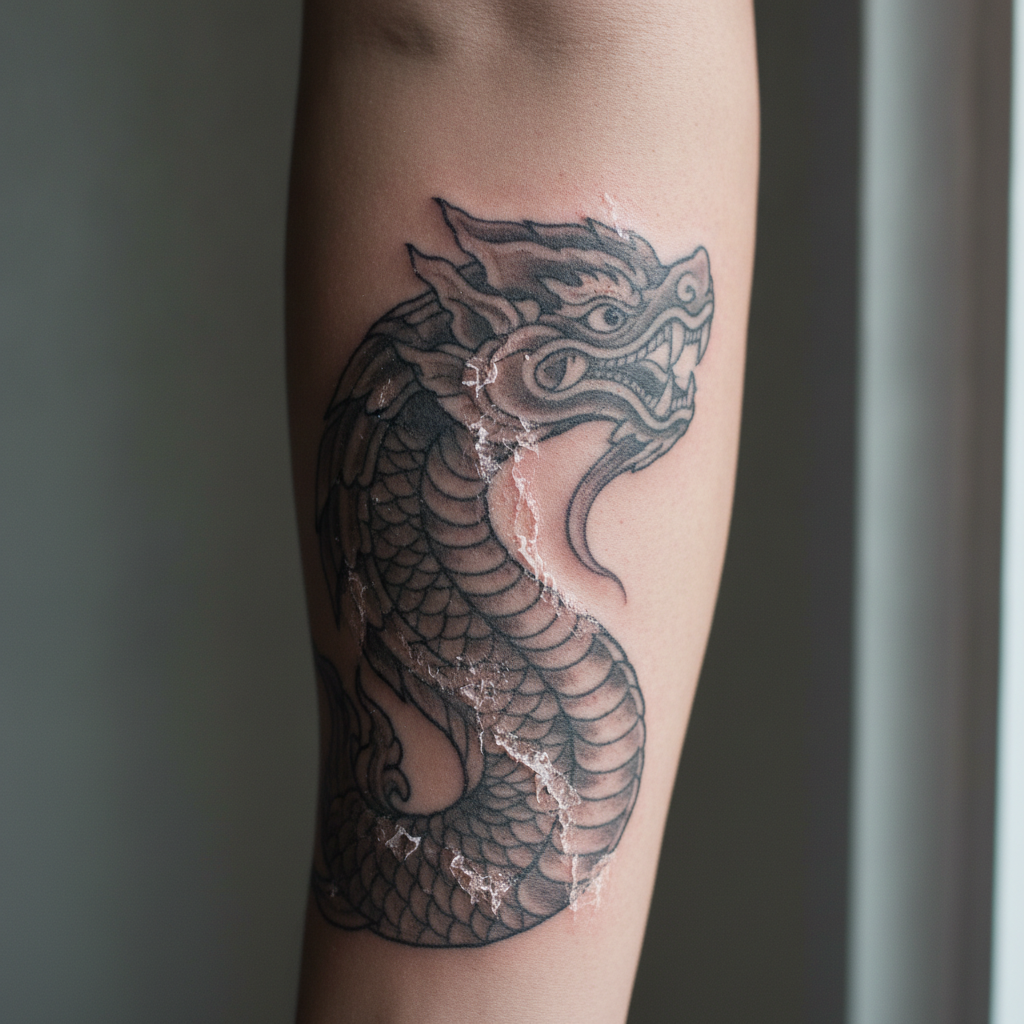
- A thin, even scab has formed over the linework and shading
- The redness around the tattoo has faded noticeably from day one
- The piece looks dull or cloudy rather than glossy and freshly inked
That cloudy, dull look is the most reliable signal. Fresh ink under ointment looks wet and saturated. Once the scab forms and the surface dries, the tattoo goes through a phase where it looks faded and dusty. That dusty look is the cue: stop the ointment, start the lotion.
Picking the right lotion
The label test is short. The lotion needs to be unscented, dye-free, alcohol-free, and as boring as possible. Aveeno Daily Moisturizing, Lubriderm Daily Moisture Fragrance Free, Cetaphil Moisturizing Lotion, Eucerin Original Healing, and Hustle Butter Deluxe all clear that bar. Avoid anything labeled "fast-absorbing" with cooling menthol, anything with retinol or AHAs, anything heavily perfumed, and the entire shea-butter aisle if the tub smells like dessert from across the room. See the full breakdown in best lotion for a new tattoo.
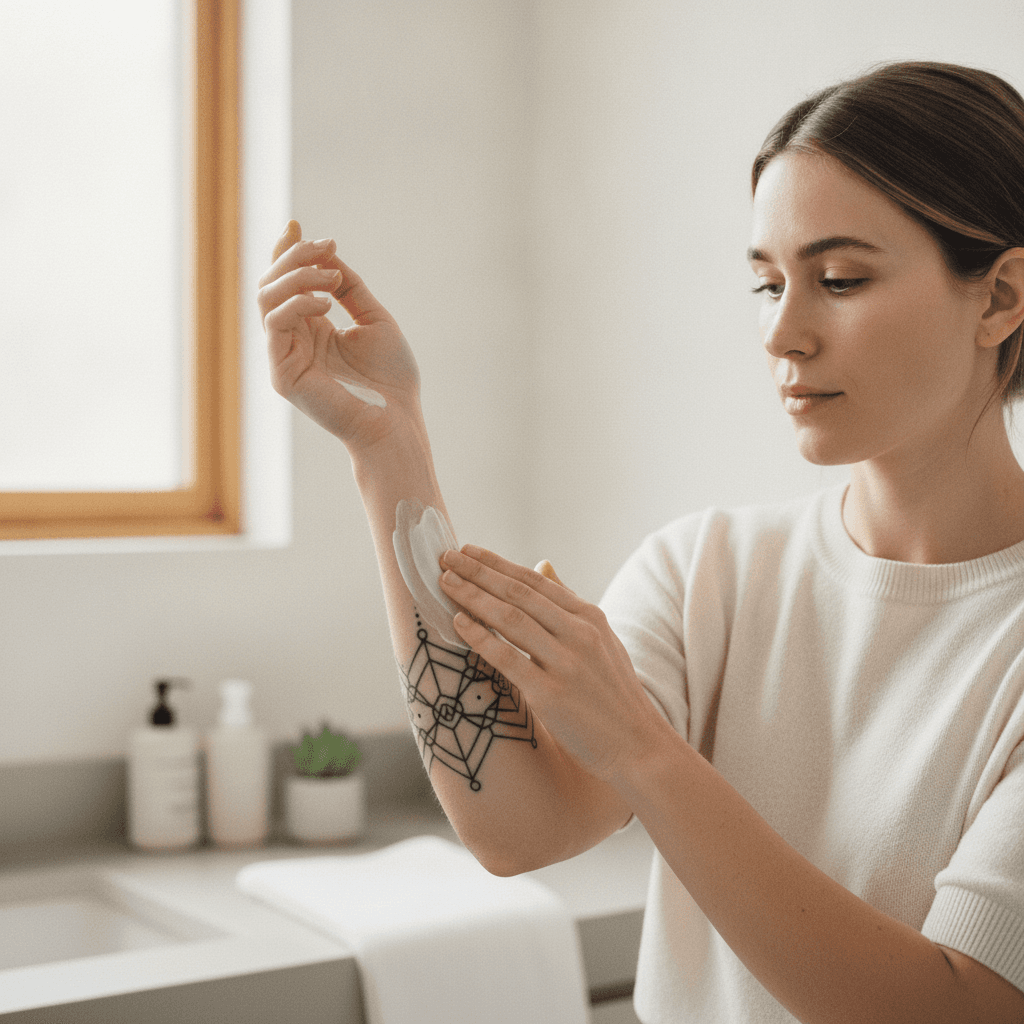
Apply less than you think. A pea-sized amount covers a palm-sized tattoo. Rub it in until the skin no longer looks shiny. If your tattoo still glistens five minutes after application, you used too much. Two to three times a day for the next ten to fourteen days is the standard cadence, plus an extra round any time the skin feels tight or itchy.
When the switch looks different
A Saniderm or second-skin wearer skips the ointment phase almost entirely. The bandage stays on for three to six days, comes off in a warm shower, and the skin underneath is usually past the weeping stage and ready for lotion straight away. There is no ointment-to-lotion transition because the film already did the occlusive job. Full protocol is in the Saniderm aftercare guide.
People with naturally dry skin or anyone healing in winter heating can stretch the ointment phase by one extra day, but no more. Color tattoos and dense black panels weep longer than fine-line, so add a day on ointment for any piece with heavy saturation. Color tattoo aftercare covers the saturated-piece nuances. Humid climates run the opposite risk: ointment plus humid air is a fast track to bubbling, so most artists in tropical cities cut the ointment phase to two or three days max. Full warm-weather protocol lives in tattoo aftercare in a humid climate.
What to do if you switched too early or too late
If you went to lotion too early and the tattoo starts weeping again, go back to a thin film of ointment for one more day and reassess in the morning. The skin will reclose quickly. No harm done as long as you do not let the area sit wet.
If you stayed on ointment too long and the tattoo bubbles, stop all product immediately. Wash gently with warm water and unscented soap, pat dry with a clean paper towel, and let the area air-dry uncovered for several hours. Most bubbling resolves in twenty-four to forty-eight hours of breathing room. Once the surface dries out, restart with lotion only, not more ointment. If the bubbling worsens, weeps yellow or green fluid, or the redness spreads, that crosses into signs of tattoo infection and warrants a message to your artist or a doctor.
Frequently asked
Can I just use lotion from day one and skip the ointment? You can, and some artists prefer this for fine-line work. The risk is that lotion does not provide enough barrier in the first forty-eight hours when the skin is genuinely open and weeping. Skipping ointment is reasonable on a small, lightly worked piece. On anything dense or large, the first three days of ointment do real protective work.
Is Aquaphor better than A+D or Hustle Butter? For most heals they perform the same job. Aquaphor is petroleum-based and the most occlusive of the three, which makes it the safest pick for the first two days but the easiest to overdo on day four. Hustle Butter is plant-based, lighter, and harder to over-apply, which makes it forgiving for first-timers. A+D sits in the middle. Pick one and stay consistent rather than rotating.
How long do I keep using lotion after the switch? Two to three weeks of twice-daily lotion covers the active heal. After that, the tattoo enters its long-term care phase: daily moisturizer if your skin is dry, plus SPF 30 or higher any time the tattoo will see sun. The sun protection piece is non-negotiable and is covered in tattoo sunscreen and long-term care.
My tattoo is itchy after I switched to lotion. Is that normal? Yes. Itching peaks around day five to ten and usually means the skin is healing, not that the lotion is wrong. Apply a thin extra layer of lotion when the itch hits and resist the urge to scratch or slap. If the itch comes with hives, raised welts, or a rash, that points to an allergy. The allergic reaction guide covers what to watch for.
Can I use coconut oil or shea butter instead of regular lotion? Not in the early healing phase. Pure oils and heavy butters trap moisture like ointment does and can trigger bubbling on a freshly closed tattoo. Once the tattoo is fully healed at the four-to-six-week mark, a light coconut or shea product is fine for ongoing care if your skin tolerates it.
What if my tattoo never fully scabs over? Some fine-line and single-needle work barely scabs at all. The surface goes from weepy to dry to flaky without ever forming a visible crust. That is normal, and the switch to lotion happens the same way: when the weeping stops and the surface feels dry, you are clear. Trust the dry test, not the scab.