cost guides
Blackwork Tattoo Cost: Pricing by Size, Coverage, and Artist Tier
Blackwork tattoo cost breaks down by ink saturation, session count, and artist tier. Real 2026 pricing for small pieces, sleeves, and back panels.
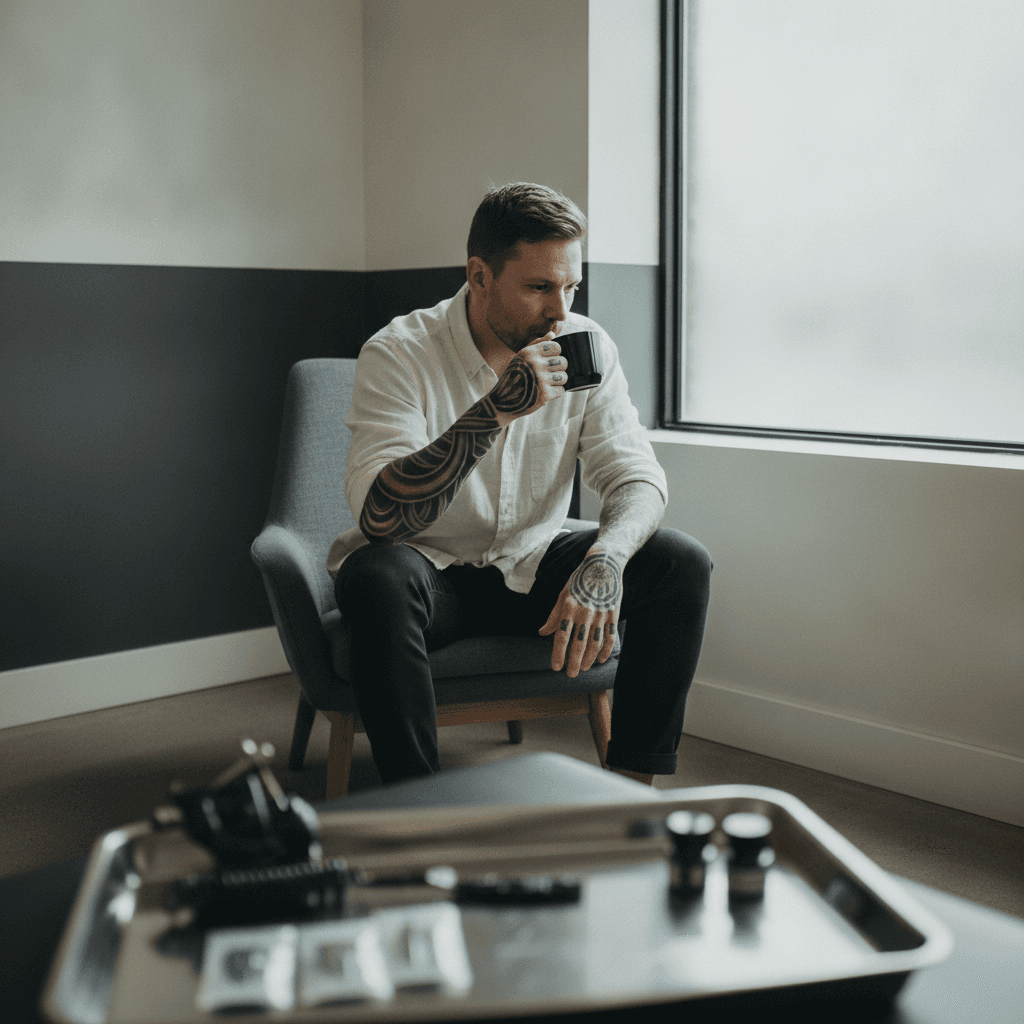
Blackwork sits in its own pricing bracket for one reason: ink saturation. A blackwork piece needs the artist to pack solid, opaque black across every millimeter of the filled area, and that packing eats hours the way a fine-line piece never will. If you are pricing a first blackwork piece or budgeting a sleeve, the number you get quoted depends on three variables that stack: the coverage in square inches, the artist's hourly rate, and how many sessions the density forces you into.
This guide walks through real 2026 pricing bands in USD across small, medium, and large blackwork work. Every number below assumes a competent professional in a licensed studio in a mid-to-large US city. Rural rates run 20 to 30 percent lower. Rates in London, Berlin, Tokyo, and Sydney track close to US pricing, with a mild premium at top studios.
What actually drives blackwork pricing
Three things move a blackwork quote up or down, and none of them are style-specific gimmicks. First is saturated black area in square inches. Blackwork artists charge by the pack, not by the outline. A 4-inch by 4-inch solid black square takes roughly the same time as a much larger outlined geometric piece, because the machine spends most of its runtime laying down opaque fill. Second is design complexity around the fill: negative-space patterns, ornamental linework, and fine white highlights add layout time and a second pass. Third is your artist's tier, which we break down below.
Session count follows from saturation. Skin can only take so much trauma per sitting before it stops accepting ink cleanly. Most blackwork artists cap a solid-fill session at 4 to 5 hours. A full sleeve of dense blackwork almost never finishes in one day, no matter what you are willing to pay. For a broader style breakdown, the blackwork style guide covers the technique and aesthetic side.
Hourly rates by artist tier
Blackwork specialists tend to price on the higher end of the market because the style is physically demanding and the mistakes are unforgivable. A patchy solid black looks obviously wrong, so studios protect their reputation by pricing accordingly.
- Apprentice or junior artist: $80 to $120 per hour. Use for small, simple solid-fill shapes only.
- Mid-level professional: $150 to $220 per hour. The realistic bracket for most first-time blackwork clients.
- Established blackwork specialist: $250 to $400 per hour. Books out 3 to 9 months in advance.
- Guest artist or internationally known name: $400 to $700 per hour, plus a shop fee and often a flight/hotel contribution for private bookings.
Flat-rate pricing is common for small blackwork pieces under 3 hours. Anything larger almost always shifts to hourly, because the artist cannot accurately predict how your skin will take the pack until the second session. If you want to understand why studios switch models mid-project, the hourly vs flat-rate pricing breakdown covers the tradeoffs.
Cost by size and coverage
These bands assume a mid-tier artist at $180 per hour. Scale up or down based on your artist's rate.
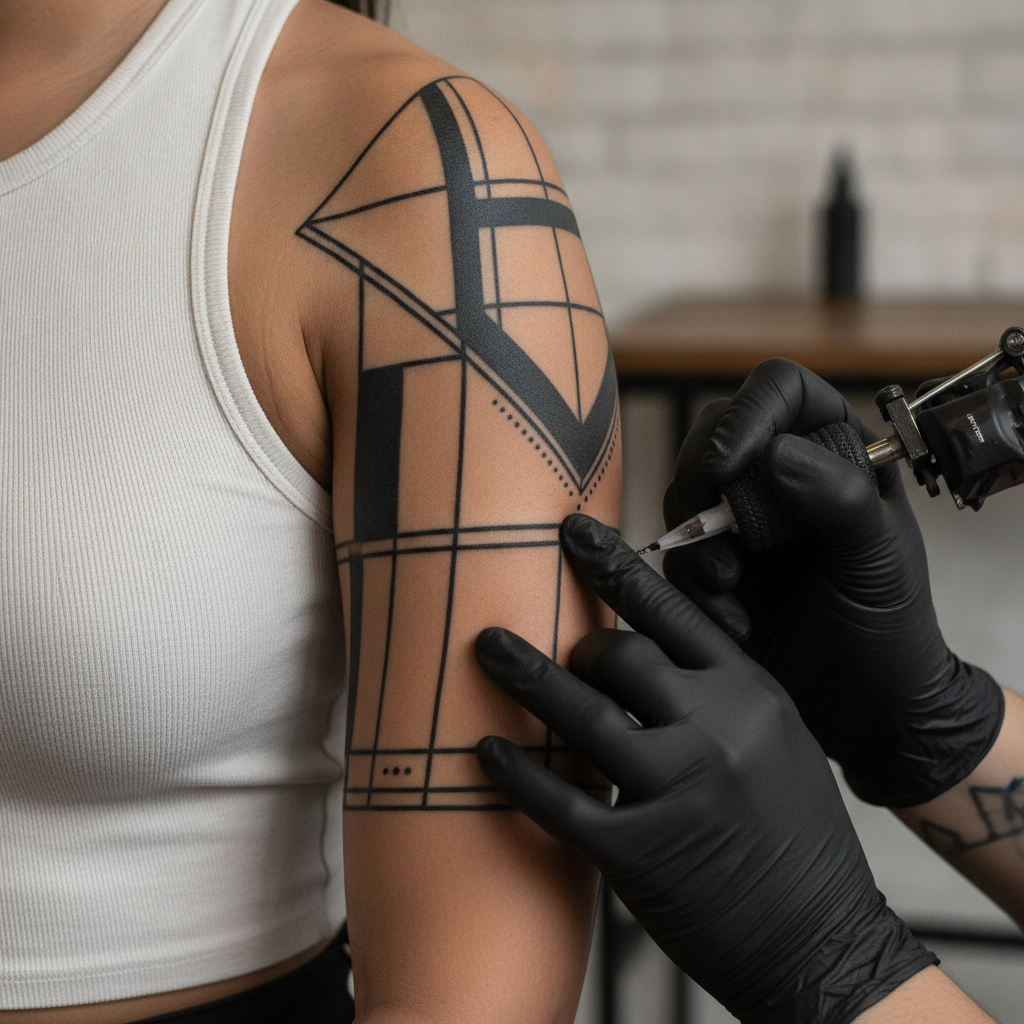
- Small solid-fill piece (2 to 3 inches, single sitting): $250 to $500. Think a filled geometric shape, a small ornamental cluster, or a solid silhouette. Often priced flat.
- Medium piece (4 to 6 inches, 3 to 5 hours): $550 to $900. Ornamental panels, mid-sized geometric mandalas, small negative-space designs. Usually one sitting, sometimes split into two if the fill is very dense.
- Large single piece (6 to 10 inches, 6 to 10 hours): $1,100 to $1,800. Forearm cuffs, calf panels, chest ornamental work. Almost always two sittings for solid fill.
- Half sleeve, mostly blackwork: $2,000 to $3,500 across 2 to 4 sessions. Cost climbs quickly if you want negative-space linework built into the pack.
- Full sleeve, heavy blackwork: $3,500 to $6,500 across 4 to 7 sessions. Solid armor sleeves land at the top of this band because every millimeter of exposed skin gets packed twice.
- Full back panel: $4,500 to $9,000 across 5 to 10 sessions. Back skin takes ink well, but the sheer square inches of solid black force long timelines.
For placement-specific pricing that overlaps with blackwork budgets, the full sleeve cost guide and the back piece cost guide give useful anchor numbers.
Why touch-ups are common on blackwork
Solid black almost always needs one touch-up around the 4 to 8 week mark. Small patches heal unevenly no matter how good the artist is, especially on the ribs, elbows, hands, and feet. Reputable blackwork artists include one touch-up session in the original quote if it is booked within 90 days of the final session. Confirm this in writing before your deposit. If you need a second pass after the free window, expect $80 to $200 depending on size, or the artist's shop minimum. The touch-up cost breakdown covers what studios typically include.
Deposits, tipping, and hidden costs
Blackwork specialists take non-refundable deposits ranging from $100 to $500, applied to your final session, not your first. For multi-session sleeves, some artists take a deposit per session. Tipping is standard at 15 to 22 percent of the total, distributed across sessions or paid in full on the last one. On a $4,000 sleeve, budget $600 to $880 in tips. Custom design fees are sometimes charged separately, usually $100 to $300 for complex ornamental or geometric layouts, and are almost never refundable if you cancel.
Numbing cream is another line item people forget. Blackwork sessions run long and dense, and a rib or spine sleeve session without numbing is punishing. A tube of professional-grade numbing cream costs $30 to $60 and lasts 2 to 3 sessions.
Frequently asked
Is blackwork more expensive than regular black-and-grey? Yes, per square inch. Solid black packing takes 30 to 50 percent longer than shaded black-and-grey coverage of the same size. A 6-inch black-and-grey portrait might run $700 to $1,000 in one sitting, while an equivalent solid blackwork ornament of the same dimensions can hit $1,200 to $1,500 across two sessions.
Can I get a small blackwork piece for under $200? Only from an apprentice, and even then most shops enforce a $100 to $150 minimum charge. A tiny solid-fill piece from a mid-tier artist starts at $250 once the shop minimum, deposit, and setup time are factored in.
How many sessions does a full blackwork sleeve really take? Most artists plan for 5 to 7 sessions of 4 to 5 hours each, spaced 4 to 8 weeks apart. Very dense armor sleeves stretch to 8 or 9 sessions. Full sleeves finished in fewer than 4 sessions are usually rushed, and rushed blackwork heals patchy.
Do I pay session by session or all at the end? Standard practice is a non-refundable deposit up front, then payment at the end of each session for the hours actually worked. Some specialists ask for a larger deposit and roll it into the final session. Confirm the payment structure in the same conversation where you discuss the design.
Does location on the body change the price? Slightly. Ribs, hands, feet, and inner biceps take longer because the skin is thinner and the artist has to slow the pack rate. Expect a 10 to 20 percent bump in total hours on those placements compared to a forearm or calf of the same size.
Is a cheap blackwork tattoo ever worth it? Small, simple solid shapes from a reputable junior artist are fine and often good practice work for them. Large blackwork from anyone under mid-tier is not worth the savings. Uneven packing on a sleeve or back panel costs more to fix than doing it right the first time, and some heavy scarring cannot be corrected without a laser session first.