cost guides
Japanese Irezumi Tattoo Cost: 2026 Pricing Guide
Japanese irezumi tattoos run $200 to $400 per hour and full back pieces hit $8,000 to $20,000. Here is what 2026 pricing actually buys you.
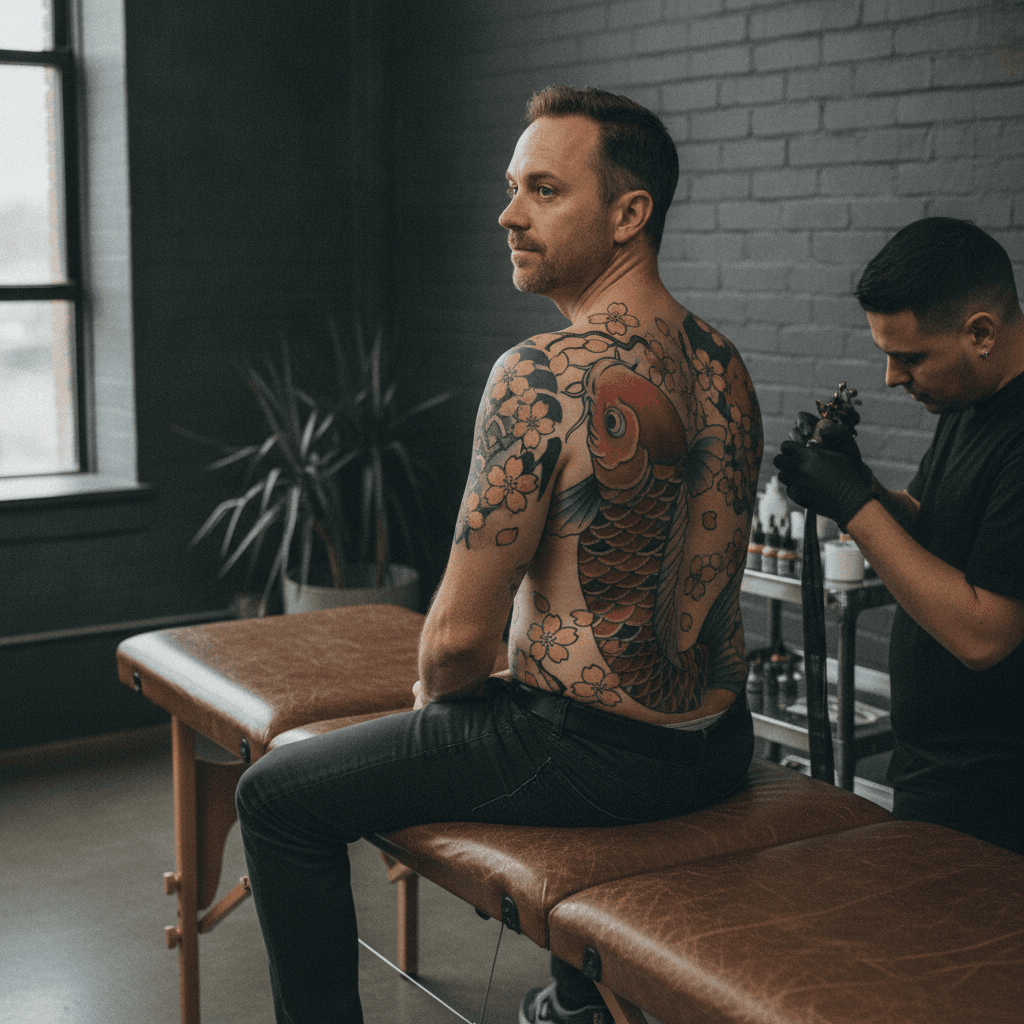
Japanese irezumi is one of the most expensive tattoo traditions you can commit to, and the bill reflects centuries of layered iconography, deliberate composition, and long studio hours. A finished back piece is rarely under $8,000, and a full bodysuit at a respected studio in Tokyo, Osaka, or Los Angeles can clear $40,000 across two or three years of sittings. This guide breaks down what you pay for, why hourly rates sit so much higher than the average tattoo, and how to scope a piece honestly before you book your first consultation.
What irezumi actually costs in 2026
Hourly rates for irezumi specialists run $200 to $400 in major U.S. cities, $250 to $500 in Tokyo and Kyoto when working with horishi who accept foreign clients, and $180 to $300 in Bangkok, Bali, and Ho Chi Minh City. Flat-rate quotes are more common for irezumi than for Western styles because experienced artists already know how many sessions a half sleeve, sleeve, or back piece will need. Expect a half sleeve to land between $2,500 and $5,500, a full sleeve between $5,000 and $11,000, a chest panel between $3,000 and $7,000, and a back piece between $8,000 and $20,000 depending on density of color and background work.
- Half sleeve: $2,500 to $5,500 across 3 to 5 sessions
- Full sleeve: $5,000 to $11,000 across 6 to 10 sessions
- Back piece: $8,000 to $20,000 across 10 to 25 sessions
- Full bodysuit: $25,000 to $60,000+ across 2 to 4 years
Deposits sit in the $200 to $1,000 range and almost always come off the final session, not the first. Cancellation forfeits the deposit by default, and most irezumi artists keep a tight booking calendar that does not reschedule generously.
Why irezumi runs higher than most styles
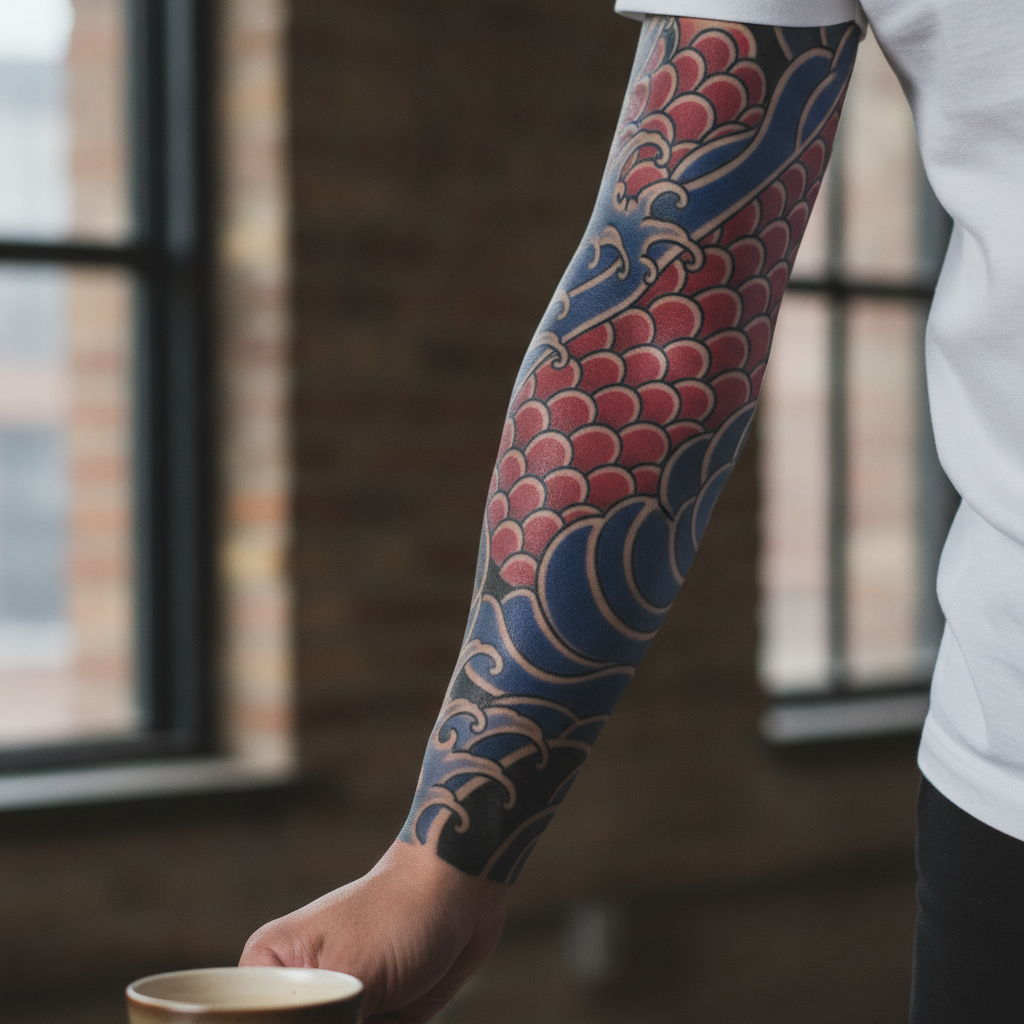
Irezumi pricing reflects three things Western flash work does not carry. The first is composition. A traditional sleeve is not a stack of independent motifs but a single scene with a hero subject, supporting elements, wind bars, water, and clouds that move together around the limb. Designing this kind of unified flow takes hours of drawing time before a needle touches skin, and the artist charges for that work either as a separate design fee of $300 to $800 or rolled into the first session. The second is color density. Backgrounds in irezumi are saturated to the point that black areas read solid, and packing color this hard requires multiple passes per area across multiple sessions. The third is studio time itself. A traditional artist may book six hours per session and refuse to compress the calendar, because skin needs to heal fully between passes for the final color to hold its depth. If you want context on the visual language behind the pricing, the Japanese irezumi style guide walks through motifs, symbolism, and what a complete sleeve usually contains.
Tebori vs machine pricing
Tebori is the hand-poked tradition where ink is pushed into the skin with a wooden or metal handle holding a row of needles. It is slower, gentler on the skin in some artists' hands, and produces a specific gradient effect in color work that machines struggle to mimic exactly. Pure tebori artists charge a premium of 20 to 40 percent over machine rates for the same area, putting a full sleeve in the $7,500 to $14,000 range and a back piece in the $11,000 to $25,000 range. Many modern artists work hybrid, using a machine for outlining and tebori for color packing, which lands closer to standard machine pricing while keeping some of the visual signature. If you are price-sensitive and want the irezumi look without paying the tebori premium, hybrid is the practical compromise.
Sessions, healing, and total timeline
A back piece is not a single decision. It is a two to three year commitment with sessions every six to ten weeks. Each session usually runs four to six hours, and longer sittings cost less per hour but extract more from your body. Most artists cap full-color sessions at six hours because saturation drops on tired skin and the work suffers. Plan for $600 to $2,400 per session at U.S. rates, paid at the end of each sitting. Between sessions you need to follow a clean healing routine, since infected or poorly healed areas cost extra to fix and push the timeline back. The tattoo aftercare timeline covers the day-by-day expectations, and skipping it costs you twice when an artist has to rework lost color.
A respected horishi once said his rate is not for the hour you sit. It is for the thirty years he spent learning to fill that hour.
Booking abroad: Tokyo, Bangkok, and Bali
Booking outside the U.S. can cut total cost by 30 to 50 percent, but the math gets complicated once flights, hotels, and per diem stack up. Tokyo specialists who accept foreign clients book six to eighteen months out and often require an introduction or a serious portfolio review of your existing work. Bangkok has a strong irezumi scene at $180 to $280 per hour with shorter wait times. Bali sits in the $150 to $250 range, and if you are already considering it, the Bali tattoo pricing breakdown covers studio quality, hygiene checks, and what to verify before you book. Travel work is best for self-contained pieces of one to three sessions. Multi-year back pieces are not realistic to start abroad unless you commit to repeat visits on a fixed schedule.
Hidden costs people forget to budget
The sticker price of the tattoo is rarely the full spend. Tipping irezumi artists in the U.S. follows the standard 15 to 20 percent guideline per session, and on a $1,200 sitting that is $180 to $240 extra each time. Most artists do not expect tips in Japan, though a small gift or paying the consultation fee in full is appreciated. Touch-ups after full healing are usually free in the first three months and charged at the hourly rate after that. Color refreshing on a finished sleeve runs $400 to $1,200 every five to eight years if you want the saturation to stay magazine-strong. Consultation fees of $50 to $150 are increasingly common at high-demand studios and almost always non-refundable.
Frequently asked
Is irezumi more painful than other tattoo styles? The actual needle pain is similar to any other large color tattoo, but session length is the real factor. Six-hour sittings on the ribs, spine, or back of the knees push most people to their limit. Tebori is often reported as less sharp than machine work but slower, so the cumulative discomfort balances out. Eating well, sleeping the night before, and staying hydrated do more for tolerance than any topical product.
Can I get a Japanese-style sleeve from a non-Japanese artist? Yes, and many of the best irezumi artists working today are based in the U.S., Europe, and Australia. What matters is whether they have studied the traditional composition rules and motif library, not their nationality. Look for a portfolio with multiple finished sleeves and back pieces, not single panels, since composition is where untrained artists fail first.
Why do some Japanese studios refuse foreign clients? A small number of traditional studios have historical ties to clientele that prefer privacy, and walking in cold rarely works. Many studios now openly welcome foreign clients, and a polite email in advance with reference photos of your healed work usually opens the door. Booking through an intermediary or studio manager who handles English-language clients is the cleanest path.
Should I get the outline done before saving for color? This is a personal call. Outlining a full back or sleeve and waiting a year for color is common and can spread the cost out, but you walk around with a black outline that looks unfinished. Most artists prefer to do an area to completion before moving to the next, so you have finished sections rather than a half-baked outline across your whole body.
Does cover-up work cost more in irezumi? Yes, by 30 to 60 percent. Irezumi color saturation requires a clean canvas, and covering an existing piece often means extra black work to mask the old design and more sessions to build the color depth back up. Some artists will refuse cover-ups entirely if the existing piece is too dark or too recent.
How do I know if a quote is fair? Ask the artist how many sessions they expect and what each session will run in hours. Multiply by their hourly rate and compare to the flat quote. If the flat is significantly higher, ask what is included that pushes the price up. A fair quote will line up within 10 to 15 percent of the hourly math, and any larger gap should come with a clear explanation about design time, color complexity, or material costs.