cost guides
Calf Tattoo Cost: What You'll Actually Pay in 2026
Calf tattoo cost in 2026 runs $120 for a small piece to $2,800 for a full wrap. Here is the real pricing by size, style, and artist tier.
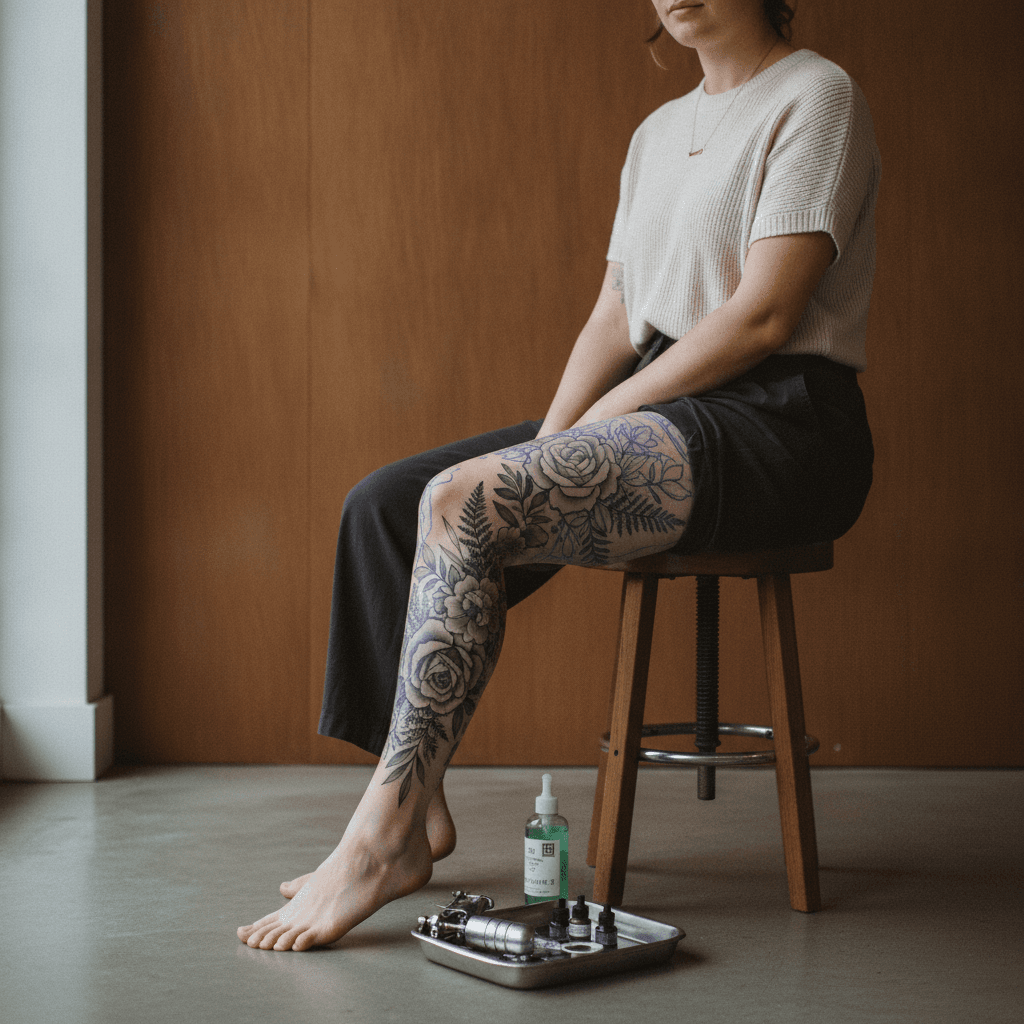
The calf is one of the best-priced large canvases on the body. The skin is forgiving, the muscle holds ink well, and most artists love working on it because they can sit comfortably and pull long, clean lines without the client squirming. In 2026 a calf tattoo costs anywhere from $120 for a small palm-sized piece to $2,800 for a full wrap done by a name-tier artist. The spread is wide because "calf tattoo" can mean a two-inch minimalist symbol or a knee-to-ankle Japanese panel, and the price tracks size and detail almost linearly.
What a calf tattoo actually costs by size
Small calf tattoos in the two to four inch range usually fall between $120 and $300. These are the simple lettering pieces, small line-work animals, single flowers, and minimalist geometric shapes. Most studios charge their shop minimum here, which sits at $100 to $150 in mid-market US cities and $200 to $250 in major coastal markets. A medium calf tattoo, roughly five to eight inches and covering one face of the calf, runs $400 to $900. This is the range most first-timers land in because it gives enough room for shading or color without committing to a full panel.
A large piece that wraps the back of the calf or fills the entire outer face costs $1,000 to $1,800 and typically takes two sessions of four to five hours each. Full calf wraps, the ones that go all the way around from knee to ankle, run $1,800 to $2,800 and almost always require three or more sessions. Color and dense black saturation push the upper bound higher because both require slower, more careful packing. For context on how this compares to other large placements, our thigh tattoo cost breakdown and half-sleeve cost guide cover the next-most-common big-canvas options.
Hourly rates and why your artist quotes the way they do
Most calf work is priced hourly once you cross the four-inch mark. The going rate in 2026 sits at $150 to $250 per hour in the US, $180 to $350 in London and Berlin, and $120 to $200 in Bangkok and Bali. Senior artists with two-year waiting lists charge $300 to $500 an hour and will not negotiate. A typical calf session lasts three to five hours because the placement is comfortable to sit, which means an experienced artist can quote you a flat day rate of $800 to $1,500 and finish a medium piece in one visit.
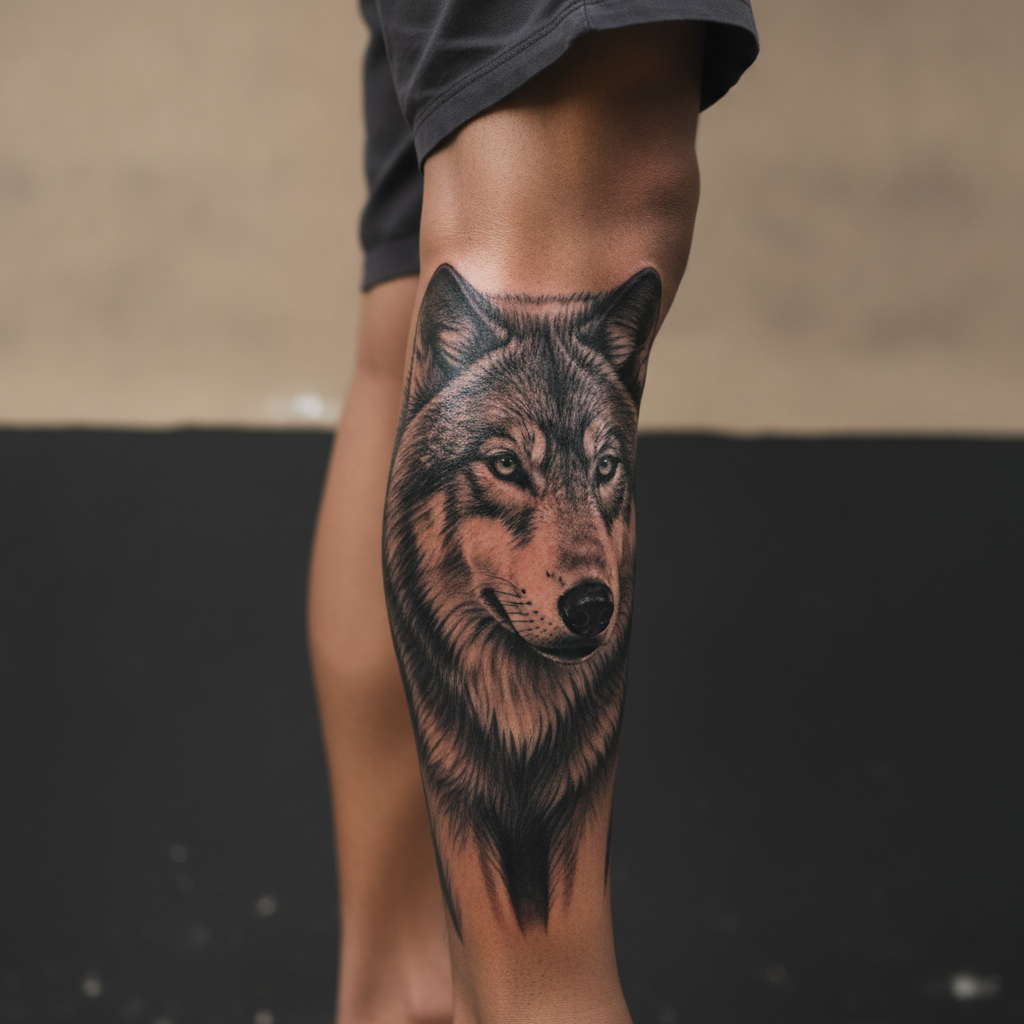
Flat-rate pricing dominates the small end. A four-inch fine-line botanical with no shading might be quoted at $250 outright because the artist knows it takes an hour and they would rather not deal with timer disputes. Once a piece moves past four hours total, almost every studio switches to hourly because the unknowns around healing breaks, color packing, and stencil adjustments make flat quotes unreliable for the artist. If you want to see how the two pricing models compare in practice, the hourly vs flat-rate breakdown covers when each one favors the client.
How style changes the price
Fine-line and single-needle calf tattoos sit at the cheap end because they use one needle configuration, no shading, and pull in roughly an hour per palm-sized area. Expect $200 to $500 for a medium fine-line piece. Black-and-grey realism on the calf is the most common mid-tier choice and prices land at $600 to $1,400 for a six to eight inch piece because the smooth gradients take time. Color realism adds 30 to 50 percent on top of black-and-grey because the artist switches inks constantly, wipes more, and works in shorter productive bursts before the skin gets too red to read.
Japanese irezumi calf panels and traditional American sleeves on the leg are the priciest because they demand solid color blocks, heavy black outlines, and multi-session commitment. A Japanese half-leg panel from a respected artist runs $2,200 to $4,500 across three to four sessions. Geometric blackwork sits in the middle at $700 to $1,600 for a full calf face, with the dotwork variants costing 20 percent more because of the slower needle work.
What pushes the price up
A few specific factors stack quickly:
- Knee or shin coverage: The skin tightens over bone and the artist slows down, adding 15 to 25 percent.
- Wrapping the leg: Going around the calf doubles the surface area and almost always pushes you into multi-session territory.
- Solid black or saturated color: Packing density costs more than line work. Budget another $200 to $500 above the line estimate.
- Same-day consultation and tattoo: Walk-ins at high-end studios cost 20 to 30 percent more because the artist did not pre-draw the design.
- Cover-up over an existing tattoo: Add 40 to 80 percent depending on how dark the old piece is. The cover-up cost guide goes deeper on this.
What to expect in the chair
Calf tattoos sit at a four to five out of ten on the pain scale for most people, which is one of the reasons the placement is so popular for first big pieces. The fleshy back of the calf is the easiest area. The shin, the inside of the ankle, and the area directly above the knee are sharper. Sessions on the calf usually run longer than other placements because the position is sustainable, which means you get more square inches per dollar of shop time.
Healing takes the standard two to three weeks for the surface and four to six weeks for the deeper layers. The calf has good blood flow and heals cleanly, but the placement rubs against jeans and bedding more than you would expect. Plan to wear loose shorts at home for the first ten days. Sleeping on your side becomes uncomfortable for a few nights. The day-by-day healing timeline walks through what each week looks like if you have not been through it before.
Frequently asked
How much should I tip on a calf tattoo? Standard tipping is 15 to 25 percent of the total session cost. On a $600 piece that is $90 to $150. Tip in cash on the day of the appointment because card tips often skip the artist and go through the shop's books. A $20 minimum is normal even on small flat-rate pieces.
Is a calf tattoo cheaper than a forearm tattoo of the same size? Usually slightly cheaper per square inch because the calf is faster to tattoo and easier on the artist. Expect to pay roughly 10 to 15 percent less than a comparable forearm piece, though name-tier artists charge their rate regardless of placement.
Can I get a full calf tattoo in one sitting? A small to medium piece up to about six inches, yes. A full wrap or a knee-to-ankle panel, no. Most artists cap sessions at five to six hours because the skin stops accepting ink cleanly after that and the result suffers. A full calf typically takes two or three sessions spaced three to six weeks apart.
Does the calf hold ink better than other placements? Yes, the calf is one of the most stable placements for long-term ink retention. The skin does not stretch as much as the stomach or upper arm, sun exposure is moderate, and the muscle keeps the ink anchored. Expect a calf tattoo to age slower than a hand, foot, or rib piece of the same age.
How long should I wait between sessions on a large calf piece? A minimum of three weeks, ideally four to six. The skin needs to fully close and the underlying layers need to settle before the next pass. Coming back too early on partially healed skin causes blowouts and uneven saturation.
What is the cheapest way to get a calf tattoo I will not regret? Pick a single mid-sized piece in a style you have liked for at least a year, book with a solid mid-tier artist instead of the cheapest one available, and avoid trying to fit a full sleeve concept into a single small session. A $500 piece done well lasts a lifetime. A $150 piece done by an underqualified artist costs $1,200 in laser removal later.