aftercare
Tattoo Blowout: Causes, Prevention, and What to Do
A tattoo blowout happens when ink lands too deep and spreads into fuzzy halos around your lines. Here is what causes it and what to do.
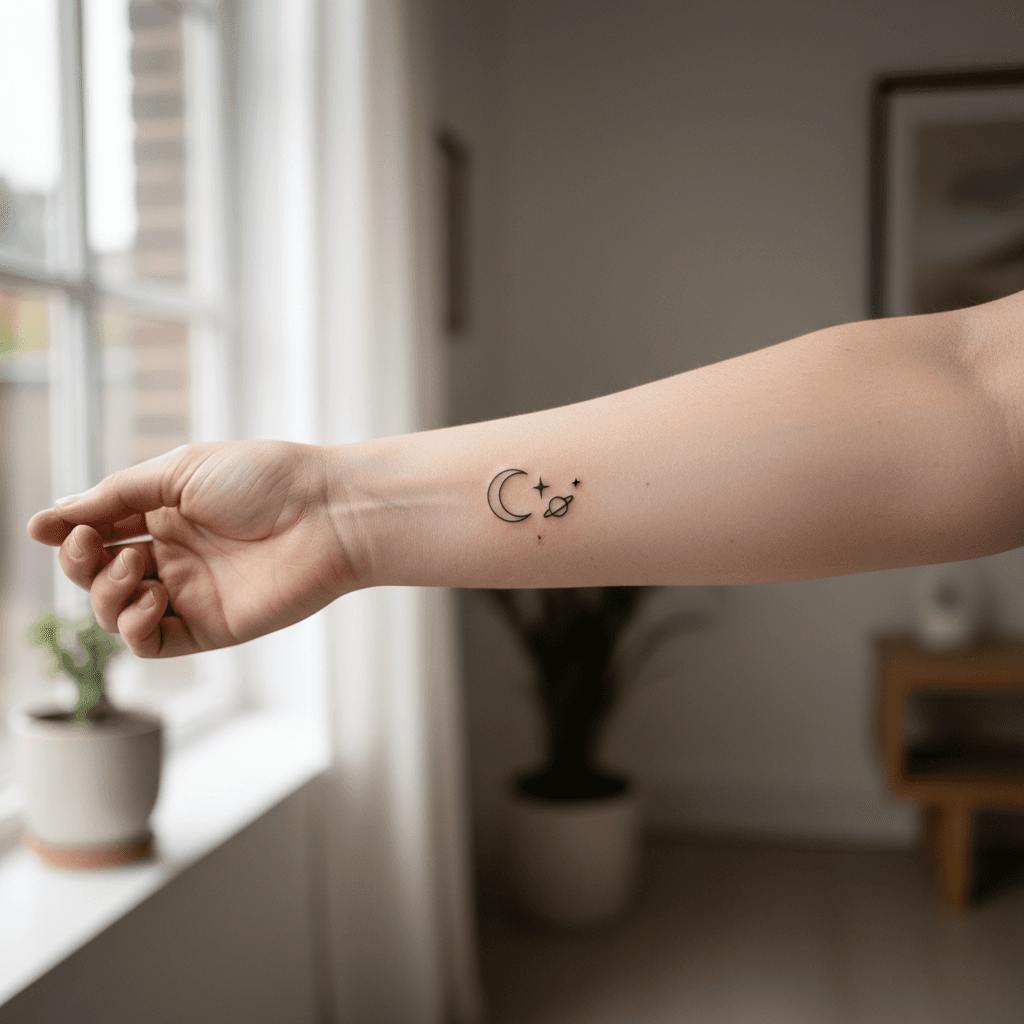
A tattoo blowout is what happens when ink lands too deep and spreads sideways into the fat layer under your skin. Instead of a crisp line, you end up with a soft bluish halo blurring out from the original stroke. It is one of the most common reasons a healed tattoo looks worse than it did on day one, and it is almost always preventable on the artist's side.
This guide covers what a blowout actually is at the skin layer, which placements and styles are most at risk, the specific mistakes that cause it, and what your real options are if your tattoo has already blown out.
What a blowout actually is
The skin you tattoo into has three working layers. The epidermis sits on top and sheds in about four weeks, so ink deposited there scabs off. The dermis is the target layer, around 1 to 2 mm deep depending on body area, and that is where pigment needs to settle for a sharp permanent line. Below that is the hypodermis, a layer of subcutaneous fat with looser tissue and more lateral space for fluid to spread.
A blowout means the needle drove pigment past the dermis into the hypodermis. Once ink hits that fat layer, it disperses sideways before the body can encapsulate it. The visible result is a faint blue or grey smear sitting next to the original line, sometimes one millimeter out, sometimes five. It usually shows up during the healing window between days 10 and 21 as the surface scabbing falls off and the deeper layer becomes visible.
Blowouts are not the same as bruising. A bruise fades in 7 to 14 days. A blowout is permanent because the ink particles are now lodged in tissue at a depth the immune system cannot fully clear. Some blowouts settle slightly as inflammation subsides over the first three months, but the spread itself does not go away on its own.
Where blowouts happen most
Certain body areas are structurally more prone to blowout because the skin is thinner, the fat layer sits closer to the surface, or the tissue moves a lot during the session. The high-risk zones are consistent across artists and styles.
- Inner wrist and inner bicep — skin thickness under 1 mm, soft tissue immediately below
- Ankle, top of foot, and inside of the foot arch — bone is close to the surface and the dermis is thin
- Ribcage and side of torso — flexing and breathing pull the skin during work
- Behind the knee and inner elbow — high-mobility flexor zones, very thin skin
- Fingers and outer hand — almost no fat, thin dermis, and constant movement during healing
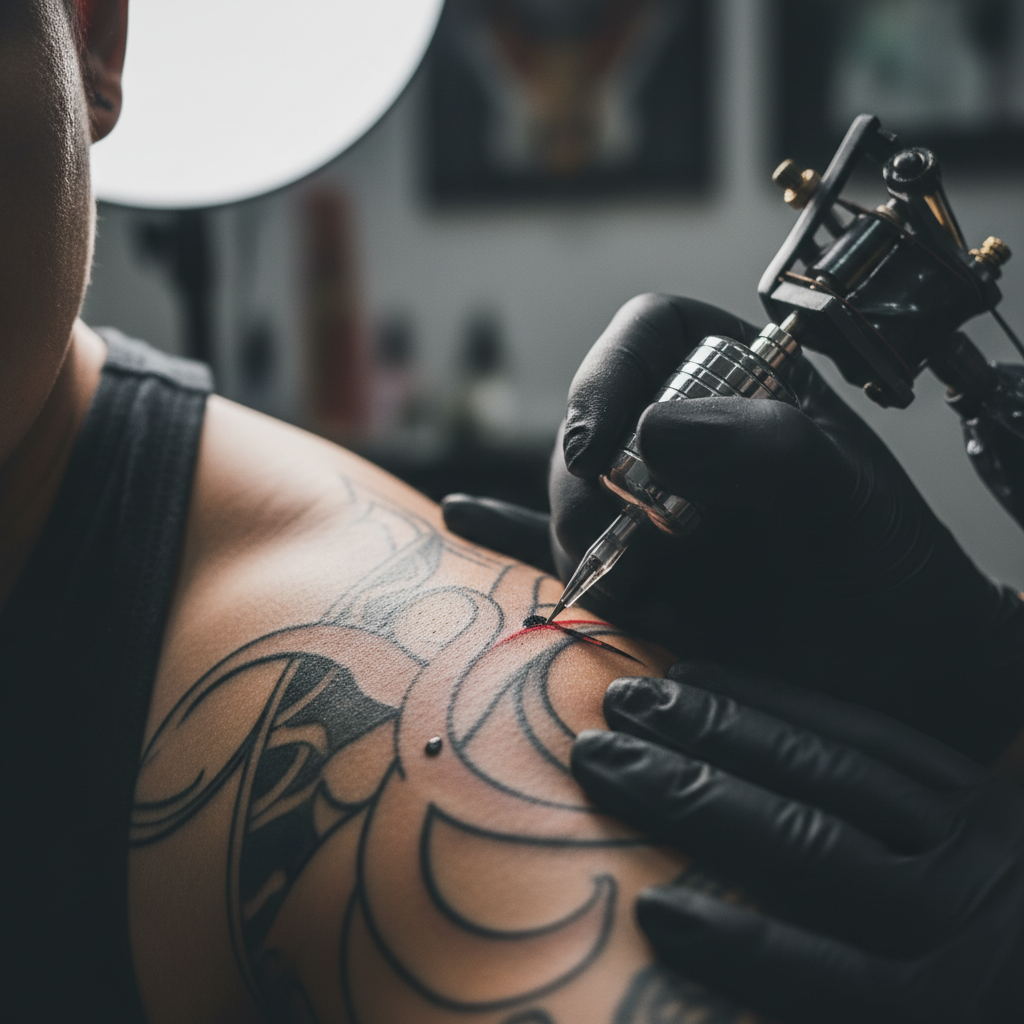
Style choice matters too. Fine-line work is the most blowout-prone style on the market because single-needle and three-round-liner setups leave no margin for depth error. A bold American traditional line is around 1 to 2 mm thick to start with, so a small bleed is invisible. A 0.25 mm fine line with a 1 mm halo around it has effectively quadrupled in width and lost its identity entirely.
What actually causes a blowout
Blowouts almost always trace back to one of four specific technical mistakes during the session. Knowing them helps you spot warning signs in your artist's portfolio and during your own consultation.
The first and most common cause is needle depth too deep. The needle should sit roughly 1 to 1.5 mm into the skin, just past the resistance point of the dermis. New artists often run too deep because it feels like they are getting better ink saturation, when in reality they are depositing pigment in the fat layer. Watch for portfolios where every healed photo has slight haloing around the lines, especially on wrists and ankles.
The second is excessive machine pressure. Even at correct depth, pressing the machine harder into the skin compresses tissue and lets the needle reach further than the gauge suggests. Rotary machines with adjustable give are forgiving here, but heavy-handed coil machine technique on thin skin will blow out lines that would have healed cleanly with a lighter pass.
The third is bad skin stretch. The artist's free hand should pull the skin taut in a tripod stretch, three contact points around the area being worked. If the stretch is loose, the skin bunches as the needle enters, and the pigment lands at an angle that drives it sideways under the surface. This is why ribs and behind-the-knee tattoos blow out so often. The skin is hard to keep flat without the client tensing up.
The fourth is over-working a small area. Going back over the same line three or four times to "make it pop" tears the dermis and opens lateral pathways for ink. A single confident pass at correct depth deposits more cleanly than repeated touches.
What you can do to prevent one
Most of the prevention is on the artist, but you have meaningful input as the client. Vet the artist before booking, not after.
Look through their healed-work portfolio specifically, not just fresh-tattoo shots. Fresh tattoos all look sharp because the trauma response is hiding the deeper layer. A healed photo at 4 to 6 weeks is the only honest indicator. If they only post day-one photos, that is a flag. Ask directly whether they have healed shots from clients with similar skin to yours, especially if you have thinner or more reactive skin.
Match the style to the placement. A fine-line ankle piece is asking for trouble unless the artist has a clear track record on that exact combination. Move fine-line work to the outer forearm, calf, or shoulder cap, areas where the dermis is thicker and movement is lower. If you want a tattoo on a high-risk zone, choose a style with thicker line weight or some shading, so any minor spread will not be visible.
Stay still during the session and breathe normally. Tensing creates micro-movements the artist has to compensate for, and on ribs or torso that compensation is what causes uneven depth. If a section hurts enough that you cannot hold still, ask for a short break and reset rather than gritting through it.
Skip alcohol and blood thinners for 48 hours before the session. Thinner blood means more bleeding, which can dilute pigment and force the artist to go deeper or over-work the area to compensate.
What to do if your tattoo blew out
If you notice halos forming around your lines during healing, do nothing during the first month. Inflammation amplifies the appearance of a blowout, and what looks alarming at week two often settles into something more subtle by week eight. Photograph it weekly under the same lighting so you have an honest comparison.
After three months, the result is permanent. At that point you have three realistic options. The first is laser fading. Picosecond lasers can break down the pigment in the spread area without affecting the deeper main lines significantly, though it usually takes 3 to 6 sessions at $100 to $300 each. This works best on small, isolated blowouts in single black ink. Coloured ink blowouts are harder to laser cleanly.
The second is a shading-based correction. A skilled artist can sometimes integrate the blowout into deliberate soft shading, turning the smear into intentional atmosphere around the design. This works for illustrative and neo-traditional pieces. It will not work on a clean minimalist single-line piece because there is no shading vocabulary to absorb the halo.
The third is a cover-up. A larger, darker, more detailed design over the existing piece can hide both the original tattoo and the blowout. This is the nuclear option and only makes sense if you were unhappy with the original anyway.
Do not let the same artist who caused the blowout attempt the fix unless you have a clear reason to believe their depth control has improved. Get a second opinion from someone whose healed portfolio you have inspected.
Frequently asked
How soon will I know if my tattoo blew out? The earliest reliable window is around day 14, after the surface scabbing has fully shed and the lines are visible through new skin. Some swelling and pinkish edges are normal until then. By day 30 you will see the final state of any blowout, and at three months it is permanent.
Are blowouts the artist's fault or mine? Almost always the artist's. Depth, pressure, and stretch are all on their side of the table. Client factors like skin reactivity or movement during the session can contribute, but a competent artist adjusts their technique to compensate for the area and the client's skin type.
Can a small blowout heal on its own? The visible appearance can soften by 10 to 20 percent over the first three months as inflammation drops, but the ink particles in the deeper tissue stay put. What you see at the three-month mark is what you keep.
Is fine-line work always risky? Not always, but the margin for error is much smaller than with bolder styles. A fine-line artist with strong healed-work documentation on similar placements to yours is fine. A generalist who occasionally does fine-line as a side specialty on high-risk zones is a real risk.
Will laser removal fix a blowout completely? It can fade a blowout enough that it is no longer visible at conversational distance, especially on simple black ink. Full erasure of the spread without touching the main lines is hard. Expect a noticeable improvement, not a perfect reset.
Should I let the studio touch up a blowout for free? A reputable shop will offer a free touch-up for healing issues, but a blowout is not a touch-up problem. It is a structural depth issue that touching up the same lines will not fix and can make worse. Ask instead for a consultation about correction or a refund toward laser work elsewhere.